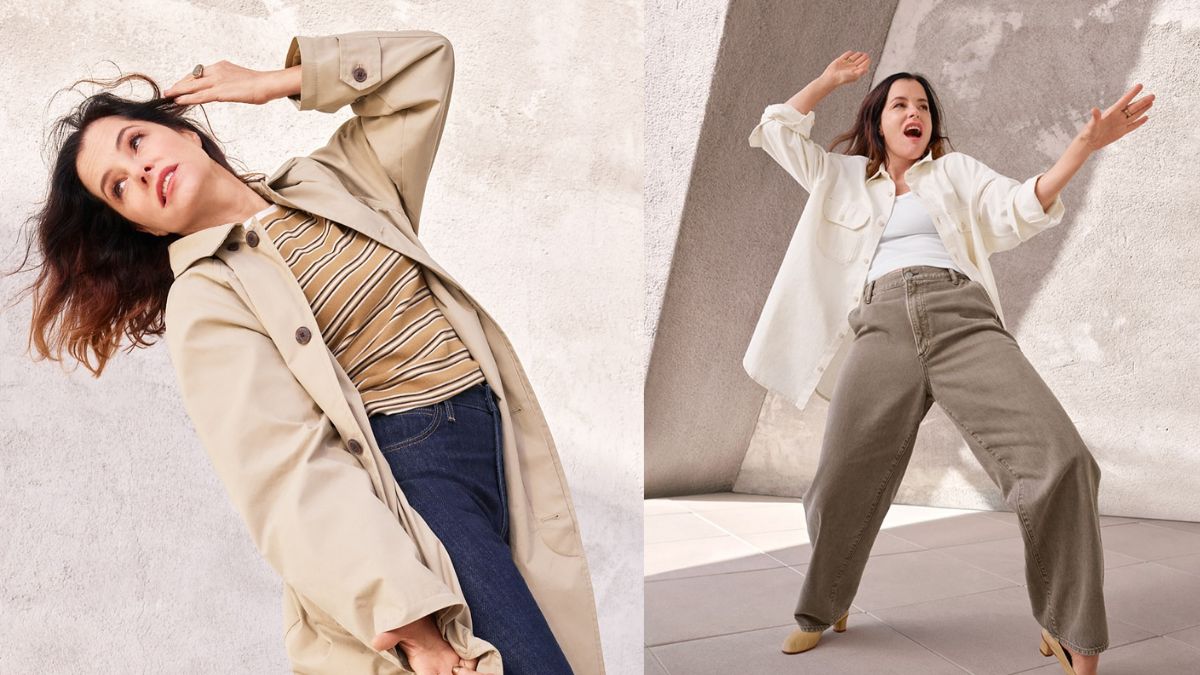
Audiences first noticed Parker Posey the way you notice someone at a party who isn’t trying too hard—she just stood out. In Richard Linklater’s “Dazed and Confused” in 1993, she played Darla Marks, a sadistic high school senior tormenting incoming freshmen, and something about her performance felt different from typical young actresses of that era. She wasn’t conventionally beautiful in the way Hollywood usually demands. She was something more interesting—memorable.
That film became a cult classic, but it was what happened next that defined her career. Instead of leveraging that visibility into blockbuster roles, she disappeared into independent cinema, appearing in film after film that most Americans never saw in theaters. Time magazine would eventually label her “Queen of the Indies” in 1997, a title that became both badge of honor and career limitation.
Quick Overview
| Category | Details |
|---|---|
| Full Name | Parker Christian Posey |
| Date of Birth | November 8, 1968 |
| Birthplace | Baltimore, Maryland, USA |
| Nationality | American |
| Profession | Actress, Writer, Producer, Musician |
| Years Active | 1991–present |
| Height | 5’5″ (165 cm) |
The Moment She Became Noticeable
After “Dazed and Confused,” she appeared in “Party Girl” in 1995, playing Mary, a New York club kid who becomes a librarian. The film cost $200,000 to make and barely got theatrical distribution, yet it became a touchstone for young women navigating identity and adulthood in the mid-’90s.
Critics started paying attention. Her performance had quirk without being precious, intelligence without being pretentious. She could make eccentric characters feel grounded rather than like calculated quirks writers invented.
“Kicking and Screaming,” “The Daytrippers,” “The House of Yes,” “Clockwatchers”—she did 32 independent films between 1993 and 2000. Most people hadn’t heard of them, but film festival audiences and critics knew her name. She became a fixture at Sundance, Toronto, and other festivals where independent cinema thrived before streaming platforms existed.
Why Independent Films Became Her Natural Space
She gravitated toward indie cinema not because she couldn’t get mainstream work—she turned down studio offers—but because the characters interested her more. Independent films let actresses play complicated, flawed, interesting women. Studio films in the ’90s mostly offered girlfriends, wives, or attractive obstacles for male leads.
Working with directors like Hal Hartley, Richard Linklater, and particularly Christopher Guest gave her creative freedom. Guest’s mockumentaries—”Waiting for Guffman” (1996), “Best in Show” (2000), “A Mighty Wind” (2003), “For Your Consideration” (2006), and “Mascots” (2016)—showcased her improvisational skills and comedic timing. Those films operated without traditional scripts, requiring actors to create characters through improvisation, which suited her perfectly.
The indie world also moved faster. She could do three small films in the time a studio picture spent in development. This kept her working constantly, building a resume that valued volume and variety over blockbuster visibility.
Working Without Chasing Stardom
She did take studio roles. “You’ve Got Mail” (1998) with Tom Hanks and Meg Ryan gave her mainstream exposure. “Scream 3” (2000) put her in a horror franchise that dominated young audiences. “Blade: Trinity” (2004) and “Superman Returns” (2006) were big-budget action films.
But these felt like excursions rather than career pivots. She never abandoned independent cinema for Hollywood. According to her official IMDb, she has over 100 acting credits spanning films, television, and stage work—a level of productivity that required saying yes to projects others might consider beneath someone of her talent.
In a 2012 interview, she admitted the “Queen of the Indies” label created problems: “I’m trying to work in studio movies, but they won’t hire me. I get feedback from my agent saying, ‘She’s too much of an indie queen.’ And then on the other side, my name doesn’t get the financing to do a movie over $1 million.”
She was caught between worlds—too indie for Hollywood, too expensive for true independent financing. This tension defined much of her career from the 2000s onward.
How She Earns and What That Means
According to Celebrity Net Worth‘s detailed analysis, her estimated net worth is $5 million as of 2025. Other sources estimate between $5 million and $10 million, with the variation reflecting difficulty in assessing income from independent films, which pay modestly compared to studio work.
Her wealth comes from accumulated film and television work over 30+ years. Independent films typically pay $50,000-$150,000 for lead roles—respectable but not life-changing. Studio films pay significantly more, though her roles were usually supporting rather than lead, meaning lower salaries than stars.
Television became increasingly important financially. Her three-season run as Dr. Smith on Netflix’s “Lost in Space” (2018-2021) likely paid more per year than most of her film work. Guest appearances on shows like “Will & Grace,” “Parks and Recreation,” “The Good Wife,” and “Louie” provided steady income between film projects.
She’s diversified through writing—her 2018 memoir “You’re on an Airplane: A Self-Mythologizing Memoir” received critical praise—and producing. She executive produced the 2019 documentary “The Booksellers.”
Real estate provides some financial stability. She purchased a Greenwich Village co-op for $1.35 million in 2008 and sold it for $1.55 million in 2016. In 2019, she bought a Manhattan apartment for $1.49 million. These aren’t massive real estate wins, but they represent smart financial management.
Her 2025 appearance in “The White Lotus” Season 3 brought renewed visibility and likely her biggest single paycheck in years. HBO pays top-tier actors well, and her performance received widespread critical acclaim.
Media Attention and How It Changed
In the 1990s, journalists wrote about her as the face of independent cinema’s golden age. She represented something authentic when mainstream culture felt increasingly manufactured.
By the 2000s, the narrative shifted to “whatever happened to Parker Posey?” pieces, as if disappearing from blockbusters meant disappearing entirely. She never stopped working, but the media attention faded when she wasn’t in multiplex releases.
In 2015, she told an interviewer she had considered quitting acting entirely: “I saw the independent film movement go away from me… it’s a world market now. They’re made from real star power. Whoever’s hot at the moment.” When Woody Allen cast her in “Irrational Man,” she cried—it felt like vindication that her approach to acting still mattered.
The past few years brought reassessment. Younger audiences discovering her work through streaming platforms, combined with strong performances in “Lost in Space,” “The Staircase” (2022), and “The White Lotus,” reminded people she never actually left—they just stopped paying attention.
The Foundation That Came Before
She was born November 8, 1968, in Baltimore, Maryland, to Lynda Patton, a chef, and Chris Posey, who owned a car dealership. She was named after model Suzy Parker. She has a twin brother, Christopher, who became a lawyer.
The family moved to Monroe, Louisiana, when she was young, then to Laurel, Mississippi, where her father operated Posey Chevrolet. She attended R.H. Watkins High School in Laurel before heading to SUNY Purchase to study drama.
At SUNY Purchase, she roomed with Sherry Stringfield, who would later star in “ER.” A talent agent saw her in a play and signed her immediately. Less than three weeks before graduation, she dropped out after landing a role on the soap opera “As the World Turns,” playing Tess Shelby for eight episodes.
Personal Life
She dated actor Stuart Townsend after meeting on “The Venice Project” (1999); they broke up in 2001. She was in a relationship with rock singer Ryan Adams from 2003 to 2005, providing vocals on several of his records.
From the late 2000s to early 2010s, she dated visual artist Scott Lenhardt. Beyond these publicly known relationships, she maintains significant privacy around her personal life.
As of 2026, there’s no publicly confirmed relationship. She’s never married and has no children. She lives in New York City, having resided in both Greenwich Village and the East Village over the years.
She’s notoriously private about romantic life, rarely discussing it in interviews. This privacy has served her well—her personal life never overshadowed her professional work.
How Her Career Adapted Without Declining
In recent years, she’s embraced television more fully. Her role in Louis C.K.’s “Louie” (2012) as Liz, his love interest, showcased dramatic range that surprised viewers who knew her primarily for comedic work.
“Lost in Space” gave her steady work and exposure to younger audiences who’d never seen her ’90s films. Playing the manipulative Dr. Smith allowed her to be genuinely threatening, a departure from her usual sympathetic characters.
Her 2024 Emmy nomination for guest starring in “Mr. & Mrs. Smith” proved she could still command attention in limited screen time. Her two-episode arc playing a spy was memorable enough to earn award recognition.
“The White Lotus” Season 3 in 2025 brought widespread critical praise. Reviews specifically highlighted her Southern accent and ability to convey wealth, privilege, and underlying vulnerability simultaneously.
Influence That Persists
She influenced how independent cinema portrayed women in the ’90s. Her characters weren’t waiting to be saved or existing primarily in relation to men. They had their own neuroses, ambitions, and complications.
Filmmakers like Noah Baumbach, Wes Anderson, and other directors who came of age in the ’90s cite her as influential. The quirky, intelligent, slightly odd female characters that became common in independent cinema owe something to her template.
Newer audiences discovering her work through streaming platforms appreciate what made her special—authenticity in an industry that often rewards artifice. She never seemed to be acting, just being interesting versions of complicated people.
Read Also: Demond Wilson: Acting Career, Life Changes, and Personal Journey
About The Author