Mike Macdonald became the youngest head coach in the NFL when the Seattle Seahawks hired him at age 36 in January 2024. His journey from unpaid intern to leading an NFL franchise in less than a decade reflects the combination of analytical thinking, relentless work ethic, and family values instilled by his father, a West Point graduate and Army officer.
People search for his story because it demonstrates how someone can rise through coaching ranks without playing professional football. From choosing coaching over corporate finance to building elite NFL defenses, his path shows that dedication and strategic thinking can overcome the traditional requirement of playing experience at the highest levels.
Family Background and the Influence of Hugh Macdonald
Mike Macdonald was born on June 26, 1987, in Boston, Massachusetts. His father, Hugh Macdonald, graduated from the United States Military Academy at West Point in 1971 as part of the Class that would later be known for producing leaders across military and civilian sectors.
Hugh served as an engineer officer in the U.S. Army, where he developed the discipline and analytical mindset that would profoundly influence his son. After military service, Hugh remained active in community work and advocacy, particularly during his later battles with kidney disease. His approach to problem-solving—breaking down complex challenges into manageable components—became a model Mike would apply to football strategy.
Mike grew up with two sisters, Kate and Maggie Macdonald, in a household where education, discipline, and critical thinking were emphasized. His mother’s name has not been widely publicized, as the family maintains privacy around certain personal details. The Macdonald family moved from Massachusetts to Georgia during Mike’s childhood, settling near Atlanta where he would spend his formative years.
Hugh’s military background created an environment where structure, preparation, and attention to detail were daily expectations. Mike has credited his father’s influence repeatedly, explaining that the analytical approach to defense—studying tendencies, recognizing patterns, making adjustments—mirrors the systematic thinking his father demonstrated throughout his military and civilian career.
Early Life and Education in Georgia
The Macdonald family’s move to Georgia placed Mike in an environment where football culture was intense and everywhere. He attended high school in the Atlanta area, participating in both football and baseball. He played defensive back and showed promise, but injuries limited his playing career and shifted his focus from being on the field to understanding the game from a coaching perspective.
These early injuries proved formative rather than devastating. Unable to compete physically at the level he desired, Mike began studying film, learning formations, and understanding why certain plays succeeded or failed. This analytical approach would become his trademark.
He enrolled at the University of Georgia, where he earned a degree in finance, graduating summa cum laude. His academic excellence demonstrated intellectual capacity that extended far beyond football knowledge. The finance background gave him skills in data analysis, risk assessment, and strategic planning—all applicable to football at the highest levels.
While at Georgia, he began coaching at Cedar Shoals High School, gaining hands-on experience working with players and developing game plans. This early coaching work confirmed what his injuries had suggested: his future in football would be as a strategist and teacher, not a player.
Beginning the Coaching Career
After graduating from Georgia, Mike returned to the university in 2010 as a graduate assistant under head coach Mark Richt. This unpaid position required long hours, menial tasks, and total commitment with no guarantee of advancement. He worked primarily with the defense, learning from experienced coaches while handling responsibilities that ranged from film breakdown to organizing practices.
His work ethic and football intelligence caught attention. In 2014, he received an opportunity that would change his career trajectory: the Baltimore Ravens offered him a coaching internship. The Ravens organization, known for defensive excellence and analytical approaches under general manager Ozzie Newsome and coach John Harbaugh, provided the perfect environment for his skills.
Rising Through the Baltimore Ravens Organization
Mike’s progression through Baltimore demonstrated sustained excellence rather than quick jumps. He started as a defensive assistant in 2014, learning the Ravens’ defensive system and organizational culture. By 2018, he had been promoted to defensive backs coach, working directly with players and contributing to game planning.
In 2020, at age 33, he became the Ravens’ inside linebackers coach. Each position taught different aspects of defensive coordination—coverage principles, run-stopping techniques, blitz packages, and how individual position groups integrate into cohesive defensive schemes.
His analytical approach impressed Ravens defensive coordinator Don “Wink” Martindale and head coach John Harbaugh. Mike’s ability to identify offensive tendencies through film study and translate those insights into defensive adjustments became increasingly valuable.
The Michigan Opportunity
In 2021, Jim Harbaugh (John’s brother) hired Mike as defensive coordinator at the University of Michigan. This represented a significant risk—leaving an established NFL position for college football, where he would face different challenges and need to prove himself capable of leading an entire defensive unit.
The gamble paid off immediately. Michigan’s defense ranked third nationally in 2021, allowing just 17.4 points per game. The Wolverines won the Big Ten Championship and reached the College Football Playoff, with Mike’s defense as the foundation of that success.
His one-year college stint accomplished multiple goals: it proved he could coordinate a defense, it demonstrated his schemes worked at elite levels, and it positioned him for NFL defensive coordinator opportunities.
Return to Baltimore as Defensive Coordinator
In 2022, Mike returned to the Baltimore Ravens as defensive coordinator, replacing Wink Martindale. Some questioned whether a 34-year-old with one year of coordinator experience could maintain Baltimore’s defensive excellence. He answered decisively.
In 2023, the Ravens defense ranked first in the NFL in multiple categories including points allowed, total yards allowed, and third-down defense. The unit became the foundation of Baltimore’s success, with Mike’s schemes confusing opposing quarterbacks and limiting explosive plays.
According to NFL analysts, his defensive approach combined aggressive pressure with disguised coverages, making pre-snap reads difficult and forcing quarterbacks into mistakes. His success drew attention from teams seeking head coaches who could build complete programs around defensive identity.
Becoming Seattle Seahawks Head Coach
On January 31, 2024, the Seattle Seahawks hired Mike Macdonald as their head coach, making him the youngest head coach in the NFL at age 36. The Seahawks, coming off the Pete Carroll era, sought a coach who could modernize their approach while maintaining Seattle’s defensive tradition.
His first season showed immediate impact. The Seahawks improved defensively, adopted more aggressive schemes, and demonstrated the discipline and preparation that defined Mike’s coaching philosophy. Players responded to his analytical approach and clear communication style.
He brought staff members from Baltimore and Michigan, creating continuity while adapting to Seattle’s roster and division challenges. His ability to connect with players despite the age gap—he’s closer in age to some players than to veteran coaches—demonstrated leadership skills beyond tactical knowledge.
Personal Life with Stephanie and Fatherhood
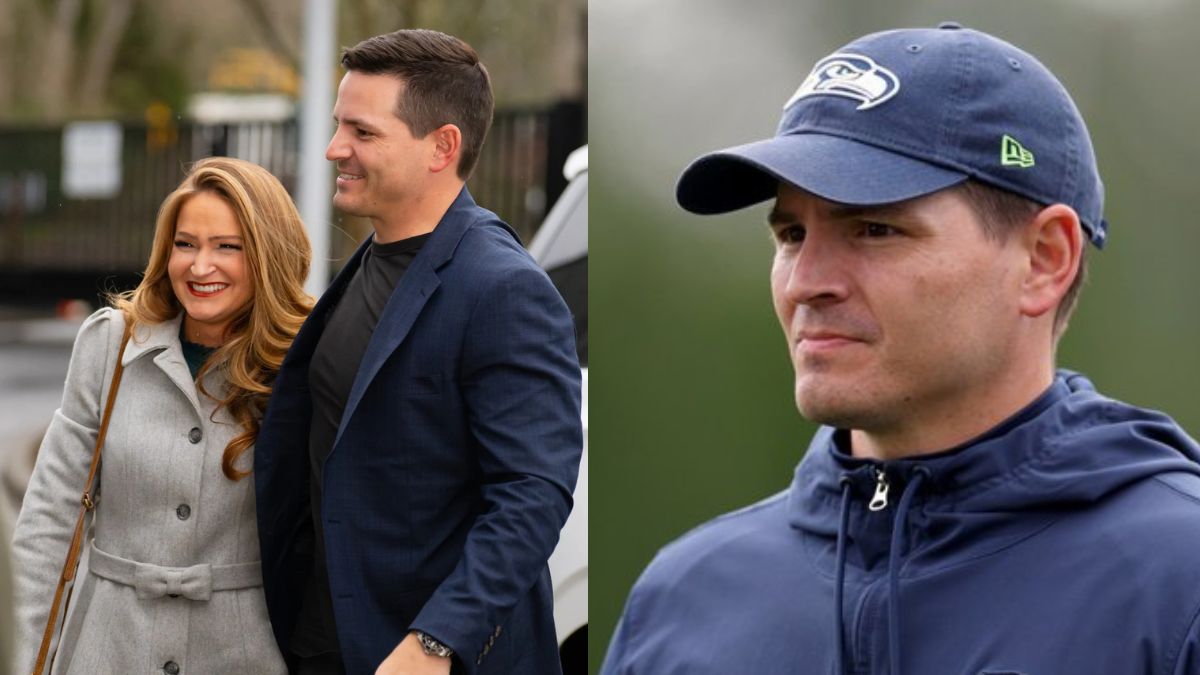
Mike married Stephanie Macdonald in 2021. They met while he was coaching with the Ravens and she was working as an NFL cheerleader, sharing understanding of the demanding schedules and travel requirements that come with professional football careers.
On December 3, 2024, Stephanie gave birth to their son Jack David Macdonald. Becoming a father during his first season as NFL head coach added complexity to already demanding responsibilities. Mike has discussed how fatherhood has influenced his perspective on work-life balance, though he acknowledges the challenge of managing NFL coaching demands with being present for his family.
The couple maintains relative privacy despite Mike’s public role, sharing occasional glimpses of family life while keeping most details away from media attention. Stephanie’s experience in professional sports gives her insight into the pressures Mike faces, creating partnership based on mutual understanding.
Coaching Philosophy Rooted in Family Values
Mike’s coaching philosophy reflects his father Hugh’s military influence: thorough preparation, disciplined execution, and adaptability when plans change. He emphasizes film study, pattern recognition, and putting players in positions to succeed based on their specific strengths.
His approach combines traditional defensive principles with modern analytics. He uses data to inform decisions about fourth-down attempts, two-point conversions, and personnel groupings, but never lets statistics override football instincts developed through years of study.
Players describe his teaching style as clear and patient. He explains the “why” behind schemes, helping players understand concepts rather than simply memorizing assignments. This educational approach reflects both his father’s influence and his own academic background.
Net Worth and Financial Standing
Mike Macdonald’s reported annual salary as Seahawks head coach is approximately $9 million, placing him in the middle range for NFL head coaches. His estimated net worth is around $10 million, accumulated through coaching salaries over his career.
These figures should be viewed as approximations. NFL head coach contracts often include incentives for playoff appearances, division titles, and other achievements that aren’t included in base salary reports. His actual compensation could vary significantly based on performance bonuses.
His financial success came relatively quickly compared to coaches who spend decades climbing through ranks. His combination of finance education and coaching excellence positioned him for high-level opportunities while still in his thirties.
Read Also: Matt Nagy: Coaching Career, Leadership Choices, and NFL Journey
About The Author