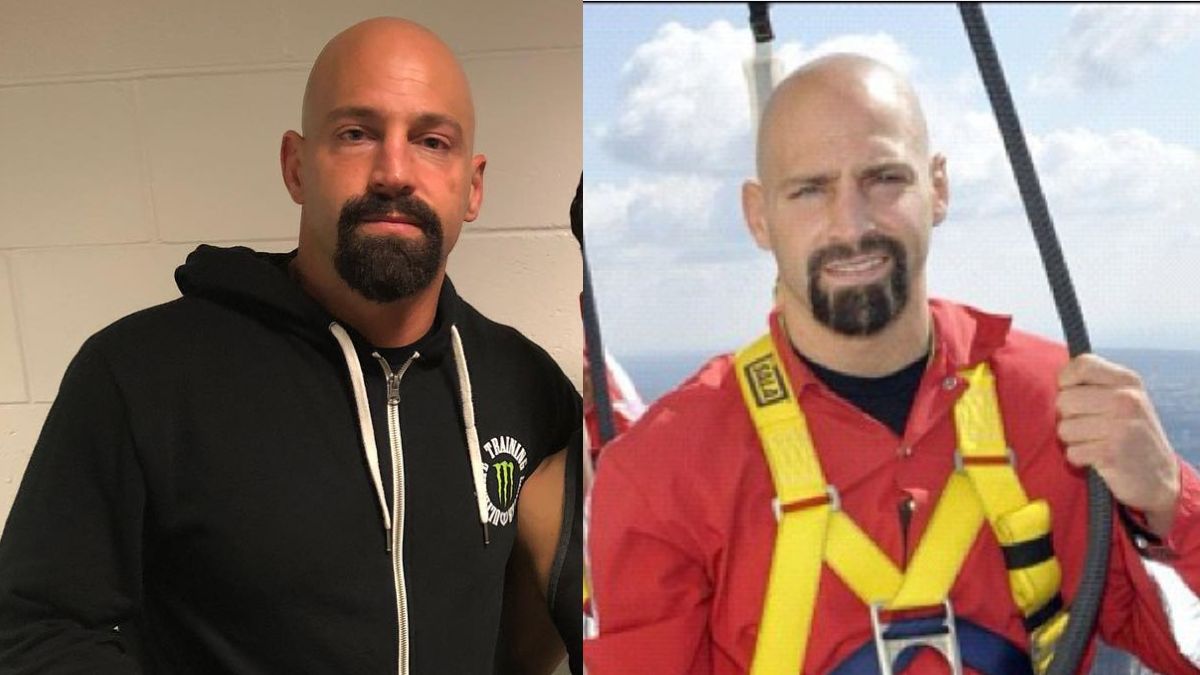
Khalil “Tiki” Ghosn was born on February 9, 1977, in California. Most sources list Orange County as his birthplace, though specific city details vary across records. What’s certain is that he grew up in a Lebanese-American household in Southern California during the late 1970s and 1980s, a period when mixed martial arts didn’t yet exist as a recognized sport in America.
He is 48 years old as of 2026, a retired welterweight fighter who competed professionally from 1998 to 2009, and now runs one of the most successful fighter management agencies in MMA. His story touches three distinct eras of the sport: the early days when the UFC was still finding its identity, the explosion of MMA into mainstream consciousness, and the modern business infrastructure that supports fighters outside the cage.
His career also carries controversy that cannot be ignored in any honest biography, though the legal truth of those matters remains unresolved.
Early Yers and Family Background
The Ghosn surname traces back to Lebanese roots, part of the broader Lebanese diaspora that settled across the United States throughout the 20th century. Tiki grew up in a middle-class family with at least one sibling—his sister Miriam, who would later recall in interviews that her younger brother showed combative tendencies from an early age.
According to family accounts, Tiki got into scuffles during grade school, behavior that his parents observed with a mixture of concern and acceptance. His mother reportedly shielded herself from watching the violence of his later fights, while his father maintained a calm presence during viewings. This dynamic suggests a household that supported his athletic pursuits while understanding the physical risks that came with them.
He attended Mater Dei High School in Santa Ana, California, one of the most successful athletic programs in the state. He played defensive back on the football team during the 1995 season, when Mater Dei went undefeated and won a national championship. That experience—being part of a championship team at a school known for producing college and NFL talent—gave him early exposure to high-level competition and the discipline required to succeed in team sports.
After high school, he briefly attended Orange Coast College. It was during this period that his athletic path took an unexpected turn.
The Shift From Football to Fighting
While playing football, Ghosn took up Muay Thai kickboxing as a form of cross-training. The decision was practical at first—improving footwork, conditioning, and explosiveness for the defensive back position. But something about the martial art resonated deeper than football ever had.
He made the decision to leave football behind and pursue mixed martial arts full-time. This was 1997 or 1998—years when MMA was still banned in many states, when the sport had no mainstream media coverage, and when professional fighters often worked second jobs because purses alone couldn’t support them. Choosing MMA over football was choosing uncertainty over a clearer path.
His professional debut came in June 1998 against Genki Sudo, a Japanese fighter who would later become one of the sport’s cult heroes. Ghosn lost that fight. He went on a three-fight winning streak afterward and earned a contract with the UFC, the organization that was slowly building legitimacy after nearly going bankrupt in the mid-1990s.
The UFC Years and the Robbie Lawler Fight
Ghosn competed in the UFC, Strikeforce, World Fighting Alliance, King of the Cage, and World Extreme Cagefighting during his career. His professional record finished at 10 wins and 8 losses—a respectable mark for someone competing during an era when fighters often took short-notice bouts against mismatched opponents just to stay active.
His most famous fight came at UFC 40 in November 2002 against Robbie Lawler, who would go on to become one of the greatest welterweights in UFC history and a future world champion. Lawler knocked Ghosn out in less than ninety seconds. In the post-fight interview, Ghosn falsely claimed the referee had stopped the fight due to a cut he suffered. Video footage showed clearly that he had been knocked unconscious. The claim damaged his credibility with fans and media, though whether it was a deliberate lie or confusion from being knocked out remains debatable.
He was one of four original MMA fighters managed by Dana White before White became president of the UFC. That early relationship with White—who would go on to transform the UFC into a billion-dollar organization—speaks to Ghosn’s positioning within the sport’s inner circles even as a mid-tier competitor.
He was also one of the three original members of Team Punishment alongside Tito Ortiz and Rob McCullough. He trained and sparred with Quinton “Rampage” Jackson, who became a UFC Light Heavyweight Champion. These connections built a network that would serve him long after his fighting career ended.
Read Also: Michael Morales Biography: Early Life, MMA Career & Personal Journey
Huntington Beach Ultimate Training Center
On January 1, 2001, while still competing actively, Ghosn opened the Huntington Beach Ultimate Training Center in California. According to industry accounts, it was California’s first real mixed martial arts training center—a facility purpose-built for MMA rather than a traditional martial arts gym that added MMA classes as an afterthought.
The gym attracted top-level talent. Ghosn worked with Michael Bisping, B.J. Penn, Rob McCullough, Quinton Jackson, Tito Ortiz, Jason Miller, Ricco Rodriguez, Cheick Kongo, Joey Beltran, Brandon Halsey, and Ken Shamrock—a roster of champions, title challengers, and fan favorites that gave the gym credibility across weight classes and fighting styles.
He appeared as a guest coach on “The Ultimate Fighter: Heavyweights” and “The Ultimate Fighter: Team Bisping vs. Team Hendo,” which brought him visibility beyond the hardcore MMA fanbase. His reputation as a coach and trainer grew even as his own competitive career wound down.
He officially retired from fighting in 2009 at age 32 with a 10-8 professional record.
Arsenal Sports Agency and Fighter Management
After retiring, Ghosn founded Arsenal Sports Agency, a fighter management company that represents MMA athletes in contract negotiations, sponsorships, and career planning. By 2025, the agency had grown to represent over 20 active fighters.
His client roster includes some of the biggest names in the sport: Dustin Poirier, Aljamain Sterling, Brian Ortega, Paulo Costa, Tracy Cortez, Mackenzie Dern, and Chael Sonnen, among others. Managing fighters of this caliber requires deep relationships with promotions like the UFC and Bellator, understanding of fight purses and pay-per-view points, and the ability to negotiate leverage for clients who have limited bargaining power in a sport where the promotion holds most of the cards.
His personal connections from his fighting days—particularly his long-standing friendship with Dana White—likely aided client acquisition and deal-making. Arsenal Sports Agency positioned itself as a boutique firm specializing in experienced athletes who benefit from Ghosn’s insider knowledge.
According to his management company profile, he maintains close ties to leading MMA promotions and has built a business model around steady growth rather than rapid expansion. The agency’s success reflects Ghosn’s ability to transition from athlete to businessman—a shift many fighters attempt but few execute successfully.
Read Also: Gina Carano Biography: Parents & Family Background, Acting & MMA Career
Public Controversy
In August 2024, former UFC middleweight champion Sean Strickland publicly accused Ghosn of sexual assault. Strickland claimed on social media that Ghosn had repeatedly assaulted a woman during his time training at the Huntington Beach Ultimate Training Center years earlier. Strickland stated his information came from the alleged victim’s father and that he was prepared to support legal proceedings, including crowdfunding costs if necessary.
The allegations prompted reactions within the MMA community. Aljamain Sterling, a client of Arsenal Sports Agency and former UFC bantamweight champion, addressed the matter on social media, stating he had only recently become aware of the accusations and that “this is not a reflection of me, in any form.”
As of early 2026, Ghosn has not issued a public statement or video denial regarding the claims. Strickland alleged that Ghosn considered pursuing a defamation lawsuit but no such legal action has been publicly filed. No criminal charges have been filed, no arrests have been made, and no civil lawsuit has been filed by any alleged victim.
These allegations exist in the public record and have been reported by multiple MMA media outlets. They have not been proven in any legal forum, and Ghosn maintains the presumption of innocence that applies to all unproven accusations. The matter remains unresolved.
Personal Life
Ghosn stands 5 feet 10 inches tall and competed at 170 pounds during his welterweight career. He has maintained privacy around most aspects of his personal life, including relationships and family beyond his sister Miriam.
According to some sources, he previously dated Arianny Celeste, a UFC Octagon Girl, though neither party has confirmed this publicly and details remain limited.
He has not publicly discussed religious beliefs, marital status, or whether he has children. These aspects of his life remain private.
Net Worth and Financial Standing
Estimating Ghosn’s net worth requires significant caution. His income derives from multiple sources: ownership of Huntington Beach Ultimate Training Center, which has operated for over two decades; management fees from Arsenal Sports Agency clients, which typically range from 10-20% of fighter earnings; and potentially residual income from past endorsements or appearances.
Various online sources have estimated his net worth in the range of $1 million to $3 million, though these figures are speculative. Fighter management income depends on client success—purses, win bonuses, sponsorships—which fluctuates fight-to-fight. Gym ownership provides steadier income but involves overhead costs that reduce net profit.
Without confirmed financial disclosures, any net worth figure represents educated guesswork rather than verified information. What’s clear is that he built sustainable income streams beyond his fighting career, which many retired fighters fail to do.
Read Also: Who Is Taylor Heise? Parents, Height, Career Stats, PWHL Salary & Olympics
About The Author