
Reza Pahlavi is the eldest son of Mohammad Reza Pahlavi, the last Shah of Iran, and has lived in exile since the 1979 Iranian Revolution. For over four decades, he has positioned himself as a voice for Iranians seeking democratic change.
Born into royalty but raised in exile, his life story reflects the complexities of displacement, inherited legacy, and the challenge of representing a nation he left as a teenager.
Early Life and Royal Background
Reza Pahlavi was born on October 31, 1960, in Tehran, Iran. His father was Mohammad Reza Pahlavi, the Shah of Iran, and his mother was Farah Pahlavi, who held the title of Shahbanu (Empress).
As the eldest son, he was named Crown Prince at age seven during his father’s coronation ceremony in 1967. His childhood was spent in royal palaces with access to elite education and training.
He showed early interest in aviation and earned his pilot’s license at age 12, which was remarkably young even for someone with royal privileges and resources.
Education and Departure from Iran
In August 1978, at age 17, Reza left Iran to attend fighter pilot training at Reese Air Force Base in Lubbock, Texas. This departure came just months before the revolution that would change everything.
According to his official profile, the Iranian Revolution in January 1979 forced the entire royal family into permanent exile. Reza completed his military training in the United States but never returned home.
After his father’s death in Cairo, Egypt, on July 27, 1980, some monarchist supporters declared Reza the rightful heir. He was only 19 years old at the time.
His education continued in exile. He attended multiple institutions including Williams College and eventually earned a degree in political science from the University of Southern California in 1985.
Read Also: Jesse Jackson Biography: Wife, Children, Death, Family, Education & Career Journey
Parents and Family Background
Reza’s father, Mohammad Reza Pahlavi, ruled Iran from 1941 until the 1979 revolution. The Shah implemented modernization programs but faced criticism for authoritarian governance and suppression of political opposition.
His mother, Farah Diba Pahlavi, was the Shah’s third wife and became Shahbanu (Empress) of Iran. She was known for promoting arts and culture during her time in Iran and continued humanitarian work after exile.
Reza has siblings who also grew up in exile. His younger brother Ali Reza died by suicide in 2011 in Boston. His sister Leila passed away in 2001 in London. Another sister, Farahnaz, lives privately.
The family’s experience of exile has been marked by personal tragedies that affected each member differently over the decades.
Marriage to Yasmine Etemad-Amini
In 1986, Reza married Yasmine Etemad-Amini in a ceremony held in Greenwich, Connecticut. Yasmine was also born in Iran but left during the revolution and grew up in the United States.
Yasmine earned her law degree from George Washington University and worked as a staff attorney for the Children’s Law Center in Washington, D.C., for ten years. She has been involved in charitable work focused on children’s welfare.
She co-founded the Foundation for the Children of Iran in 1991, though she later stepped back from leadership roles. The foundation focuses on humanitarian causes related to Iranian children.
The couple has maintained a relatively private family life in the United States, away from the spotlight that surrounds political opposition movements.
Three Daughters
Reza and Yasmine have three daughters. Their eldest daughter, Noor Pahlavi, was born on April 3, 1992. She has been involved in social causes and speaks publicly about issues affecting Iran.
Their second daughter, Iman Pahlavi, was born on September 12, 1993. In June 2025, she married Bradley Sherman, an American entrepreneur, in a ceremony held in Paris. This was the first wedding among the grandchildren of the late Shah.
Their youngest daughter, Farah Pahlavi, was born on January 17, 2004. She was named after her grandmother, the former Shahbanu of Iran.
All three daughters were raised in the United States and have pursued their own interests while maintaining connections to their Iranian heritage through family and community.
Life in Exile: Potomac, Maryland
The Pahlavi family has lived primarily in Potomac, Maryland, a suburb of Washington, D.C., for many years. This location provides proximity to political institutions and the Iranian diaspora community.
Their home life is described as relatively quiet and private compared to the public nature of Reza’s political activities. Neighbors and community members report that the family maintains a low profile in daily life.
Living near the capital has allowed Reza to engage with policymakers, media organizations, and other opposition figures while raising his family in a stable environment.
The Washington, D.C. area hosts one of the largest Iranian diaspora communities in the United States, providing cultural connections for the family.
Physical Appearance and Personal Details
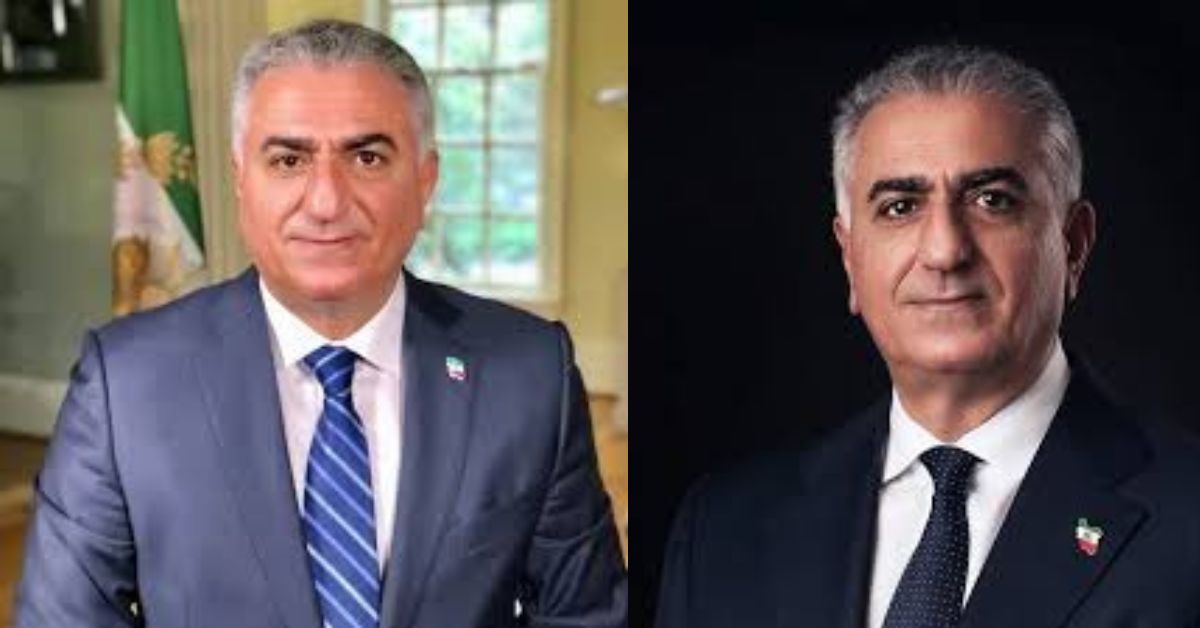
Reza Pahlavi is now 65 years old. He stands approximately 5 feet 10 inches tall with a build that reflects his age and lifestyle.
He typically appears in professional attire during public appearances and interviews, maintaining a formal presentation style appropriate for his role as a public figure.
His appearance and demeanor reflect both his royal upbringing and his decades living in the West, combining formality with accessibility in public settings.
Net Worth and Financial Situation
Reza Pahlavi’s exact net worth is not publicly known, as he does not release financial statements. After the 1979 Iranian Revolution, members of the former royal family left Iran and reportedly maintained assets abroad. However, there are no verified public records that confirm the current value of those assets.
Over the years, Pahlavi has said in interviews that he does not receive money from foreign governments. Media outlets have reported that he primarily lives on remaining family wealth and private support from individuals who back his advocacy work. Because there is no official financial disclosure, any specific net worth figure found online should be viewed as an estimate rather than confirmed fact.
Role in Iranian Opposition
Since the revolution, Reza Pahlavi has positioned himself as an advocate for democratic change in Iran. He gives interviews to international media and speaks at events related to Iranian issues.
He has stated publicly that he supports secular democracy and believes Iranians should choose their own form of government through free elections. He has said he would accept either a constitutional monarchy or a republic based on popular choice.
His approach has evolved over the decades from claiming royal authority to positioning himself as a facilitator of democratic transition rather than a future ruler.
He maintains relationships with various opposition groups, though not all Iranian dissidents support or accept his leadership claims.
Public Speaking and Media Presence
Reza Pahlavi appears regularly on international news programs, including American, European, and Middle Eastern media outlets. He discusses Iranian politics, human rights, and his vision for Iran’s future.
He maintains active social media accounts where he shares statements, videos, and commentary on events inside Iran. His online following includes hundreds of thousands of people, primarily from the Iranian diaspora.
He has written opinion pieces for major publications and speaks at conferences, universities, and think tanks about Iran-related topics.
His communication style emphasizes democratic values, human rights, and peaceful transition, though his actual influence inside Iran remains debated.
Read Also: Jasmine Crockett Biography: Political Journey, Education, Parents & Family Background
About The Author