Matt Weston is Britain’s most successful skeleton racer and currently the world’s best in the sport. At 28 years old, he holds every major title skeleton racing offers—Olympic champion, two-time World champion, two-time European champion, and three-time overall World Cup winner. He’s the only male athlete in history to simultaneously hold all four major titles.
His path to dominance wasn’t typical. He didn’t grow up sliding down ice tracks—he competed in taekwondo and rugby until age 20, when a talent identification program introduced him to skeleton in 2017. Within eight years, he transformed from complete beginner to Olympic gold medalist, breaking four consecutive track records at the 2026 Milano Cortina Olympics.
Profile OverView
| Category | Details |
|---|---|
| Full Name | Matt Weston |
| Date of Birth | March 2, 1997 |
| Age | 28 years old (as of 2026) |
| Birthplace | Redhill, England |
| Hometown | Kent, England |
| Height | 6’0″ (183 cm) |
| Sport | Skeleton |
| Current Status | Olympic, World, European, and World Cup Champion |
| School | Bennett Memorial Diocesan School, Tunbridge Wells, Kent |
| Parents | Alison Weston (mother), Tom Weston (father) |
| Previous Sports | Taekwondo, Rugby |
Parents and Family Background
Matt’s parents are Alison and Tom Weston. They traveled to Cortina d’Ampezzo, Italy in February 2026 to watch their son win Olympic gold—a moment Matt described as making the achievement even more special.
His parents supported his athletic pursuits from his youth through taekwondo and rugby, and later through his unconventional transition to skeleton at age 20. Matt has mentioned that his family provides crucial emotional support, especially given that he spends six months per year away from home competing internationally.
He grew up in Kent, England, specifically in the Tunbridge Wells area. His family wasn’t involved in winter sports—skeleton came into his life through a talent identification program rather than family tradition.
Early Life and Education
Born March 2, 1997 in Redhill, England, Matt grew up in Kent. He attended Bennett Memorial Diocesan School in Tunbridge Wells, where he balanced academics with serious athletic training in taekwondo.
During his youth, he competed nationally and internationally in taekwondo. At the 2012 European Cup in Slovakia, he won both gold and silver medals while representing England—significant achievements showing his competitive ability at age 15.
He also played rugby at a high level, representing Kent county teams and playing for Sevenoaks RFC and a Saracens Academy college program. Rugby developed his physical strength and competitive mentality that would later benefit his skeleton career.
Career Before Skeleton
Matt’s athletic career focused on taekwondo and rugby until age 17, when a stress fracture in his back forced him to quit taekwondo. Overtraining had caused the injury, making the combat sport too dangerous to continue.
After quitting taekwondo, he continued with rugby while also working with a weightlifting coach to maintain fitness. In December 2017, this weightlifting coach suggested he try “Discover Your Gold”—a UK Sport talent identification program designed to find athletes with potential for Olympic sports.
The program assessed his physical attributes and identified skeleton as a potential match. At age 20, having never tried skeleton, he began training to see if he had what it took.
His initial training included work with the Royal Marines—a grueling process designed to test both physical and mental toughness. The Marines training prepared him for skeleton’s demands: explosive power, mental resilience, and ability to perform under pressure.
Read Also: Victoria Mboko’s Story: Family, Discipline and a Breakthrough in Tennis
Breaking Into Skeleton Racing
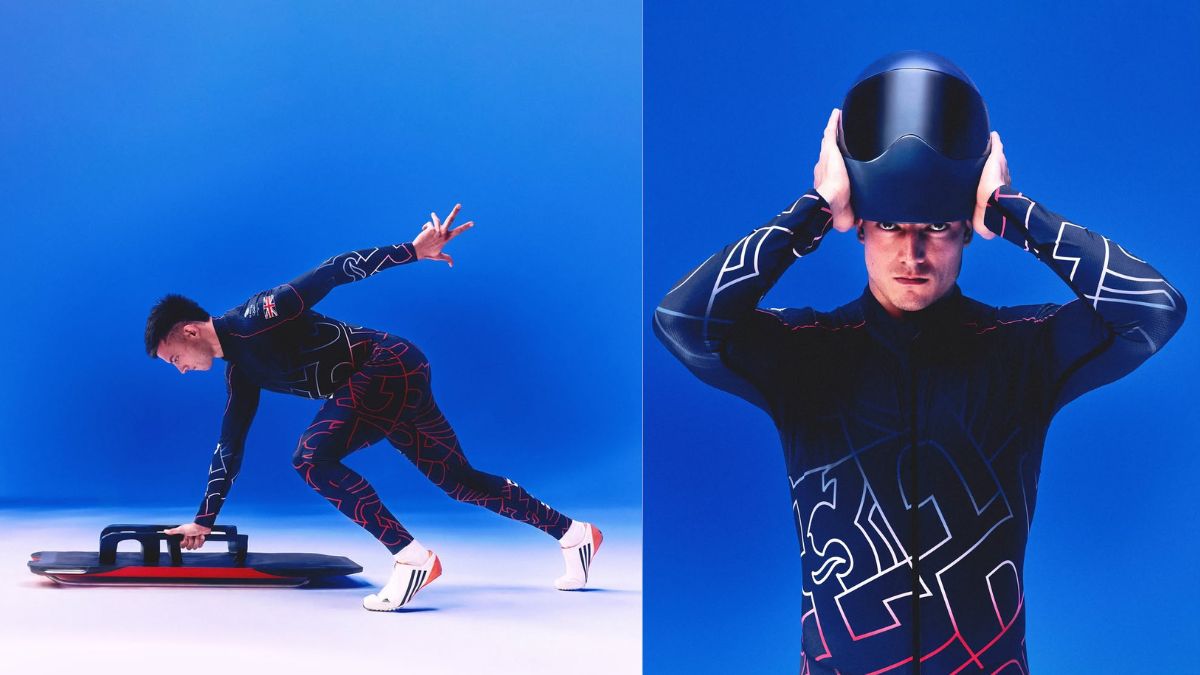
Matt competed in skeleton for the first time in 2019 at age 22—extremely late compared to most elite skeleton athletes who start in their teens. His debut came on the Europa Cup circuit (the second tier below World Cup) in Winterberg, Germany, where he finished 15th.
What happened next showed his natural talent. In his first three Europa Cup races, he won two titles—silver at Igls, Austria and bronze at Altenberg, Germany. These results fast-tracked him to World Cup competition.
In January 2020, he made his World Cup debut. By December 2020, in just his fifth World Cup start, he won silver at Innsbruck—the highest finish by a British man since Kristan Bromley in 2010.
In November 2021, he won his first World Cup gold at Innsbruck in a three-way tie with Germany’s Christopher Grotheer and China’s Geng Wenqiang. It was Great Britain’s first men’s World Cup gold in 14 years.
The 2022 Olympics and Crisis Point
Matt competed at the 2022 Beijing Winter Olympics finishing 15th—a disappointing result for someone who had already won World Cup races. More significantly, Great Britain failed to win any skeleton medals for the first time since the sport returned to the Olympics in 2002.
According to Team GB official profile, he seriously considered quitting skeleton after Beijing. Equipment problems had undermined confidence despite his proven ability. The entire British skeleton team struggled with “intense emotional fallout” and questioned whether they could rebound.
He has spoken openly about the mental challenges during this period—dealing with pressure of representing a historically dominant program while facing setbacks. The British team took a risk with equipment that didn’t work, and rebuilding motivation required time and support.
The Comeback and Dominance
The 2022-23 season marked his transformation into skeleton’s dominant force. The British team reset everything—new coaches, new equipment philosophy, new approach.
In November 2022, he finished third at the season-opening World Cup in Whistler. In December, he won gold at Lake Placid. In January 2023, he won bronze in Winterberg and back-to-back golds in Altenberg.
One of those Altenberg victories doubled as the European Championships, making him European champion. Later that month at the World Championships in St. Moritz, he won his first world title with a combined time of 4:28.71, becoming the first British man to be world skeleton champion since Kristan Bromley in 2008.
“It’s an absolute dream to be world champion,” he said. “I knew that I had a good chance after winning the last two World Cups in Altenberg but to actually come here and make it a reality is incredible.”
Three-Time World Cup Champion
Matt won his first overall World Cup title in the 2023-24 season. Heading into the final race at Lake Placid, he trailed Germany’s Christopher Grotheer by 75 points. Grotheer finished 17th while Matt placed fourth—enough to claim the overall title.
He also won silver at the 2024 World Championships in Winterberg, finishing 0.23 seconds behind Grotheer, and silver in the mixed team event with Tabby Stoecker.
In the 2024-25 season, he won his second consecutive overall World Cup title, establishing himself as the sport’s most consistent performer.
During the 2024-25 season, he won five of seven World Cup races. The other two were won by his British teammate Marcus Wyatt—meaning British men won every single race that season.
In January 2025, he reclaimed the World Championship title, becoming the first British skeleton athlete—male or female—to win two world titles.
View this post on Instagram
2026 Olympic Gold and Historic Achievement
Matt arrived at the 2026 Milano Cortina Olympics as the overwhelming favorite—reigning world champion, European champion, and three-time World Cup winner. The pressure was immense.
On February 13-14, 2026, he delivered one of the most dominant Olympic performances in skeleton history. As documented by ESPN, he set track records in all four runs at the Cortina Sliding Centre—an unprecedented achievement.
His combined time of 3:43.33 beat silver medalist Axel Jungk of Germany by 0.88 seconds. He was faster in each successive run, turning his final slide into a victory lap.
When he crossed the finish line, he broke into tears and hugged his coach Martins Dukurs—the Latvian legend and 2014 Olympic champion who had been considered the world’s best until Matt surpassed him.
He became the first British man to win Olympic skeleton gold. Amy Williams (2010) and Lizzy Yarnold (2014, 2018) had won for British women, but no British man had achieved it. He’s only the third British man to win individual Winter Olympic gold—joining figure skaters John Curry (1976) and Robin Cousins (1980).
More remarkably, he became only the second male athlete in skeleton history to simultaneously hold Olympic, World, European, and World Cup titles—and the first to hold all four championships at the same time.
Physical Attributes and Unusual Skills
At 6’0″ (183 cm) and 183 pounds (83 kg), Matt has an ideal build for skeleton—powerful enough for explosive push starts yet streamlined for aerodynamic speed down the track.
Skeleton requires specific physical capabilities: explosive leg power for the push start (which lasts about 5 seconds), core strength for maintaining aerodynamic position while lying face-down on a sled at 80+ mph, and mental toughness to stay calm while racing head-first down ice at extreme speeds.
One unusual fact: Matt is on record stating he can juggle and ride a unicycle at the same time—a quirky skill that shows exceptional balance and coordination.
Personal Life and Relationship
Matt is engaged to his fiancée Alex (her surname hasn’t been publicly disclosed). She was present in Cortina to watch him win Olympic gold alongside his parents.
He has spoken about how challenging his career is on their relationship—he’s away from home for six months each year competing internationally, and the lifestyle of a skeleton athlete isn’t glamorous. Despite this, she remains supportive.
“They’re the ones that are pushing me the most,” he said after winning gold. “My fiancée, I’m out of the country for six months of the year and it’s not a glamorous lifestyle being a skeleton athlete but she’s still always there supporting me.”
Net Worth and Financial Reality
Matt’s estimated net worth is approximately £200,000-400,000. His income comes from UK Sport funding for elite athletes, prize money from World Cup victories and championships, and potential sponsorships.
British skeleton athletes receive funding through UK Sport’s World Class Programme, which provides salaries for medal-potential athletes. World Cup victories come with prize money, and championship medals carry bonuses.
Unlike mainstream professional sports, skeleton doesn’t offer lucrative contracts. Athletes compete primarily for national pride and personal achievement rather than wealth.
Read Also: Federica Brignone Biography: Career, Family and Journey in Alpine Skiing
About The Author