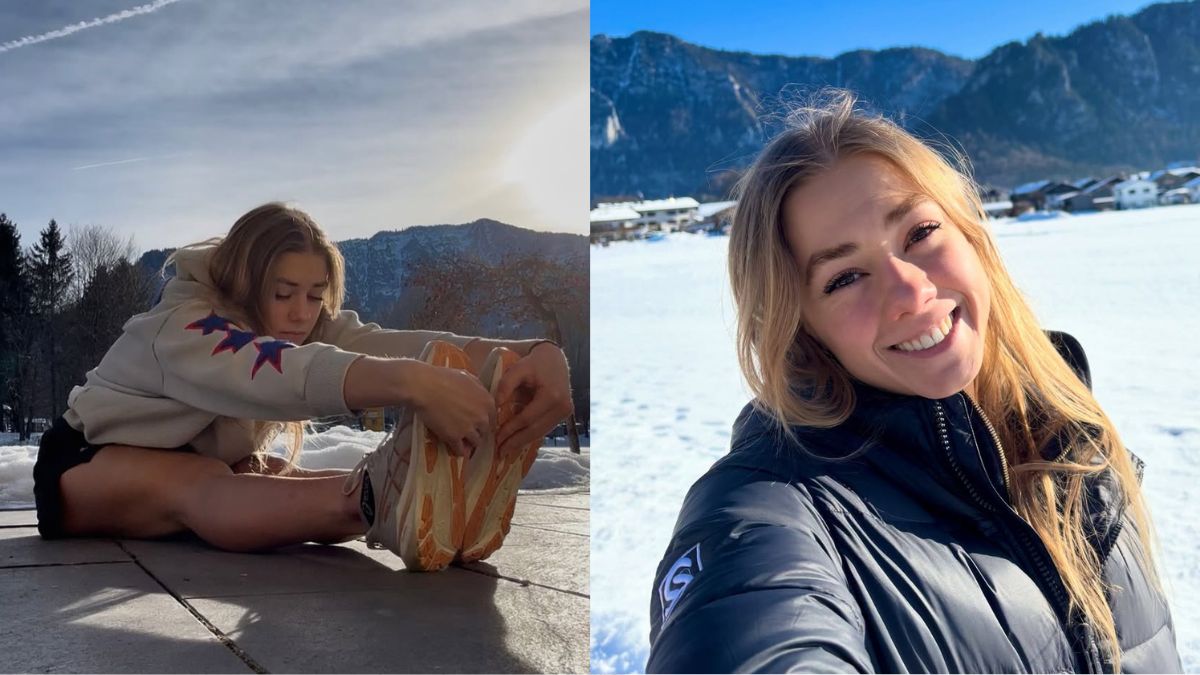
Greta Myers never planned to become a speed skater. She was a hockey player, fast and fearless, spending winters on Minnesota ice like thousands of other kids. Then a Russian coach named Andre Zukov watched her skate and said something that changed everything: “Come speed skate. Your country needs you.”
She was 12 years old. She said okay. Now, at 21, she’s competing at the 2026 Winter Olympics in Italy, representing Team USA in four events. Her rise happened fast—just 10 years from putting on speed skates for the first time to racing against the world’s best.
Quick Profile
| Field | Details |
|---|---|
| Full Name | Greta Myers |
| Birthday | May 22, 2004 |
| Age | 21 years old |
| Hometown | Lino Lakes, Minnesota |
| Height | Information not publicly available |
| Parents | Joe Myers (father), Sheila Myers (mother) |
| Siblings | Three siblings (two sisters who play hockey, one brother) |
| Current Home | Milwaukee, Wisconsin (training base) |
| Sport | Speed Skating (Long Track) |
| Olympic Events | 1500m, 3000m, Mass Start, Team Pursuit |
Parents and Family
Greta’s father is Joe Myers, who put her on ice skates before she could barely walk. He gave her a nickel for every lap she completed around the rink when she was little. “That was a good motivator,” Greta recalled. “As a kid, when you can put those in your piggy bank, that’s so exciting.”
Her mother is Sheila Myers. Together, Joe and Sheila raised four children in Lino Lakes, a small Minnesota town where ice skating is part of winter life. Greta has two sisters and a brother. Her sisters also play hockey, making the Myers household very active and sports-focused.
The family became “rink rats” according to Greta—spending countless hours at ice rinks for practices, games, and training. This environment gave all the Myers children comfort on ice that most people never develop.
When Greta was in high school and her speed skating career started taking off, Joe told her the truth about what it would take. After she said she wanted to stand on an Olympic podium, he explained that reaching that goal would require sacrifices in her personal life. “Nothing else can interfere with what you want to do,” he told her. “That’s the way it’s got to be.”
She understood and accepted those terms.
Growing Up in Minnesota
Greta was born on May 22, 2004, in Minnesota. She attended several schools growing up: Hand in Hand Christian Montessori in Roseville, Mounds Park Academy in St. Paul, and Gentry School in Vadnais Heights. She also ran track for Concordia Academy, competing in the 1600 and 3200 meter races.
Her first love was hockey. She started skating at age two and began playing organized hockey soon after. She played for Centennial and Roseville teams, always the fastest player on the ice.
Speed skating entered her life by accident in 2016. She was at the Roseville Oval for hockey practice when Andre Zukov, a Russian coach working with the high-performance speed skating team, approached her afterward with his memorable recruitment pitch.
She tried it. She liked it. But she didn’t quit hockey immediately—she did both sports for two years, which meant an exhausting schedule of practices, games, and competitions.
Choosing Speed Skating Over Hockey
By age 14, Greta faced a difficult choice. She couldn’t keep doing both sports at a high level—the training schedules conflicted and her body needed rest. She had to pick one.
She chose speed skating for a specific reason: control. “With speed skating I like that I can have more control over my success,” she explained. “It’s very self-focused.”
In hockey, your performance depends partly on teammates. In speed skating, your result comes directly from your own preparation, technique, and effort. For someone competitive and self-driven, that appealed to her.
Her hockey coaches were supportive. Craig Rosenthal, one of her coaches, said: “Greta is a great kid and teammate.” The decision meant giving up something she loved, but it opened doors she couldn’t have imagined.
Moving Away for Training
As Greta’s talent became clear, she made another big sacrifice. During her junior year of high school, she moved to Milwaukee, Wisconsin, to train under Bob Corby—one of America’s best speed skating coaches. Corby also coaches Jordan Stolz, one of the world’s top male skaters.
Moving meant leaving her family, living with a host family, and taking online classes to finish high school while training full-time. Most teenagers wouldn’t consider this, but Greta was focused on her Olympic goal.
Coach Corby saw her potential immediately. “She is really strong. She’s got a big engine,” he said, noting that she’s operating on an accelerated timeline compared to most female speed skaters, who typically peak between ages 23 and 27.
Major Achievements
Greta’s career highlights include:
2023 World Junior Championships: Won four medals including silver in the overall standing and team pursuit, plus bronze in both 1000m and 1500m. Her overall silver made her the first American woman in 20 years to medal in the all-around at World Junior Championships.
2024 Four Continents Championships: Won two bronze medals in her first year competing as a senior.
2025 World Championships: Placed 5th in team pursuit, 15th in mass start, and 20th in 1500m—solid results competing against the world’s best.
Junior National Records: Set records in the 500m, 1000m, and 1500m at the junior level.
2026 Olympics: Qualified for Team USA and competed in four events at the Milan Cortina Games.
Personal Life
Greta is currently single and focused entirely on her skating career. She lives in Milwaukee for training but considers Minnesota home. According to Team USA profile, when she’s not training, she enjoys cooking, baking, reading, painting, and gardening—quiet, introspective activities that balance the intensity of competitive sport.
She’s described as soft-spoken and mellow off the ice, a contrast to the fierce competitor who pushes herself in training. She values time with family and friends when her schedule allows, though training demands mean she can’t visit Minnesota as often as she’d like.
Net Worth
Greta Myers does not have any publicly confirmed net worth, which is common for young Olympic athletes in sports like speed skating. At this level, athletes do not earn large salaries. Prize money from World Cup and championship events exists, but it is limited and usually helps cover travel and competition costs rather than generate income.
Her primary financial support comes from Team USA funding, which provides coaching, training facilities, medical care, and partial travel assistance. She also has a verified partnership with Blaze Credit Union in Minnesota, helping support her training journey. Like many Olympic athletes, Greta’s career is driven by performance and opportunity rather than financial gain, with community and institutional support playing a key role in making elite competition possible.
The 2026 Olympics
At the Olympic trials in Milwaukee in January 2026, Greta had a scary moment. During her 1500m heat, she accidentally made contact with American veteran Brittany Bowe, triggering an automatic disqualification. “I knew the moment I hit her, I was like, ‘Oh dang,'” she said.
Despite that setback, her overall performances earned her spots on the Olympic team in four events: 1500m, 3000m, mass start, and team pursuit. She also served as a reserve for the 5000m.
Competing at 21 years old, she’s one of the youngest on Team USA’s speed skating squad. According to recent coverage in the Star Tribune, her youth and rapid improvement suggest her best performances may still be ahead of her.
Read Also: Jessie Diggins: Career, Family Background and Personal Life
About The Author