Frank Reich is respected in American football as both a player who engineered historic comebacks and a coach who developed championship-winning offenses. Even after his coaching career ended, people search for his story because it represents resilience, faith, and adaptability across four decades in professional football.
His journey matters because it shows how setbacks can become preparation for future success. He spent most of his playing career as a backup quarterback but became known for the two biggest comebacks in football history. After retirement, he earned a divinity degree and served as a pastor before returning to coach at the highest levels of the NFL.
| Category | Details |
|---|---|
| Full Name | Frank Michael Reich |
| Date of Birth | December 4, 1961 |
| Age | 63 years (as of January 2026) |
| Birthplace | Freeport, New York |
| Nationality | American |
| Height | 6’4″ (193 cm) |
| Profession | Football Coach, Former NFL Quarterback |
| Playing Position | Quarterback (1985-1998) |
| Coaching Role | Offensive Coordinator, New York Jets |
Growing Up in Lebanon, Pennsylvania
Frank Reich was born to German American parents, with his father, Frank Reich Sr., having played college football as a center and linebacker for the Penn State Nittany Lions from 1953 to 1955. His mother, Patricia “Pat” Reich, was a physical education teacher and coach at the middle school level.
Shortly after his birth, his family relocated to Lebanon, Pennsylvania, where Reich spent his formative years. This small town environment shaped his values around community, hard work, and faith.
His father was drafted by the Philadelphia Eagles in 1956 but did not play in the NFL, instead pursuing a career as a high school football coach and technology education teacher at Lebanon High School, retiring in 1992. His mother coached track, field hockey, and cheerleading at the school level.
Both parents emphasized education and athletics in raising their family in Lebanon, Pennsylvania. Growing up in a household where both parents were educators and coaches created an environment where sports were viewed as tools for teaching discipline and character.
His brother Joe also went into coaching, serving as head football coach at Wingate University from 2001 to 2023 before being promoted to head athletic director. Athletics ran deep in the Reich family.
High School Years
Reich’s childhood was immersed in sports, playing baseball, basketball, and football. He attended Cedar Crest High School in Lebanon, Pennsylvania, where he excelled as a three-sport athlete.
During his junior and senior years, he started as the quarterback for the football team. His talent was evident, earning him a spot in the prestigious Big 33 Football Classic in 1980 following his senior year—an all-star game featuring Pennsylvania’s top high school players.
His high school success earned him an athletic scholarship to the University of Maryland, where his football journey would take an unexpected turn.
College Career and the First Great Comeback
Upon graduating from high school, Reich received an athletic scholarship to the University of Maryland, where he played for the Maryland Terrapins football team. For his first three years, he served as the backup quarterback, famously rooming with and backing up future NFL star Boomer Esiason.
Playing behind Esiason meant limited opportunities. But on November 10, 1984, everything changed.
After an injury to starter Stan Gelbaugh, Reich entered the game with Maryland trailing 31-0 at halftime against the Miami Hurricanes. He then engineered an extraordinary comeback, leading the Terrapins to a 42-40 victory, which, at the time, marked the largest deficit ever overcome in a college football game.
This performance changed how NFL scouts viewed him. He was drafted by the Buffalo Bills in the third round of the 1985 NFL draft, 57th overall.
NFL Playing Career
He spent 14 seasons in the NFL, mostly as a backup quarterback. For ten years with the Buffalo Bills (1985-1994), he backed up Hall of Fame quarterback Jim Kelly.
According to his Pro Football Reference profile, he appeared in four consecutive Super Bowls with Buffalo from 1991-1994, though the team lost all four championship games.
His defining moment as a player came on January 3, 1993, in a playoff game against the Houston Oilers. With Kelly injured, he entered the game with Buffalo trailing 35-3 in the third quarter—a 32-point deficit.
He led the Bills to win 41-38 in overtime, a feat that remains the largest postseason comeback in NFL history. This legendary performance, coupled with his earlier college comeback, solidified his nickname, “The Comeback Kid”.
In 2014, Pro Football Hall of Fame Executive Bill Polian, who was general manager of the Bills when they drafted Reich, called him “the greatest backup quarterback in NFL history”.
After Buffalo, he played for the Carolina Panthers (1995), New York Jets (1996), and Detroit Lions (1997-1998). He threw the first touchdown pass in Panthers franchise history.
The Ministry Years
After retiring from the NFL in 1998, he made an unusual decision for a former professional athlete. Reich pursued ministry work, earning a Master of Divinity from Reformed Theological Seminary and later serving as president of its Charlotte campus from 2003 to 2006.
He also served as a pastor at Ballantyne Presbyterian Church until 2007. During these years, he worked in ministry full-time, preaching, counseling, and leading a congregation.
Throughout Reich’s NFL career, he remained a devout Christian. Reich is a motivational speaker utilizing the great comebacks and the importance of God as a main keynote of his speeches. Reich credits the song “In Christ Alone” by Michael English as his inspiration.
This period wasn’t a break from football—it was following a different calling he felt was equally important.
Return to Football as a Coach
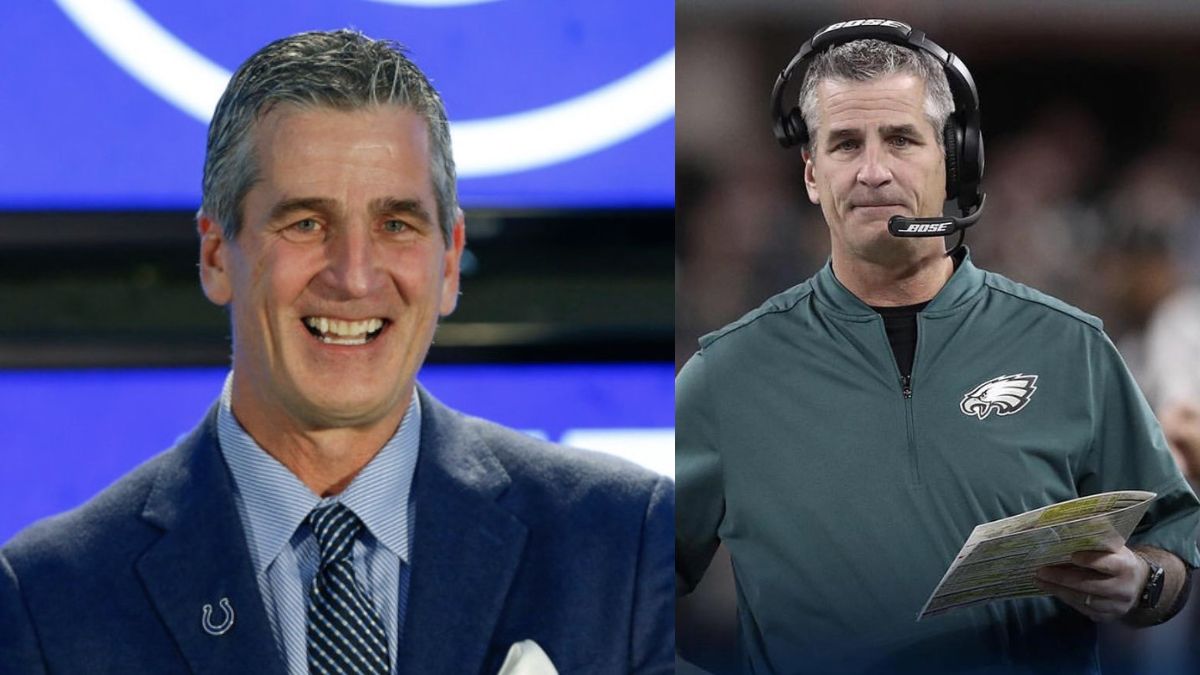
In 2006, at age 45, he transitioned back to football by joining the Indianapolis Colts as an unpaid coaching intern, a role he held through 2007 while learning under head coach Tony Dungy.
He started at the bottom despite his NFL playing experience, working as an intern without pay to learn the coaching profession. This humility impressed everyone in the Colts organization.
Reich’s dedication earned him a promotion in 2008 to offensive assistant. He advanced further in 2009 to quarterbacks coach, a position he held through 2010, directly mentoring Hall of Famer Peyton Manning.
Under Reich’s guidance, Manning earned NFL MVP honors in 2009 and threw for 4,500 yards that season, helping the Colts achieve a 14-2 record, secure the AFC’s top seed, and advance to Super Bowl XLIV.
His coaching career progressed through various positions—wide receivers coach, quarterbacks coach, and offensive coordinator for the San Diego Chargers (2014-2015).
In February 2026, the New York Jets officially named Frank Reich as their offensive coordinator. The move reunited him with the NFL at a time when the Jets were looking to stabilize and rebuild their offense. His experience working with quarterbacks and designing adaptable offensive systems made him a natural fit for the role.
Team leadership emphasized his calm approach, leadership skills, and ability to work through challenging transitions—qualities that have defined his career at every level of football.
The Super Bowl Victory
In January 2016, he was hired as offensive coordinator for the Philadelphia Eagles under new head coach Doug Pederson. This role would define his coaching legacy.
During the 2017 season, quarterback Carson Wentz suffered a torn ACL in December. Backup Nick Foles took over, and the Eagles’ season appeared doomed. But the Eagles won Super Bowl LII on February 4, 2018, defeating the New England Patriots 41-33.
His offensive game plan helped Foles throw for 373 yards and three touchdowns, earning Super Bowl MVP honors. The victory gave him his first championship ring as a coach.
Head Coaching Career
On February 11, 2018, he was hired as head coach of the Indianapolis Colts. According to Stanford’s official athletics website gostanford.com, despite a 1-5 start, Reich guided the Colts to a 10-6 overall record and an appearance in the Divisional Round of the NFL Playoffs during a season that was highlighted by Andrew Luck earning Pro Bowl honors.
He coached the Colts for five seasons (2018-2022), compiling a 40-33-1 record. He was fired on November 8, 2022, after a 3-5-1 start to the season.
He was hired as head coach of the Carolina Panthers in January 2023. The team struggled badly, finishing 1-10 before he was fired on November 27, 2023—making him the first coach fired midseason in back-to-back years.
In March 2025, he was hired as interim head coach at Stanford University. In his lone season as head coach of Stanford football, Reich made an immediate impact. Stanford won four games in 2025, the program’s most wins since 2020, including reclaiming The Axe against rival California.
After a brief period working in college football, Reich returned to the NFL in February 2026. The New York Jets hired him as their offensive coordinator, bringing him back to professional football in a role focused on quarterback development and offensive structure
Wife and Family Life
Reich met his future wife, Linda (née Fick), in sixth grade in Lebanon, Pennsylvania, and the couple married in 1987 while Reich was playing quarterback for the Buffalo Bills.
Reich, 63, and his wife, Linda, have three daughters, Lia, Aviry and Hannah, and four grandchildren.
Lia and Aviry were born in Buffalo during Reich’s tenure with the Bills, while Hannah was born in Charlotte, North Carolina. The family has navigated multiple moves across NFL cities throughout his playing and coaching career.
Linda has been described as a steadfast partner throughout his NFL career, providing support during the frequent relocations that come with coaching in professional football.
Faith and Values
His Christian faith has been central to his life and career. He held Bible studies with teammates during his playing days and felt a vocational pull toward ministry that led to his divinity degree.
His leadership style as a coach reflects his faith values—patience, forgiveness, second chances, and developing people beyond just their athletic abilities. Former players consistently describe him as someone who cared about them as people, not just as football players.
He continues working as a motivational speaker, combining football stories with spiritual themes about resilience, faith, and overcoming adversity.
Net Worth and Earnings
His estimated net worth is $12-15 million, accumulated through his playing career, coaching salaries, speaking engagements, and other ventures.
During his 14-year NFL playing career, he earned steady income as a backup quarterback. While backup salaries were lower than starters, playing for 14 seasons provided financial stability.
His coaching career brought higher earnings. NFL offensive coordinators typically earn $1-2 million annually, and head coaches earn $5-8 million per year. His five years as Colts head coach and one year with Carolina provided substantial income.
He continues earning through motivational speaking, where experienced NFL figures can command $20,000-50,000 per appearance depending on the event.
Read Also: Matt Nagy: Coaching Career, Leadership Choices, and NFL Journey
About The Author