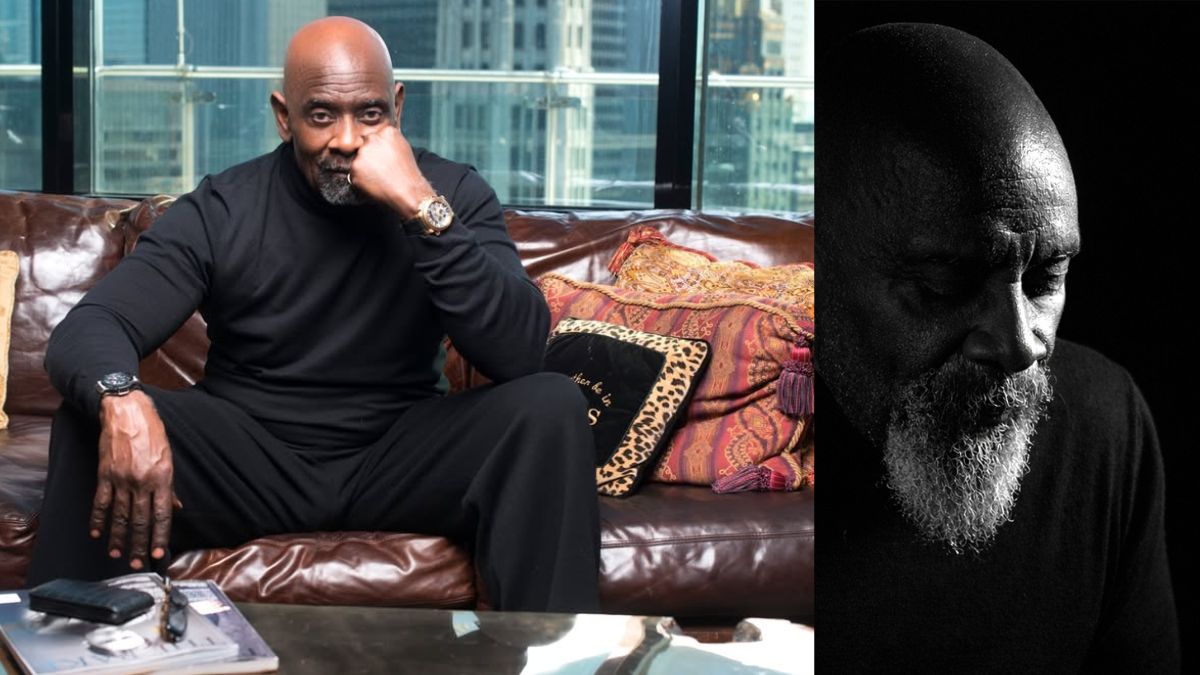
The man sleeping in a locked bathroom at a San Francisco BART station with his toddler son in 1981 couldn’t have imagined that 25 years later, Will Smith would portray his life story in a film that would gross over $300 million worldwide. But Chris Gardner’s journey from that bathroom floor to a $70 million net worth represents more than a rags-to-riches tale—it’s a masterclass in making two critical life decisions and refusing to break them, no matter the cost.
Born into poverty, abuse, and chaos in Milwaukee, he broke every destructive cycle he inherited. At 71 years old in 2026, Gardner stands as living proof that your starting point doesn’t determine your destination, but your decisions during the hardest moments absolutely do.
Quick Profile
| Category | Details |
|---|---|
| Full Name | Christopher Paul Gardner |
| Date of Birth | February 9, 1954 |
| Age | 71 years old (as of 2026) |
| Birthplace | Milwaukee, Wisconsin, USA |
| Height | 6’2″ (1.88 m) |
| Current Residence | Chicago, Illinois, USA |
| Profession | Entrepreneur, Motivational Speaker, Author, Stockbroker |
| Companies Founded | Gardner Rich & Co (1987), Christopher Gardner International Holdings (2006) |
| Famous Book | “The Pursuit of Happyness” (2006) |
| Movie Adaptation | “The Pursuit of Happyness” (2006) starring Will Smith |
Parents and the Childhood
Christopher Paul Gardner was born on February 9, 1954, to Bettye Jean Gardner and Thomas Turner in Milwaukee, Wisconsin. He was the second child and the only boy born to his mother. His older half-sister Ophelia came from a previous relationship, while his younger sisters Sharon and Kimberly were born from his mother’s marriage to Freddie Triplett.
Thomas Turner, his biological father, was absent—living in Louisiana during Gardner’s birth and remaining essentially nonexistent throughout his childhood. Gardner wouldn’t meet his father until he was an adult with a son of his own.
His stepfather, Freddie Triplett, filled that void with violence. Triplett was physically abusive to Bettye Jean and the children, creating an atmosphere of constant fear in the household. His rage was unpredictable and terrifying, forcing the children to walk on eggshells daily.
When Gardner was eight years old, his mother was convicted of attempting to kill Triplett by burning down their house while he was inside. She was imprisoned, and the children were placed in foster care for the second time. The first placement had occurred earlier when Triplett falsely reported Bettye Jean for welfare fraud, landing her in jail while he maintained control.
Despite these absences and the trauma of her marriage, Bettye Jean became the most important influence in Gardner’s life. She planted seeds that would grow into his success decades later. She told him repeatedly: “You can only depend on yourself. The cavalry ain’t coming.”
She also gave him permission to dream beyond his circumstances. Gardner recalls watching a basketball game on TV with his mother when he was young. He mentioned that one of the players was making a million dollars. His mother looked at him and said, “One day, you’re going to be making a million dollars too.”
That moment mattered because it came from someone whose life gave her every reason to crush dreams, not encourage them. Her belief became his foundation.
Foster Care and the Uncle Who Changed Everything
During his time in foster care, Gardner met his three maternal uncles: Archibald, Willie, and Henry. Of the three, Uncle Henry had the most profound impact, entering Gardner’s world exactly when he needed a positive male role model.
Henry showed him what manhood could look like without violence, alcohol, or abuse. He represented possibility and strength without destruction. But when Gardner was nine years old, Henry drowned in the Mississippi River.
The children learned their mother had been imprisoned when she showed up at Henry’s funeral escorted by a prison guard—a devastating image that stayed with Gardner forever.
These childhood experiences taught him what he wanted to avoid: child abandonment, child abuse, alcoholism, domestic violence, fear, poverty, and illiteracy. He made a conscious decision to break every cycle he was born into, though he didn’t yet know how.
Military Service and Medical Research
Because his family couldn’t afford college, Gardner joined the U.S. Navy after high school graduation. His only path to education was through military service, following in Uncle Henry’s footsteps.
He trained as a hospital corpsman at the U.S. Navy Hospital Corps School in Great Lakes, Illinois, learning first-aid basics and medical support skills. After completing training, he was assigned to work at a research lab in San Francisco.
Following his Navy service, Gardner worked as a research lab assistant at the University of California San Francisco (UCSF) and at the Veterans’ Hospital. There he met Dr. Robert Ellis, a renowned cardiac surgeon who invited Gardner to join his medical research team.
Working with Dr. Ellis, Gardner’s name appeared as co-author on medical research papers—credentials that positioned him for medical school. He was building the resume for becoming a doctor, doing everything right according to the traditional success playbook.
But his research position paid only about $8,000 per year (equivalent to $28,512 in 2025 dollars)—not enough to support himself, his girlfriend Jackie Medina, and their soon-to-be-born son. After four years, he quit to double his salary by becoming a medical equipment salesman.
The Red Ferrari That Changed Everything
In the early 1980s, Gardner was struggling as a medical equipment salesman in San Francisco, selling bone-density scanners. The devices were expensive and difficult to move, creating financial stress that strained his relationship with Jackie.
One day, after a sales call at San Francisco General Hospital, Gardner encountered a man getting out of a bright red Ferrari. The man was impeccably dressed, radiating success.
Gardner walked up and asked two questions that would change his life: “What do you do?” and “How do you do it?”
The man was Bob Bridges, a stockbroker. He explained what he did and how much money he made. More importantly, Bridges didn’t brush Gardner off—he took him seriously, introduced him to managers at finance companies, and showed him that this world was accessible.
Gardner made his second critical life decision: he would become world-class at whatever he did. If he was going to pursue something, he would be excellent at it. This decision led him toward Wall Street.
The Unpaid Internship That Cost Everything
In 1981, Gardner landed an interview for an intern position at Dean Witter Reynolds, one of the major stock brokerage firms. He was competing against candidates with MBA degrees and finance experience. He had neither.
But he had determination, intelligence, and the ability to learn quickly. He was accepted into the program—one of 20 interns selected that year. The internship was unpaid and lasted approximately six months, with no guarantee of a job at the end.
Just as he started the internship, his life collapsed. Jackie, unable to handle the financial stress and his career change, left him. She took their infant son Christopher Jr. with her.
Around the same time, Gardner was arrested for $1,200 in unpaid parking tickets and spent 10 days in jail. When he was released, he had lost his apartment and most of his possessions. His girlfriend was gone with his son, he had no income, and he was essentially homeless.
Four months later, Jackie returned and left Christopher Jr. with Gardner. She couldn’t handle being a single mother. Gardner accepted custody immediately—fulfilling his first and most important life decision: his children would always know who their father was.
He was living in a flophouse that didn’t allow children. He was homeless while working an unpaid internship at a prestigious brokerage firm, trying to become a stockbroker while raising a toddler alone.

A Year of Hidden Homelessness
For nearly one year, Chris Gardner and his son were homeless while he worked at Dean Witter Reynolds. None of his colleagues knew.
According to his official biography at chrisgardnermedia.com, he slept with his son wherever they could find safety: in his office after hours, at flophouses, motels, parks, airports, on public transport, and even in a locked bathroom at a BART station.
The BART bathroom became their safest option some nights—he could lock the door and his son could sleep without being disturbed or in danger. They ate meals at soup kitchens. Every dollar Gardner earned from side work went to daycare so he could work longer hours.
Gardner would show up at the office impeccably dressed in suits, maintaining the appearance of success while hiding the reality that he had nowhere to go when he left. He worked harder than anyone else, determined to prove himself worthy of a full-time position.
His daily goal was 200 cold calls to prospective clients—twice what other interns managed. He arrived earlier and stayed later than everyone else. His work ethic became legendary within the firm.
The Church That Gave Them Shelter
Concerned for his son’s wellbeing, Gardner approached Reverend Cecil Williams at Glide Memorial United Methodist Church in San Francisco. The church had a shelter program for homeless mothers, but Gardner was a single father.
He asked Reverend Williams to make an exception. Williams agreed without hesitation, providing them shelter and safety during the most desperate period.
This act of kindness from Reverend Williams and the Glide Memorial Church saved them. Gardner has never forgotten it—decades later, he remains one of the church’s most generous supporters and has helped fund a $50 million project creating low-income housing in the San Francisco area where he was once homeless.
Read Also: Erika Kirk Age, Biography, Family, Career and Personal Details
Becoming a Stockbroker
In 1982, after completing his training program, Gardner passed his Series 7 exams and was offered a full-time position at Bear Stearns & Company. His starting salary was only $1,000 per month—modest even for 1982—but it was steady income.
For the first time in a year, he could afford to rent a small apartment. He and his son were no longer homeless. The bathroom floors and park benches were behind them.
Gardner’s career ascended rapidly. He became one of Bear Stearns’ top earners, mastering the business through the same relentless work ethic that got him through homelessness. His ability to connect with clients, understand their needs, and execute trades skillfully built his reputation.
Founding Gardner Rich & Co
In 1987, confident in his abilities and tired of making money for others, Gardner founded his own brokerage firm: Gardner Rich & Co. He started it from his small Chicago apartment with just $10,000 in capital and a single wooden desk.
The “Rich” in the company name honored commodities trader Marc Rich, whom Gardner admired for his trading acumen and business success.
Gardner Rich & Co specialized in institutional brokerage—executing debt, equity, and derivative product transactions for the nation’s largest unions, public pension plans, and financial institutions. This wasn’t retail stock trading; this was high-level institutional work requiring expertise and trust.
The firm grew steadily, and Gardner’s reputation as an excellent broker brought in major clients. What he built from that single desk became a multimillion-dollar business.
Family Life and His Children
Gardner’s relationship with Jackie Medina was complicated. After she left Christopher Jr. with him, they later reconciled, and Jackie gave birth to their daughter Jacintha Darlene Gardner on October 5, 1985.
However, Gardner refused to enter another committed relationship with Jackie, though she helped care for the children while he worked. He had been briefly married to Sherry Dyson, a mathematics educator, from 1977 to 1986, but that marriage ended in divorce. He and Sherry had no children together.
His son Christopher Jr., who lived through the homeless year as a toddler, later said he didn’t remember being homeless—he just remembered always moving. “I couldn’t tell you that we were homeless,” Christopher Jr. recalled. “I just knew that we were always having to go.”
This was partly Gardner’s success as a father—he protected his son from fully understanding their situation while keeping him safe and loved throughout it.
Selling His Stake and New Ventures
In 2006, Gardner sold his minority stake in Gardner Rich & Co for a multimillion-dollar sum. The exact figure hasn’t been publicly disclosed, but it was substantial enough to secure his financial future permanently.
He then established Christopher Gardner International Holdings, with offices in New York, Chicago, and San Francisco. The new company pursued investment ventures globally, including projects in South Africa where Gardner met with Nelson Mandela to discuss creating jobs and economic opportunities.
The Book and the Movie
In January 2002, Gardner did an interview on ABC’s 20/20 that generated overwhelming response. Hollywood producers reached out, sensing his story had commercial potential.
On May 23, 2006, Gardner published his autobiography “The Pursuit of Happyness.” The unusual spelling comes from a mural outside his son’s daycare in San Francisco’s Chinatown during their homeless period—the word “Happiness” was misspelled as “Happyness” on the wall, and Gardner kept that spelling for his title.
The book became a #1 bestseller on both The New York Times and Washington Post lists.
Sony Pictures adapted it into a film released December 15, 2006, with Will Smith playing Gardner and Smith’s real son Jaden Smith playing Christopher Jr. According to coverage on entertainment industry sites tracking the film’s success, including Deadline archives at https://deadline.com/tag/the-pursuit-of-happyness/, the movie grossed $163 million domestically and over $300 million worldwide.
Will Smith earned an Academy Award nomination for Best Actor. Gardner served as associate producer on the film.
Gardner reportedly had initial doubts about Will Smith—an actor known for action movies—playing him. But his daughter Jacintha “set him straight” by saying, “If Smith can play Muhammad Ali, he can play you!”
In the film’s final scene, Gardner makes a cameo appearance, walking past Will Smith on the street. They acknowledge each other briefly before walking away—a subtle but powerful moment.
Net Worth and Income Sources
As of 2026, Chris Gardner’s estimated net worth is $70 million. This wealth comes from multiple sources built over four decades:
Brokerage Firm Sales: His 2006 sale of Gardner Rich & Co provided a substantial financial foundation, though exact figures remain private.
Christopher Gardner International Holdings: His current investment company generates income through institutional investments and international ventures.
Book Royalties: “The Pursuit of Happyness” and his second book “Start Where You Are” continue generating royalties as bestsellers translated into dozens of languages.
Film Revenue: As associate producer on the movie adaptation, he receives ongoing revenue from the film’s continued sales, streaming rights, and broadcasts.
Speaking Engagements: Gardner earns substantial fees as one of the world’s most sought-after motivational speakers, commanding high prices for corporate events, conferences, and educational institutions.
Media Appearances: He has appeared on Oprah, CNN, CNBC, Fox News, and major publications, building his brand value.
Read Also: Barbara Corcoran Profile: Career, Business Success, and Personal Life
About The Author