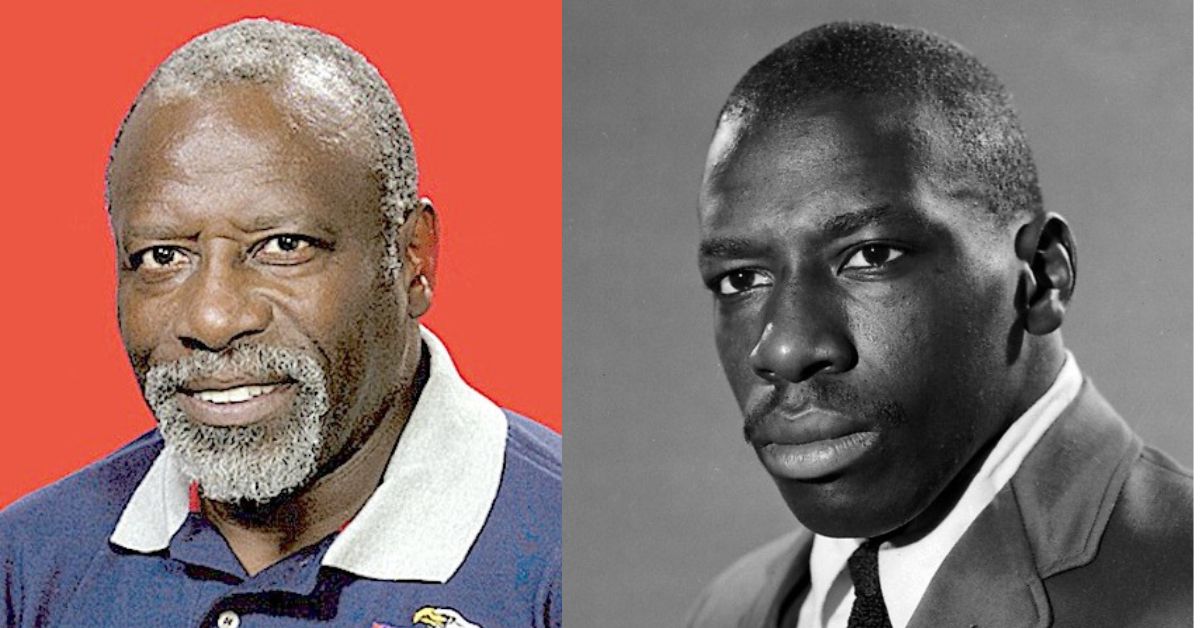
Bobby Douglas was an American wrestling legend who passed away on Monday, February 23, 2026, at the age of 83. He made history as widely recognized as the first Black American wrestler to compete for Team USA at the Olympic Games and built a Hall of Fame career as both athlete and coach.
He represented the United States at the 1964 Tokyo Olympics and captained the team at the 1968 Mexico City Olympics. He won World Championship medals and captured five national titles during his competitive years.
As a coach, he achieved even greater success. He led Arizona State to an NCAA championship in 1988 and spent 13 years at Iowa State, where he mentored Cael Sanderson to a perfect 159-0 college record. He was inducted into the National Wrestling Hall of Fame in 1987.
His journey from extreme poverty in Ohio to becoming one of wrestling’s most respected figures represents one of the most inspiring stories in American sports.
Early Life in Ohio
Robert Edward Douglas was born on March 27, 1942, in Bellaire, Ohio. His childhood was marked by severe poverty and hardship that shaped his character and determination.
His father Eddie Douglas, nicknamed “Blue,” worked as an itinerant boxer and mine worker. His mother was Belove Davis, who struggled with alcoholism after an automobile accident left her disabled when she was 27.
According to the National Wrestling Hall of Fame, family circumstances led to him being raised by his grandparents in nearby Blaine, Ohio. He and his grandmother lived in a shack in extreme poverty.
The community in Bridgeport helped raise him. Local men looked after him because they knew he had no father present and needed guidance. This support system gave him stability during difficult years.
Discovering Wrestling
Bobby Douglas found wrestling in 1957 under coach George Kovalick, who organized youth programs in his neighborhood. Coach Kovalick became a father figure who changed his life’s direction.
He attended Bridgeport High School where he starred in three sports: wrestling, football, and baseball. He earned All-State honors in both football as a running back and in baseball.
Wrestling became his passion and purpose. He would later say, “Wrestling is my best friend…it saved my life. I truly believe that. It saved my life.”
In 1959, as a sophomore, he won the Ohio state championship at 112 pounds. He won another state title at 127 pounds as a senior, becoming one of the first African American state champions in Ohio wrestling history.
College Wrestling Success
Bobby Douglas enrolled at West Liberty State College in West Virginia in 1962 as part of the school’s first wrestling team. In his first year, he won the NAIA national championship at 130 pounds.
The following year, he reached the NCAA finals at 130 pounds, finishing as runner-up. He then transferred to Oklahoma State University, one of the nation’s top wrestling programs.
Moving to Oklahoma exposed him to more overt racism than he had experienced in Ohio. “I got to Oklahoma and I found out just how bad racism was. It was different. Totally different and I adjusted, it was a real adjustment but I did adjust,” he recalled.
He won the Big 8 conference championship in 1965. He finished his college career with a 72-2 record before a concussion at the NCAA Championships ended his collegiate wrestling.
He earned a bachelor’s degree from Oklahoma State in 1967 and later completed a master’s degree from Arizona State in 1981.
Olympic and International Career
Bobby Douglas made history in 1964 when he became widely recognized as the first Black American wrestler to compete at the Olympics. He finished fourth in the featherweight division in Tokyo.
Four years later at the 1968 Mexico City Olympics, he served as captain of the U.S. freestyle wrestling team, another historic first for an African American wrestler.
According to USA Wrestling at themat.com, he competed at six World Championships between 1963 and 1970 in both freestyle and Greco-Roman wrestling.
He won a silver medal at the 1966 World Championships in Toledo, Ohio, and a bronze medal at the 1970 World Championships in Edmonton, Canada.
He won five U.S. national championships and was named U.S. Wrestler of the Year in 1970, the same year he retired from competition. Historical wrestling records credit him with a career record of 303 wins, 17 losses, and 7 ties.
Coaching Career Begins
Bobby Douglas began coaching at UC Santa Barbara in 1973. The following year, he became head coach at Arizona State University, where he stayed for 18 years.
At Arizona State, he built one of the nation’s elite programs. His greatest achievement came in 1988 when the Sun Devils won the NCAA team championship at Hilton Coliseum in Ames, Iowa.
During his time at Arizona State, he coached numerous All-Americans and national champions. He developed a reputation for technical expertise and demanding standards.
Read Also: Trick Williams Biography: WWE Career, Background, Relationship and Achievements
Iowa State Success
In 1993, Douglas became head coach at Iowa State University. Over 13 years, his wrestlers won 10 NCAA individual championships and earned 52 All-America honors.
He led the Cyclones to three runner-up finishes at the NCAA Championships in 1996, 2000, and 2002. The team also won the National Duals title in 1999-2000 with a 20-2 dual record.
According to Iowa State Athletics, he won 198 dual matches at Iowa State, second only to legendary coach Harold Nichols in program history.
He was named conference Coach of the Year twice and won the 2000 NWCA National Coach of the Year award. He was also named USA Wrestling Freestyle Coach of the Year in 1992 and 2004.
Mentoring Cael Sanderson
Bobby Douglas’s most famous coaching achievement was mentoring Cael Sanderson at Iowa State from 1999 to 2002. Sanderson became the only wrestler in NCAA history to go undefeated while winning four national championships, finishing with a perfect 159-0 record.
Sanderson won the Hodge Trophy three times and was named Outstanding Wrestler at the NCAA Championships all four years. Douglas then coached him to an Olympic gold medal at 185 pounds at the 2004 Athens Olympics.
When Douglas retired in 2006, Sanderson replaced him as Iowa State’s head coach, though Sanderson left after just two years for Penn State.
International Coaching
On the international level, Douglas served as assistant coach for 10 World and Olympic teams. He was head coach of the men’s freestyle team at the 1992 Barcelona Olympics.
His coaching career produced 13 NCAA champions across his time at Arizona State and Iowa State. He coached 110 All-America performances total.
He was one of only four NCAA coaches to win more than 400 career dual matches during his coaching career.
Personal Life
Bobby Douglas married Jackie Davidson in 1966. The couple remained married for nearly 60 years until his death. Jackie was his high school girlfriend who provided support throughout his competitive and coaching career.
They had one son, Bobby Douglas Jr., known as “BobBo.” The family faced challenges when their son was diagnosed with paranoid schizophrenia at age 19. Bobby and Jackie adapted their lives to provide ongoing care and support.
The family lived in Ames, Iowa, where they settled during his coaching years. They relied on faith and commitment to navigate the difficulties of caring for their son.
Douglas stood approximately 5 feet 7 inches tall with a compact, powerful build characteristic of elite wrestlers. Even in later years, he maintained the presence of someone who had spent a lifetime in the sport.
Ethnicity and Breaking Barriers
Bobby Douglas was African American, and his achievements as the first Black Olympic wrestler for the United States opened doors for future generations. He competed during an era when racial barriers in sports were still being broken.
He faced racism throughout his career, particularly when he moved to Oklahoma for college. However, he focused on his performance and let his wrestling speak for itself.
His success helped diversify wrestling and showed that excellence in the sport transcended race. He took pride in this role but always emphasized he wanted to be remembered as a great wrestler, not just a great Black wrestler.
Values and Character
Douglas did not extensively discuss specific religious beliefs publicly, though he and his wife relied on faith during difficult times with their son’s illness.
His core values came from wrestling itself—hard work, discipline, respect, fairness, and helping others. He often said wrestling put him in touch with people who truly work hard, are fair, love their country, and are willing to help others.
He maintained high ethical standards throughout his career. Even when opposing wrestlers used illegal moves against his athletes, he refused to compromise his principles.
Hall of Fame Honors
Bobby Douglas received numerous honors during his lifetime. He was inducted into the National Wrestling Hall of Fame as a Distinguished Member in 1987—the highest honor in American wrestling outside competition.
He was also inducted into the NAIA Wrestling Hall of Fame (1985), Arizona Wrestling Hall of Fame (1999), Dan Brand Hall of Fame (2002), OVAC Hall of Fame (2004), Ohio Hall of Fame, West Liberty Hall of Fame, Glen Brand Wrestling Hall of Fame, and Iowa State Athletics Hall of Fame (2023).
In 2005, he received the Edward Clark Gallagher Award from Oklahoma State University, given annually to the wrestling alumnus who best exemplifies the sport’s spirit and leadership.
Net Worth and Financial Background
Bobby Douglas’s exact net worth was never publicly disclosed, and there are no official financial records available that confirm a specific figure. Unlike modern professional athletes, amateur wrestlers from his era did not earn large salaries from competition.
Most of his income came from his long coaching career at Arizona State and Iowa State, along with speaking engagements and book publications. College wrestling coaches in his time earned stable but moderate salaries, reflecting dedication to the sport rather than financial gain.
Douglas often emphasized discipline and education over money. Having grown up in poverty, he valued stability and service more than wealth accumulation. His legacy was measured in championships, athletes developed, and lives influenced — not financial fortune.
Read Also: Stephanie Vaquer: Early Life, Background, and Wrestling Career
About The Author