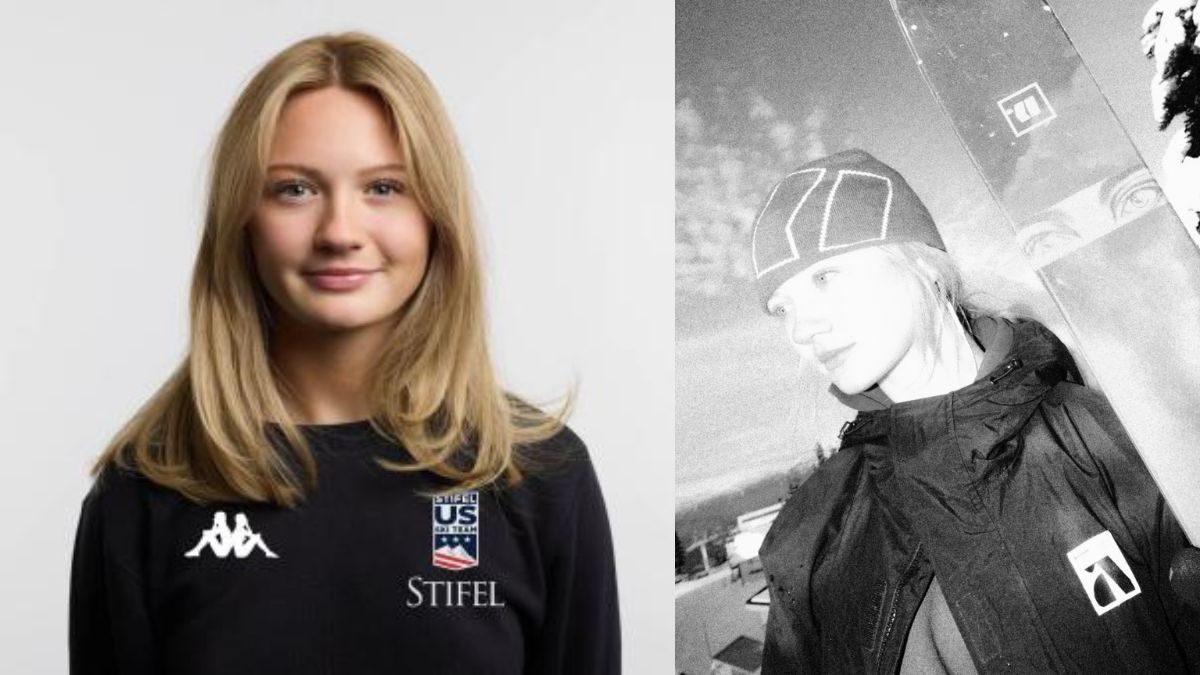
Avery Krumme qualified for the women’s freeski slopestyle final at the 2026 Winter Olympics in Milan-Cortina, becoming the only American woman to reach the medal round in her event. At just 17 years old, she represents Team USA after making the bold decision to switch from Canadian to American nationality in 2024.
Her journey from the slopes of Squamish, British Columbia, to the Olympic stage happened faster than most athletes experience. But speed has always defined her career—both on the mountain and in her rapid rise through competitive ranks.
Early Life and Childhood
Avery Krumme was born on August 23, 2008. She was raised in Squamish, British Columbia, a mountain town about 40 miles north of Vancouver known for its dedicated ski community and proximity to world-class slopes.
Squamish sits at the northern end of Howe Sound, surrounded by mountains that create a natural playground for winter sports. The town’s culture revolves around outdoor recreation, particularly skiing, snowboarding, and mountain biking.
She grew up immersed in this ski-focused environment from an early age. The region’s commitment to winter sports meant that children started skiing almost as soon as they could walk, and competitive programs began accepting participants at very young ages.
By age five, Krumme was already showing interest in freestyle skiing rather than traditional alpine racing. The creative, trick-focused nature of slopestyle and big air suited her personality better than gate-racing down groomed runs.
Family Background and Support
Krumme’s father is Ray Krumme, who has been publicly identified as a key figure in her development as an athlete. According to her official Team USA profile, Ray supported her through a major injury setback during her junior career, recognizing her determination and commitment to the sport.
Her mother’s name and other family details have not been widely publicized. The family has maintained privacy around personal matters, keeping the focus on Avery’s athletic achievements rather than family background.
Ray’s support proved crucial during difficult moments. When she suffered a serious injury during her junior years—details of which have not been publicly disclosed—he helped her maintain perspective and commit to rehabilitation rather than giving up on the sport.
The injury became a turning point. Rather than ending her career, it motivated her to train smarter. She added significant weight training to her routine and learned to use recovery time more intentionally, lessons that would serve her throughout her competitive life.
Discovering a Rare Talent
From an early age, Krumme demonstrated an exceptional ability that set her apart from other young skiers. She could spin in all four directions—left and right, both frontside and backside—with equal comfort and control.
Most skiers develop a preferred rotation direction and struggle with spins in the opposite direction. Having fluency in all four rotational axes is extremely rare, particularly for someone so young.
By age 11, this unusual skill had caught the attention of competitive coaches on the Canadian circuit. They recognized that this four-directional spinning ability would give her enormous versatility in creating trick combinations that other competitors couldn’t match.
This natural talent didn’t mean she avoided hard work. Her coaches, including Shonny Charbonneau and Graham Pollock, have praised her work ethic, noting that she consistently arrives on time for training and maintains dedication to improvement.
Junior Competitive Career in Canada
Krumme’s competitive career gained momentum on the Canadian circuit, where she consistently earned podium finishes in both slopestyle and big air events throughout her early teenage years.
During the 2023-24 season, she captured two gold medals and three silver medals across Canada Cup competitions held in the Yukon, Sun Peaks, and Horseshoe Valley, Ontario. These results established her as one of Canada’s top junior freeskiers.
Her major breakthrough came at the 2024 FIS Freestyle Junior World Championships in Livigno, Italy. She won a bronze medal in the women’s slopestyle event, her first medal at a world championship level.
She followed this success by securing double gold at the Canadian Nationals held in Whistler, winning both slopestyle and big air events. The performances demonstrated her ability to compete under pressure in highly competitive finals.
These junior successes caught international attention. Scouts from multiple national programs recognized her potential, setting up the decision that would define the next phase of her career.
Read Also: Who Is Mike Macdonald? Coaching Career, Background and Personal Life
The Decision to Represent the United States
In 2024, Krumme made the significant decision to switch her nationality from Canada to the United States. She joined the U.S. Freeski Team’s rookie roster for the 2025-26 season, a move that raised questions among Canadian skiing fans.
The specific reasons for the nationality switch have not been publicly disclosed. According to reporting from Yahoo Sports, “There is no major reporting on this, so the best that can exist is speculation.”
Some observers have suggested strategic considerations—the U.S. program may have offered better development opportunities, coaching resources, or competition pathways. Others have pointed to potential family connections to the United States, though these have not been confirmed.
What is certain is that the decision required careful thought. Changing nationality for Olympic purposes involves complex regulations, waiting periods, and permanent consequences. At age 15 or 16 when making this choice, she committed to representing the United States for the remainder of her career.
The move proved beneficial for her development. The U.S. Freeski Team provided access to world-class coaching, training facilities, and competition opportunities that accelerated her progression.
First Season Representing Team USA
Her first season competing internationally for the United States during 2024-25 showed strong development and steady improvement across multiple events.
She earned three NorAm Cup podiums during the 2024-25 season, demonstrating consistency across North American competitions. These results helped build confidence and refine her competitive instincts under pressure.
Her World Cup debut came at Stubai, Austria, where she finished 20th in slopestyle. For a rookie competing against the world’s best for the first time, the result showed she belonged at that level.
She improved throughout the season. At the Toyota U.S. Grand Prix in Aspen, she finished sixth in slopestyle. At Steamboat Springs, Colorado, she placed fourth in big air—the best result among American women at any of the season’s selection events.
These performances earned her selection to the 2026 Olympic team. In January 2026, she was officially named to represent the United States at the Milan-Cortina Winter Olympics, the youngest member of the U.S. freeski squad.
Olympic Qualification and Slopestyle Final
The slopestyle qualification round at the 2026 Olympics featured 26 athletes competing on a challenging course with technical rail sections and massive jumps. Only the top finishers would advance to the medal round.
Krumme delivered a clean and confident run, finishing fourth in qualification. Her consistency and control under Olympic pressure demonstrated maturity beyond her 17 years.
She became the only American woman to reach the slopestyle final, making her performance even more significant for Team USA. With strong form and growing confidence, she now has a real opportunity to challenge for a medal.
The women’s freeski slopestyle final is scheduled for February 9, 2026. She will compete against the world’s best, including defending Olympic champion Eileen Gu and other established stars.
Education and Personal Life
At 17 years old, Krumme balances competitive skiing with education, though specific details about her schooling have not been publicly shared. Many elite young athletes use online education programs or flexible schooling arrangements that accommodate training and competition schedules.
She has kept most aspects of her personal life private, focusing public attention on her athletic career rather than sharing details about friendships, relationships, or life outside skiing.
Her social media presence exists but remains relatively modest for an Olympic athlete. She uses platforms to share training updates and competition results rather than posting extensively about personal matters.
This privacy appears intentional. At a young age competing on the world stage, maintaining boundaries between public athletic life and private personal life helps protect normalcy and mental health.
Physical Profile and Playing Style
Specific height and weight information for Krumme has not been published in official bios. She has an athletic build suited for freestyle skiing—strong enough to handle impact landings but not so heavy that it limits aerial maneuverability.
Her playing style emphasizes technical precision and trick variety rather than pure power. The ability to spin in all four directions gives her enormous flexibility in creating unique run combinations that judges reward for difficulty and originality.
She excels on both rails and jumps, making her a complete slopestyle competitor. Some athletes specialize in rail tricks or aerial maneuvers, but her balanced skill set allows her to score well across the entire course.
Her mental approach under pressure has impressed coaches and observers. Saving herself after mistakes, maintaining composure in high-stakes competitions, and performing cleanly when it matters most separate good athletes from great ones.
Coaches and Training Team
Krumme works with coaches Shonny Charbonneau and Graham Pollock, who have been publicly credited with guiding her development. Both have praised her work ethic, punctuality, and dedication to improvement.
The coaching relationship emphasizes intentional practice rather than just volume. She doesn’t simply repeat tricks endlessly—she analyzes what needs improvement and focuses training sessions on specific weaknesses.
Her training regimen includes significant strength and conditioning work beyond on-snow skiing. The weight training she added after her junior injury has become a permanent part of her program, building the physical resilience needed for a long career.
Net Worth and Earnings
At 17 years old and early in her professional career, Krumme’s net worth and earnings information has not been publicly disclosed. Elite junior and rookie-level freeskiers typically earn modest amounts compared to established stars.
Prize money from World Cup and NorAm Cup events provides some income, though payouts at the levels she currently competes remain relatively small. Podium finishes at major events can earn anywhere from a few hundred to several thousand dollars.
Sponsorships and equipment deals likely provide additional support. Ski manufacturers, apparel brands, and energy drink companies often sponsor promising young athletes, providing gear and modest stipends in exchange for representation.
An Olympic medal would significantly change her earning potential. Medalists attract larger sponsorship deals, appearance fees, and endorsement opportunities that can transform a career financially.
For now, her focus remains on performance rather than earnings. At her age and career stage, development and results matter far more than immediate financial rewards.
Read Also: Mathilde Gremaud Biography: Age, Family, Career & Personal Life
About The Author