Garcelle Beauvais remains visible today primarily because she joined The Real Housewives of Beverly Hills in 2020, becoming the franchise’s first Black cast member. That decision brought her renewed attention after decades working steadily in television and film without achieving household-name status outside specific audiences.
Her current recogn ability stems from reality television, but her career spans over four decades across modeling, acting, producing, writing, and business ventures. She represents a particular type of entertainment career—one built on consistency and adaptation rather than explosive fame followed by retirement.
Immigration, Language Barriers, and Starting Points
She was born on November 26, 1966, in Saint-Marc, Haiti, as the youngest of eight children. Her father Axel Jean Pierre worked as a lawyer, and her mother Marie-Claire Beauvais worked as a nurse. Her parents divorced when she was three years old.
At age seven, she moved with her mother and six older siblings to Peabody, Massachusetts. She spoke only French and Creole, creating immediate challenges in school and daily life. She has stated publicly that she learned English by watching Sesame Street, the educational children’s program serving as her primary language teacher during early childhood years in America.
The family later moved to Miami, Florida, during her teenage years. The relocation positioned her closer to an industry she would accidentally enter through a chance encounter rather than calculated planning.
Modeling as Access, Not Celebrity
At seventeen, while stopped at a red light in Miami, a modeling scout approached her car. She had been driving to Fort Lauderdale to meet with agencies without an appointment after seeing a friend in a commercial. The scout represented the same agency she intended to visit.
She modeled locally in Miami for approximately one year before moving to New York City and signing with Ford Models. She lived with Eileen Ford, the agency founder, during her early New York period—a common arrangement for young models Ford personally believed in developing.
Her modeling work included print advertisements for Avon, Mary Kay, and Clairol, catalog shoots for Lerner New York, Neiman Marcus, and Nordstrom, and runway appearances for Calvin Klein and Isaac Mizrahi. She appeared on magazine covers including Essence, Ebony, and Jet, though these placements represented steady work rather than supermodel status.
According to her own accounts, she struggled financially between modeling jobs. She worked briefly as a Playboy Bunny at the New York nightclub despite being underage, earning money to cover rent during gaps in modeling assignments.
Modeling functioned primarily as industry access. It placed her in proximity to entertainment professionals, provided basic on-camera comfort, and opened doors to auditions that would have been closed to someone without any visual media experience.
Early Acting Work Without Recognition
Her first screen appearance came in 1984 on Miami Vice, where she played an unnamed waitress in one episode and returned later as a homeless character named Gabriella. These were not career-launching roles. They were typical entry-level work for young performers learning the technical aspects of television production.
She appeared in Eddie Murphy’s Coming to America in 1988, playing a rose-bearer—a background role that provided a credit in a major film but not speaking parts or character development. At age twenty-one, this represented the kind of work available to attractive young women without established acting training or industry connections.
Throughout the late 1980s and early 1990s, she accumulated guest appearances on successful sitcoms including The Cosby Show, Family Matters, Hangin’ With Mr. Cooper, and The Fresh Prince of Bel-Air. These appearances followed a pattern—one or two episodes, small supporting roles, names that didn’t register with casual viewers.
She studied at The Groundlings in Los Angeles, the improvisational comedy school that has trained numerous successful comedic actors. This training came after she had already begun working professionally, representing an investment in skill development rather than preparation before career launch.
Models Inc. and Industry Positioning
In 1994, she met Aaron Spelling through circumstances she has described as unusual—she dreamed about having a conversation with him, then arranged an actual meeting shortly after. Within weeks, he cast her in Models, Inc., a Melrose Place spinoff set in the modeling world.
She played Cynthia Nichols across twenty-five episodes from 1994 to 1995. The show was canceled after one season, failing to attract the audience Fox hoped would follow from Melrose Place. The cancellation meant losing steady employment and returning to audition circuits.
However, the experience placed her in a different category than guest-star actors. She had carried a network primetime drama for a full season, even if the show failed. Casting directors and producers could see sustained work rather than just sporadic appearances.
The Jamie Foxx Show and Steady Television Work
In 1996, she was cast as Francesca “Fancy” Monroe on The Jamie Foxx Show, a WB sitcom about a struggling actor working at his aunt and uncle’s Los Angeles hotel. She played the hotel employee who served as Jamie King’s love interest and sparring partner throughout the show’s run.
The series lasted five seasons from 1996 to 2001, totaling 100 episodes. This represented genuine career stability—regular paychecks, benefits, and the ability to plan life beyond the next audition. According to her own statements, she was still learning comedy during this period, using improvisation skills from Groundlings training to keep pace with Foxx’s spontaneous performance style.
The show attracted solid ratings within its demographic but never broke into mainstream cultural conversation the way some WB programs did. It provided steady work and increased her visibility within Black entertainment circles without making her recognizable to general audiences who didn’t watch that network.
Following The Jamie Foxx Show, she joined NYPD Blue from 2001 to 2004, playing Assistant District Attorney Valerie Heywood. The police procedural gave her three seasons of work on an established, respected drama series. She appeared in multiple episodes per season as a recurring character rather than series regular, meaning less screen time but still consistent employment.
Working Television Actress Years
From 2004 through the late 2010s, her career consisted of the work most television actors actually do—guest appearances, recurring roles lasting several episodes, supporting parts in films that came and went without major impact.
She appeared in Wild Wild West (1999), Double Take (2001), White House Down (2013), and Spider-Man: Homecoming (2017). These films ranged from major studio productions to mid-budget releases, but her roles remained supporting rather than lead. In White House Down, she played the First Lady opposite Jamie Foxx as President—a visible role in a big-budget film that still didn’t shift her career trajectory toward stardom.
Television work included Franklin & Bash (2011-2014), where she played senior partner Hanna Linden for the legal comedy-drama’s first two seasons. The TNT series gave her another multi-season commitment before the show ended its run after four seasons total.
She appeared in five episodes of Grimm during its fourth season (2014-2015), playing Henrietta, a hexenbiest killed by the spirit of Jack the Ripper. She had roles in Psych, Castle, and numerous other procedural dramas that filled cable and network schedules during this period.
This phase represents what most working actors experience—employment without fame, income without headlines, career longevity without public recognition beyond specific fan bases. She worked consistently enough to maintain SAG-AFTRA health insurance and build retirement savings, which many actors cannot achieve.
The Gap Between Recognition and Reality
Her face appeared regularly on television screens for over two decades, yet she remained largely unknown outside audiences who specifically watched the shows where she worked. This disconnect between visibility and fame characterizes most entertainment careers, though it contradicts public perception about how the industry operates.
The Jamie Foxx Show made her recognizable to Black audiences who watched WB programming in the late 1990s. NYPD Blue placed her in front of viewers who followed long-running police dramas. But these audiences didn’t necessarily overlap, and neither guaranteed recognition from people who watched different networks or different genres.
Film appearances in projects like Coming to America or Spider-Man: Homecoming might suggest widespread recognition, but supporting roles in ensemble casts don’t create the same public awareness as lead performances. Millions saw these films without necessarily registering or remembering her presence.
She worked steadily throughout this period—far more consistently than most actors manage—yet still experienced the reality that working actor status provides income and career satisfaction without creating celebrity in the broader culture.
Late-Career Reality Television Turn
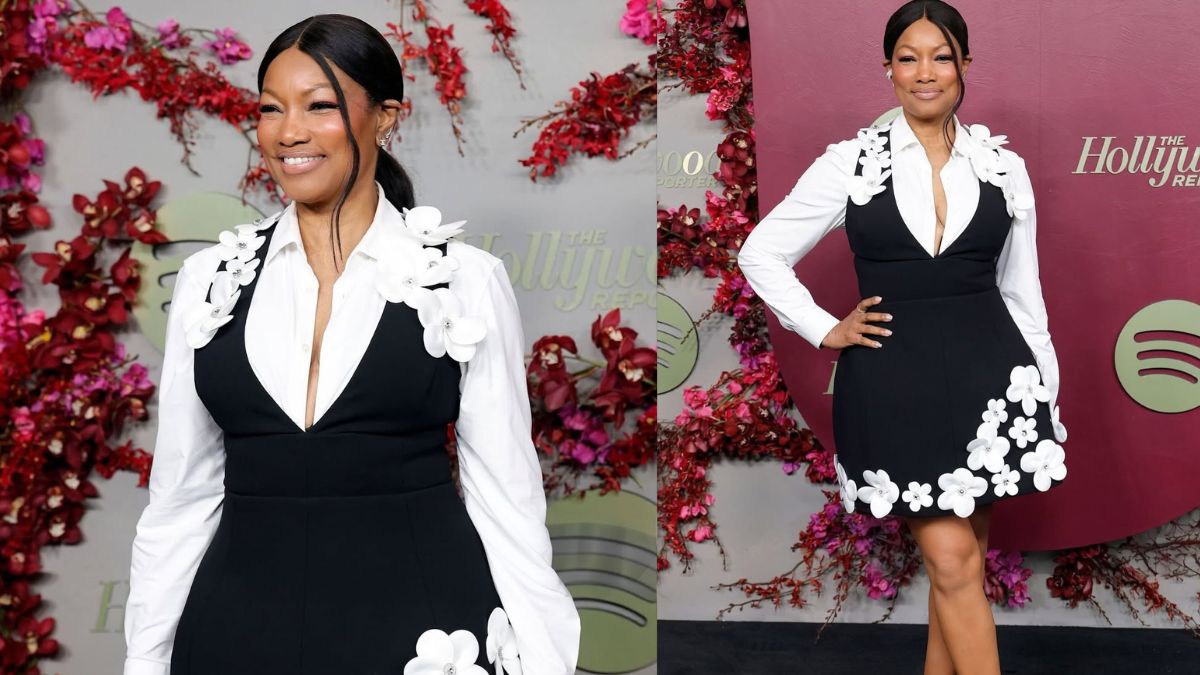
In 2020, at age fifty-three, she joined The Real Housewives of Beverly Hills as its first Black main cast member. The decision came after decades of traditional acting work, representing a significant career pivot rather than an obvious next step.
Reality television carries different risks and benefits than scripted work. It provides regular paychecks and guaranteed screen time regardless of whether producers write you into scenes. It increases visibility dramatically among audiences who might never have watched your previous work. It also exposes personal life in ways scripted roles don’t, creating vulnerability that some actors find uncomfortable.
According to multiple reports, she understood these tradeoffs. She has stated that modeling at seventeen prepared her for handling “those damn Housewives,” suggesting she viewed the experience as manageable challenge rather than intimidating unknown.
The show brought her more mainstream recognition than anything in her previous career. Audiences who never watched The Jamie Foxx Show or couldn’t name a single episode of NYPD Blue now knew her name, face, and basic personal details. Her Instagram following grew substantially, creating social media presence that translates directly into business opportunities.
She appeared on the show through its ongoing seasons, becoming one of the franchise’s more popular cast members according to fan response and media coverage. The role paid reported salaries in the range of $550,000 per season for main cast members, though exact figures for individual performers aren’t publicly confirmed.
Expanded Professional Activity After Reality Visibility
Following her RHOBH debut, her professional activity expanded beyond acting. In 2020, she joined The Real as co-host alongside Adrienne Bailon, Loni Love, and Jeannie Mai. The daytime talk show hired her for its final two seasons (2020-2022), adding daytime television hosting to her resume.
In 2022, she signed a first-look development deal with NBCUniversal Television and Streaming through her production company, Garcelle Beauvais Productions. This represented a significant shift—moving from performer to producer with control over project selection and development.
She published a memoir, Love Me As I Am: My Journey from Haiti to Hollywood to Happiness, co-written with Nicole E. Smith, through Harper Collins in April 2022. According to multiple reports, the book reached number one on Amazon shortly after release, generating media attention including appearances on Good Morning America, Nightline, and coverage in People magazine.
She launched “Garcelle at Home” with HSN in July 2022, a home collection inspired by her Haitian heritage featuring comforter sets, lamps, pillows, and accessories. The product line represents business diversification beyond performance work, creating income streams independent of Hollywood employment.
She developed a partnership with Lifetime to executive produce original films, including recent titles in the “Black Girl Missing” franchise. In April 2024, Deadline announced she would executive produce three original films for the network.
She hosts Going to Bed with Garcelle, a podcast discussing dating, sex, and relationships. She previously launched Petit Bijou, a children’s jewelry line, in 2008, and published three children’s books in her “I Am” series addressing identity issues for mixed-race children.
Personal Life Context
She married producer Daniel Saunders in 1989, and they had a son, Oliver Saunders, born in 1991. The marriage ended in divorce in 1996 after six years.
She married talent agent Mike Nilon in 2001. They had twin sons, Jax Joseph and Jaid Thomas, born in October 2007. In 2010, she discovered Nilon had been having an affair that reportedly began approximately five years earlier. She sent an email with the subject line “Tiger Woods/Jesse James/Mike Nilon” to Nilon’s agency colleagues, asking what these men had in common and stating “I am devastated!!!! And I have been duped!!”
The email was leaked publicly, creating media attention around the divorce that followed. According to her own statements in subsequent interviews, she went through shock and eventual forgiveness, focusing on co-parenting their sons. She and Nilon share custody of Jax and Jaid.
As of publicly available information, she is currently single. She has not publicly discussed romantic relationships since her divorce from Nilon, maintaining privacy around this aspect of personal life despite increased public visibility through RHOBH.
Her son Oliver graduated from university and works professionally, though specific details about his career aren’t widely publicized. Her twin sons appeared occasionally on RHOBH, and she has discussed parenting challenges including balancing work demands with being present for her children.
Financial Position and Income Sources
Net worth estimates for Garcelle Beauvais range from $4 million to $9 million depending on the source and methodology used. Celebrity Net Worth places her at $4 million, while other sources including Yahoo Entertainment and StyleCaster estimate $8-9 million. These discrepancies reflect different assumptions about asset valuations and included income streams.
Her income derives from multiple sources that have evolved throughout her career. Television acting provided steady paychecks during series runs—The Jamie Foxx Show and NYPD Blue each lasted multiple seasons with per-episode payments typical for supporting cast members on network shows during that era.
Real Housewives of Beverly Hills reportedly pays main cast members in the range of $500,000-$600,000 per season, though exact figures aren’t publicly confirmed and likely vary by seniority and negotiation. The Real daytime talk show paid co-host salaries during her two-season tenure from 2020-2022.
Her NBCUniversal first-look deal through Garcelle Beauvais Productions generates income from projects developed and produced through that arrangement. Executive producer credits on Lifetime films provide fees separate from acting work.
Product lines including “Garcelle at Home” with HSN and Petit Bijou children’s jewelry create business income through sales and licensing arrangements. Book sales from her memoir and children’s book series provide royalties, though publishing income for most authors remains modest unless sales reach bestseller status.
Real estate holdings contribute to net worth calculations. According to public records referenced in multiple reports, she owns a $1.2 million home in Northridge, California, and completed construction on a rebuilt beach cottage in Oxnard valued at approximately $2.7 million.
Modeling work during her early career and continued magazine appearances provide additional income, though modeling fees for established personalities typically serve more as publicity than primary revenue sources.
It’s important to note that net worth figures represent estimates rather than confirmed financial disclosures. Actual wealth depends on factors including tax liabilities, outstanding debts, investment performance, and business valuations that remain private.
Current Professional Phase and Trajectory
As of early 2026, she continues appearing on The Real Housewives of Beverly Hills while developing projects through her production company. She executive produces films for Lifetime and maintains her product lines and business ventures.
Her career has entered a phase where she exercises more control over projects than during her working actress years. The first-look deal with NBCUniversal allows her to develop content rather than solely auditioning for roles others create. Executive producing provides creative input and financial participation beyond performer fees.
This trajectory represents successful adaptation to an industry that typically discards performers once they age past roles Hollywood prioritizes. Rather than accepting decreased opportunities as inevitable, she created new professional avenues that value her experience and visibility.
Her current work balances continued performance (reality television) with production, business ventures, and creative projects across multiple platforms. This diversification provides income stability independent of any single employer or project, protecting against the financial precarity that affects many performers late in their careers.
Read Also: Mark Aguirre: From Franchise Scorer to NBA Champion
About The Author