Eli Stowers wasn’t supposed to be a tight end. He was a four-star quarterback recruit with scholarship offers before he’d even played varsity football. But an undiagnosed shoulder injury, two transfers, and a complete position change later, he became something better than anyone expected.
In December 2025, he stood on stages in New York and Las Vegas accepting two of college football’s most prestigious awards—the John Mackey Award as the nation’s best tight end and the William V. Campbell Trophy as the top scholar-athlete. Weeks later at the NFL Combine, he shattered records that had stood for decades.
His vertical jump of 45.5 inches broke the all-time tight end record. His broad jump of 11 feet 3 inches did the same. And his story—from buried backup at Texas A&M to consensus All-American at Vanderbilt—became one of the most remarkable redemption arcs in recent college football history.
View this post on Instagram
Quick Profile
| Category | Details |
|---|---|
| Full Name | Eli Stowers |
| Born | April 15, 2003 |
| Age | 22 years old |
| Hometown | Denton, Texas |
| Height | 6’4″ |
| Position | Tight End |
| High School | Denton Guyer (Texas) |
| Colleges | Texas A&M (2021-22), New Mexico State (2023), Vanderbilt (2024-25) |
| Major Awards | John Mackey Award (2025), Campbell Trophy (2025), All-American (2025) |
| NFL Draft | 2026 – Projected Day 2 (Rounds 2-3) |
Early Life and Family Background
Both of Eli’s parents were college athletes who dedicated their lives to coaching the next generation. Sports weren’t just what the Stowers family watched—they were what the family lived.
Donald Stowers played football at New Mexico State in the 1990s and earned an invitation to the NFL Combine. According to ESPN, he became a priority undrafted free agent for the Cincinnati Bengals, spent time with the Denver Broncos, and played professionally in NFL Europe before transitioning to coaching.
He became a high school football coach and strength coordinator in Texas, eventually settling in Denton where he could watch both his children pursue elite athletics.
Tina Stowers graduated from Baylor University and competed in beach volleyball for over a decade before coaching high school and junior college volleyball. Her athletic background gave her unique insight into the mental challenges athletes face during adversity.
The family lived in Beaumont, Texas when Eli was young, where Donald coached at Beaumont Central High School. They later moved to the Dallas-Fort Worth area, providing both children access to elite competition and training.
In December 2025, Tina joked to reporters that she barely knew what city they were in as the family traveled between watching Eli accept national awards in New York and Las Vegas while simultaneously watching their daughter Kyndal compete in the NCAA Volleyball Final Four.
Sister Kyndal Stowers and Family Support
Eli’s younger sister Kyndal Stowers is also an elite athlete with her own remarkable redemption story. She was the nation’s No. 16-ranked volleyball recruit out of Denton Guyer High School.
Kyndal signed with Baylor but suffered multiple concussions that led to medical retirement after just one season. She spent an entire year at home in Denton, lifting weights with football players and watching her brother play at Vanderbilt—something she’d never been able to do since they had always competed simultaneously.
She decided to attempt a comeback at Texas A&M. In December 2025, just days before Eli won his two major awards, Kyndal led the Aggies to their first-ever Final Four appearance with 25 kills in an upset victory over top-ranked Nebraska.
Local Texas media described it as “comeback lightning caught in the same bottle twice—nearly at the same time.” Their mother Tina told reporters that watching both children overcome career-threatening adversity and achieve national recognition within the same week was overwhelming and deeply humbling.
The simultaneous success of both siblings became a national story about perseverance, faith, and family support through the darkest moments.
High School Career at Denton Guyer
Eli attended John H. Guyer High School in Denton, where he played quarterback and became one of Texas’s top prospects. As a junior in 2019, he was named District 5-6A Co-Offensive MVP after passing for 2,969 yards with 36 touchdowns while adding 1,166 rushing yards and 11 more scores on the ground.
His best friend since age two, running back Kaedric Cobbs, played alongside him in the backfield. According to the Denton Record-Chronicle, the two met when Eli was just two years old in Beaumont, and their friendship survived multiple moves until they finally got to play together at Guyer.
During the 2019 state championship game, disaster struck. Eli suffered a devastating knee injury that required surgery and extensive rehabilitation. For someone who had received scholarship offers before even playing varsity football, the experience of serious injury was completely unfamiliar.
On the Sports Spectrum podcast, he later admitted: “I was going through it. I was pretty much depressed after that. That’s what kind of woke me up to the fact that I can’t put my worth in something that can be taken away.”
The knee injury deepened his Christian faith and prepared him mentally for even greater challenges ahead. It taught him that identity built solely on athletic success is fragile and unsustainable.
College Career at Texas A&M
Stowers committed to Texas A&M as a four-star quarterback recruit, ranked the No. 17 player in Texas by 247Sports. Head coach Jimbo Fisher had a reputation as a quarterback developer, making College Station seem like the ideal destination.
But from the moment he arrived on campus, something felt wrong. He wasn’t able to throw the football like he had throughout high school. Simple passes felt labored. His accuracy disappeared. Coaches noticed immediately.
He eventually learned he had been playing with an undiagnosed shoulder injury that worsened during his freshman year. The recruit who once threw for nearly 3,000 yards in high school suddenly couldn’t complete basic throws in college practice.
Over two seasons at Texas A&M, he appeared in just five games as a backup quarterback, barely seeing the field. For someone whose entire identity had been built around being the starting quarterback and team leader, sitting on the bench was psychologically crushing.
“My whole world revolved around football,” he admitted in interviews. The shoulder injury, combined with limited opportunities in a crowded quarterback room, forced him to make an agonizing decision about his future.
Read Also: Jasmine Crockett Biography: Political Journey, Education, Parents & Family Background
Transfer to New Mexico State and Position Change
Before the 2023 season, Stowers transferred to New Mexico State and made a life-altering choice: he would switch to tight end. The position change wasn’t his first preference—it was born from necessity and the brutal reality that his quarterback dreams had ended.
Most athletes can’t swallow that kind of pride. Admitting you’ll never play your primary position requires humility and courage that separates those who succeed from those who fade away.
The results surprised everyone, including Stowers himself. Over 15 games he caught 35 passes for 366 yards with two touchdowns while adding 108 rushing yards, two more rushing scores, and even one passing touchdown. He earned honorable mention All-Conference USA honors.
In New Mexico State’s historic 31-10 victory over Auburn—the program’s first-ever win against an SEC opponent—Stowers caught four passes for 48 yards and a touchdown. Despite ranking 184th nationally in snaps played among tight ends, Pro Football Focus rated him among the top 20 tight ends in the country in both overall grade and receiving grade.
He helped lead the Aggies to a 10-5 record, the second-most wins in a single season in program history. But after just one year, he entered the transfer portal again, seeking a bigger stage to prove himself.
College Career at Vanderbilt
Stowers transferred to Vanderbilt for the 2024 season and immediately became one of the SEC’s most productive tight ends. He earned first-team All-SEC honors in his first year with the Commodores, establishing himself as a legitimate NFL prospect.
The 2025 season elevated him to national stardom. He recorded 62 receptions for 769 yards with 4 touchdowns, leading all FBS tight ends in receiving yards. He became quarterback Diego Pavia’s most reliable target as Vanderbilt shocked college football with upset victories over ranked opponents.
His performance against Alabama epitomized his impact. In Vanderbilt’s stunning 40-35 upset over the No. 1 ranked Crimson Tide in Nashville, Stowers caught six passes for a career-high 113 yards, repeatedly exposing one of the nation’s best defenses with his combination of size, speed, and route-running skill.
According to Vanderbilt’s official athletics website, his consistent production and elite physical tools made him one of the most complete tight ends in college football by season’s end.
For his efforts, he won the John Mackey Award presented annually to the nation’s top tight end and was named a consensus All-American by multiple organizations. But perhaps more impressively, he also won the William V. Campbell Trophy—often called the “Academic Heisman”—which honors the absolute top scholar-athlete in all of college football.
The Campbell Trophy considers athletic excellence, academic achievement, community leadership, and character. Winning it meant Stowers had excelled in every dimension that matters in college athletics.
Physical Attributes and NFL Playing Style
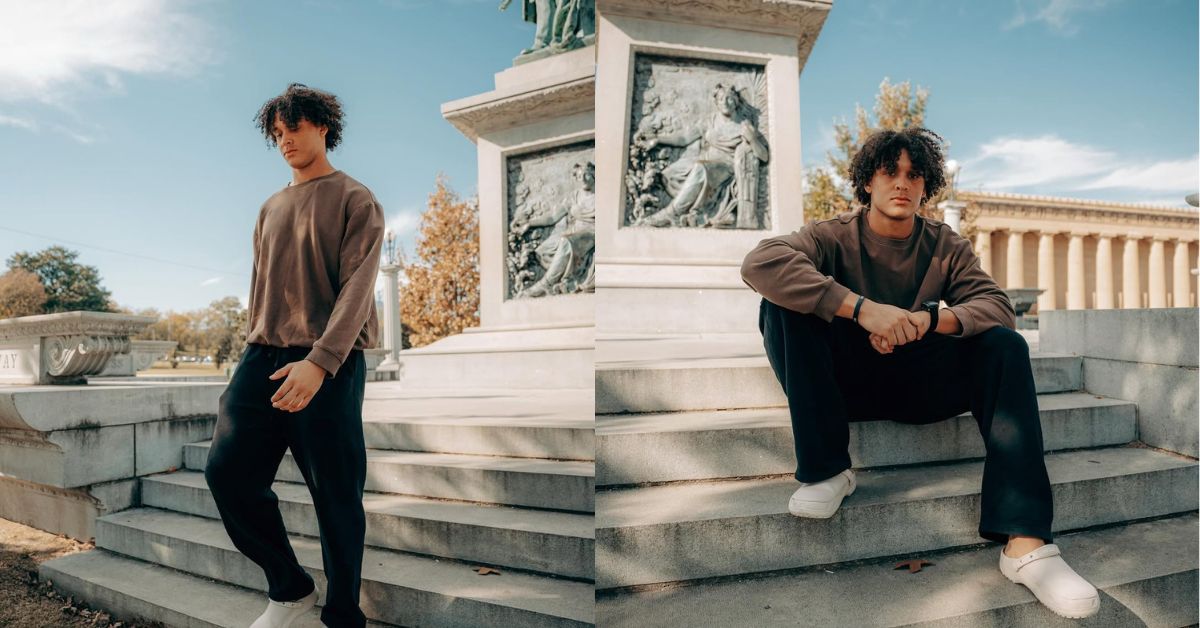
Stowers stands 6 feet 4 inches tall and weighs approximately 235 pounds—slightly undersized compared to traditional NFL tight ends who often weigh 245-260 pounds, but perfectly sized for the receiving-focused role he’ll play professionally.
His athleticism more than compensates for any size disadvantage. The combination of a 45.5-inch vertical jump and 4.51-second 40-yard dash creates matchup problems that defenses struggle to solve. Linebackers can’t keep up with his speed, while safeties and cornerbacks struggle with his size and physicality.
According to NFL draft analysis, Stowers is a reliable receiver and natural hands catcher who can secure the ball away from his body in traffic. He has big-play ability and creates separation against both man and zone coverage. After the catch, he’s difficult to bring down with a combination of power, contact balance, speed, and elusiveness that allows him to turn short gains into explosive plays.
His route-running is remarkably advanced for someone who only played tight end for three years. He understands how to find soft spots in zone coverage and wins against man coverage with a combination of speed, body control, and hand fighting at the line of scrimmage.
The primary concern for NFL evaluators is blocking. He’s willing to contribute as a blocker and shows improving technique, but he lacks the mass and raw strength to make a significant impact in the running game. This will likely limit his early NFL role to being primarily a pass-catching weapon rather than an every-down tight end.
Teams that value receiving production from the tight end position—like the Kansas City Chiefs, Miami Dolphins, or San Francisco 49ers—will view these limitations as acceptable trade-offs for his elite receiving skills.
Religious Beliefs and Personal Value
Throughout every transfer, position change, and setback, Stowers’ Christian faith remained the constant foundation of his life. He was raised attending church but considered it mostly his parents’ faith until his junior year knee injury forced him to confront deeper spiritual questions.
In an interview on the Sports Spectrum podcast, he explained: “I think God, in a way, showed me that I can’t put my worth in anything above God because anything in this world can be taken away from you. The only thing that is eternal is what Jesus did for us on the cross.”
His faith sustained him through the darkest periods at Texas A&M when his shoulder injury and limited playing time threatened to end his football dreams entirely. It gave him perspective when deciding to change positions and transfer twice—decisions that required humility and courage many athletes lack.
He’s open about his beliefs on social media and in interviews, viewing his public platform as an opportunity to share his faith journey with others facing adversity. His approach is authentic rather than preachy, focusing on how faith helped him navigate specific challenges rather than general theological statements.
His Campbell Trophy win recognized not just his athletic and academic success but also his character and the way he carries himself as a role model for younger athletes facing their own struggles.
Personal Life and Relationships
At 22 years old, Stowers maintains privacy regarding his romantic life. There is no publicly available information about a girlfriend, partner, or dating history. His social media presence focuses primarily on football, faith, family, and motivational content rather than personal relationships.
He is not married and has no children. His immediate focus appears entirely centered on preparing for the NFL Draft, supporting his family, and beginning his professional career.
Teammates and coaches consistently describe his personality as humble, hardworking, and team-oriented. Despite winning individual awards and national recognition, he regularly deflects credit to teammates, coaches, and his family’s support system.
His close relationship with his sister Kyndal is well-documented, with both siblings publicly supporting each other’s athletic careers and celebrating each other’s successes on social media.
Net Worth and Financial Future
As a college athlete who just completed his eligibility, Stowers’ current net worth is modest. He likely earned money through NIL (Name, Image, and Likeness) deals during his time at Vanderbilt, particularly after winning the Mackey Award and Campbell Trophy, though specific figures have not been publicly disclosed.
His financial situation will change dramatically after the 2026 NFL Draft. Based on recent NFL rookie contract structures, second and third-round picks typically sign four-year deals worth approximately five to eight million dollars total, with guaranteed money in the two to four million dollar range depending on exact draft position.
If selected in the second or third round as most analysts project, his rookie contract will provide immediate financial security for both him and his family. It will also reward his parents for decades of sacrifice supporting both his and Kyndal’s athletic pursuits through coaching, travel, training expenses, and emotional support during setbacks.
The Campbell Trophy scholarship of $25,000 can be used for graduate education if he chooses to pursue advanced degrees during or after his NFL career, providing additional educational opportunities.
Read Also: Reza Pahlavi Biography: Life, Family, Education & Role as Iran’s Exiled Crown Prince
About The Author