
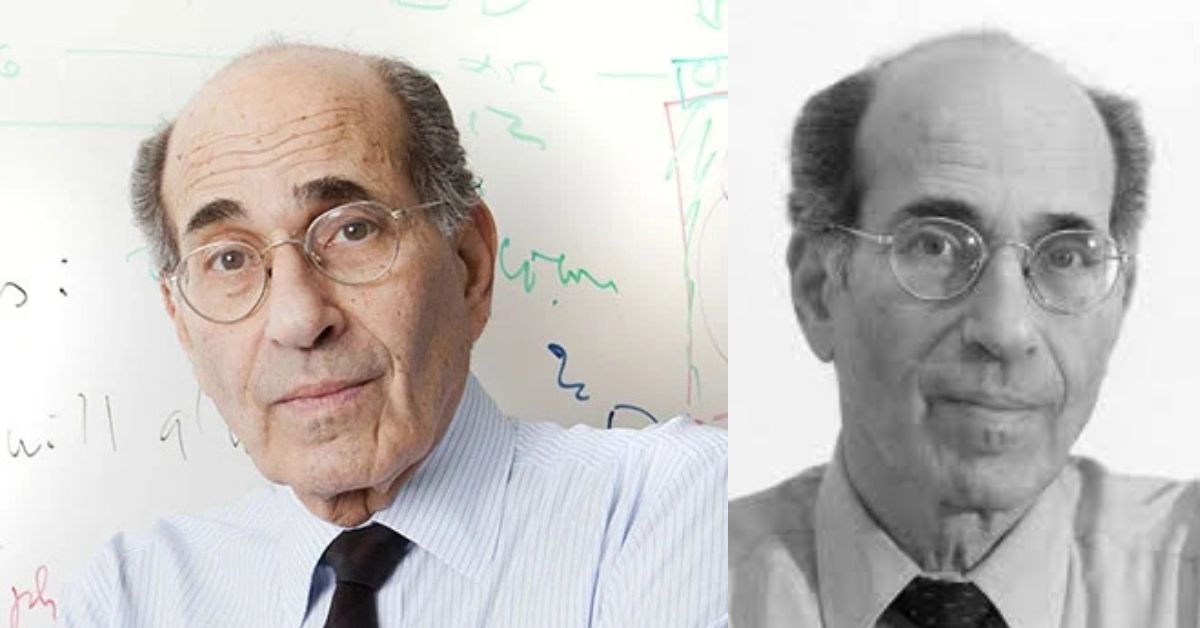
Richard Axel is an American molecular biologist and neuroscientist who won the Nobel Prize in Physiology or Medicine in 2004. He shares this honor with Linda Buck for discovering how humans and animals perceive smell.
Born on July 2, 1946, he currently works as a University Professor at Columbia University in New York. He also serves as an investigator for the Howard Hughes Medical Institute, one of the most prestigious positions in American science.
His research explained how the human brain interprets over a thousand different smells. This work opened new understanding about how genes control our senses and how the brain processes information from the outside world.
Early Life in Brooklyn
Richard Axel was born in New York City to Polish Jewish immigrant parents. His mother and father fled Poland after the German invasion during World War II and settled in the United States seeking safety and opportunity.
He grew up in Brooklyn, New York, in a middle-class family. He was the oldest child in his family, which valued education and hard work above all else.
As a young boy, Richard loved sports more than science. He enjoyed playing baseball and basketball and dreamed of becoming an athlete rather than a scientist. This would change completely during his college years.
Education and Finding His Path
Richard attended Stuyvesant High School, one of New York City’s most competitive specialized schools. He graduated in 1963 alongside several classmates who also became well-known, including political scientist Bruce Bueno de Mesquita and actor Ron Silver.
He had actually wanted to attend City High School where sports programs were stronger. However, his principal arranged his admission to Stuyvesant because of his academic abilities, even though Richard preferred athletics at the time.
He enrolled at Columbia University and earned his Bachelor of Arts degree in 1967. While at Columbia, he got his first real exposure to genetics and molecular biology.
His interest in science started accidentally. He took a part-time job washing glassware in a laboratory at Columbia just to earn money. Working in that lab environment sparked his curiosity about scientific research.
Medical School and Career Change
After finishing college, Richard enrolled at Johns Hopkins University School of Medicine to become a doctor. He earned his M.D. degree in 1971.
However, medical school revealed that he was not suited for practicing medicine. He struggled with clinical work and found it difficult to work directly with patients.
His professors and department chairman recognized this problem. They allowed him to graduate early on one condition: he had to promise never to practice medicine on living patients.
After getting his medical degree, he returned to Columbia University in 1971. This time, he joined the pathology department to work in research rather than treating patients.
Finding His Calling in Research
Even in pathology, Richard initially struggled. He was asked to perform autopsies, but his supervisors quickly realized he was not competent at this work either.
According to information from royalsociety.org, Professor Sol Spiegelman saw potential in him and invited him to work in his molecular biology laboratory instead.
This invitation changed his life completely. He discovered that laboratory research was his true calling. He worked briefly under Spiegelman before creating his own laboratory in 1974.
In 1978, after four years of conducting significant research, Columbia University promoted him to full professor. He was only 32 years old at the time, which was remarkably young for such a position.
Breakthrough Discovery in Gene Transfer
In the late 1970s, Richard worked with microbiologist Saul J. Silverstein and geneticist Michael H. Wigler on an important technique. They discovered a method called cotransformation via transfection.
This process allows scientists to insert foreign DNA into host cells to make them produce specific proteins. It sounds technical, but it revolutionized medical research and drug development.
They filed patents for this technique in February 1980, and the patents were issued in August 1983. These became known as the “Axel patents” in the scientific community.
This technique became fundamental to how pharmaceutical and biotech companies develop new medicines. The patents earned Columbia University almost $100 million per year at their peak, making Columbia one of the top universities for licensing revenue.
The Axel patents expired in August 2000, but their impact on medicine and biotechnology continues today. This technique is still used to produce insulin, growth hormones, and many other life-saving medications.
The Nobel Prize Discovery
In 1991, Richard Axel and Linda Buck published a landmark scientific paper that would eventually win them the Nobel Prize. Buck was a postdoctoral researcher working in his laboratory at the time.
They discovered how the sense of smell works at the molecular level. They identified that there are about one thousand different genes for olfactory receptors in mammals.
According to the Nobel Prize announcement, they showed that these receptors belong to a family called G protein-coupled receptors.
Their research revealed something remarkable: each olfactory receptor neuron only expresses one type of smell receptor. All neurons with the same receptor send their signals to the same specific spot in the brain called a glomerulus.
This creates a kind of map in the brain where different smells activate different patterns. The brain interprets these patterns to identify thousands of distinct odors.
They later discovered that humans have about 350 working olfactory receptors, which is about one-third the number found in rats. These genes account for roughly 3 percent of all human genes.
For this discovery, Richard Axel and Linda Buck shared the 2004 Nobel Prize in Physiology or Medicine. The official recognition stated their achievement as discovering “odorant receptors and the organization of the olfactory system.”
How His Discoveries Changed Modern Medicine
The gene transfer technique that Richard developed in the late 1970s transformed pharmaceutical manufacturing. Before this breakthrough, many medicines were difficult or impossible to produce in large quantities.
Today, this technique allows companies to produce human insulin for diabetics, growth hormones for children with deficiencies, and dozens of other essential medications. Millions of people depend on medicines created using his method.
His olfactory research opened entirely new fields of study. Scientists now understand better how the brain processes all sensory information, not just smell. This has implications for understanding memory, emotion, and even consciousness.
The framework he established for studying smell is now being applied to understand taste, touch, hearing, and vision. His work showed how to connect genetics to brain function and behavior.
Personal Life and Family
Richard Axel is married to Cornelia Bargmann, who is also a prominent neuroscientist. Bargmann is a Howard Hughes Medical Institute investigator at Rockefeller University and won the Breakthrough Prize in Life Sciences.
The couple married in 2007. They share deep interests in understanding how brains work and how neural circuits control behavior and perception. Their intellectual partnership complements their personal relationship.
Richard was previously married to Ann Axel, who works as a social worker. He has two sons from his previous marriage, though he keeps details about his children private to protect their privacy.
The couple lives in Manhattan, where they balance demanding scientific careers with interests in the arts and culture. Both maintain active research laboratories while supporting each other’s work.
Read Also: Abigail Spanberger Biography: Virginia’s First Female Governor, CIA Career and Personal Life
Ethnicity and Background
Richard Axel comes from a Polish Jewish background. His parents were Jewish immigrants who fled Poland during World War II and came to America seeking safety and opportunity.
Growing up in a Jewish immigrant family in Brooklyn shaped his early life experiences. The values of education, hard work, and intellectual achievement were important in his household.
His Jewish heritage is publicly acknowledged, though he does not speak frequently about religious practices in public forums. His focus in public life remains on his scientific work rather than personal faith matters.
Awards and Recognition
Beyond the Nobel Prize, Richard has received numerous honors throughout his career. He was elected to the American Academy of Arts and Sciences and the National Academy of Sciences in 1983.
In 2005, he received the Golden Plate Award from the American Academy of Achievement. In 2007, he was awarded the Double Helix Medal for his contributions to genetics and molecular biology.
In 2014, he was elected as a Foreign Member of the Royal Society in Britain, one of the highest honors in science. The Royal Society’s citation noted his work on gene transfer techniques and the discovery of olfactory receptor genes.
In 1989, he received the Richard Lounsbery Award from the National Academy of Sciences. In 1996, he shared the Unilever Science Award with Linda Buck for their olfactory research.
Net Worth and Financial Success
Richard Axel’s exact net worth is not publicly disclosed. However, he has earned substantial income through several sources over his long career.
Senior professors at major U.S. universities typically earn competitive salaries, and his positions at both Columbia University and the Howard Hughes Medical Institute provide significant compensation.
The “Axel patents” from his gene transfer work earned Columbia University approximately $600 million in total royalties before they expired in 2000. As the inventor, Richard received a significant portion of these earnings according to Columbia’s patent-sharing policy.
Nobel Prize winners receive prize money, though it is shared among recipients. In 2004, the Nobel Prize came with approximately 10 million Swedish kronor (about $1.3 million at the time), which he split with Linda Buck.
His scientific achievements, speaking engagements, and consulting work have provided additional income over the decades. While specific figures remain private, his accumulated wealth is estimated to be in the several million dollar range.
Current Research Work
Richard continues researching how the brain interprets sensory information, particularly smell. His laboratory studies how smells are represented in the brain and how this leads to thoughts and behavior.
He holds multiple titles at Columbia University: University Professor, Professor of Biochemistry and Molecular Biophysics, and Professor of Pathology at the College of Physicians and Surgeons.
He remains an active investigator with the Howard Hughes Medical Institute, which provides substantial funding and support for his ongoing research.
His recent work explores fundamental questions about perception and consciousness. He investigates how simple sensory inputs like smells can trigger complex memories, emotions, and decisions.
Scientific Legacy
Richard Axel’s contributions to science extend far beyond his Nobel Prize-winning discovery. His gene transfer technique transformed how medicines are developed and produced worldwide.
His mentorship has shaped the careers of many leading neuroscientists. Seven of his former trainees have become members of the National Academy of Sciences, and six are affiliated with Howard Hughes Medical Institute programs.
His work bridged molecular biology and neuroscience, showing how genetic techniques could answer questions about brain function and behavior. This interdisciplinary approach influenced how modern neuroscience research is conducted.
Read Also: Royce Williams Biography: Medal of Honor Hero, Korean War Dogfight and Lifetime of Service
About The Author