
Rafael Jodar is a name that’s been showing up more often in tennis circles lately—not because of Grand Slam wins or top-10 rankings, but because people who follow junior tennis and young professionals have started paying attention. At 19, he’s in that uncertain phase where potential meets reality, where talent needs to prove itself against adults who’ve been competing for years.
His story isn’t finished yet. Actually, it’s barely started. But there are enough pieces visible now to understand why tennis fans are curious about where this goes.
Background and Where He Comes From
He was born September 17, 2006, in Madrid. That detail matters because Madrid produces tennis players the way some cities produce musicians or artists—it’s part of the culture there. The city hosts one of tennis’s biggest tournaments every spring, so kids grow up watching world-class players compete.
His parents are both teachers. That’s verified information, though their names aren’t public. Being an only child in a family of teachers probably meant structure, discipline, homework completed before practice. Tennis became the family’s shared project.
He started playing at four years old, which sounds young until you realize most professional tennis players picked up racquets around that age. By six, he was training at Club de Tenis Chamartín in Madrid, transitioning from “kid hitting balls” to “kid learning technique.”
Growing up, he attended matches at the Mutua Madrid Open. Two stuck with him: Nick Kyrgios upsetting Roger Federer in 2015, and Grigor Dimitrov’s marathon match against Novak Djokovic in 2013. Those memories shaped his understanding of what professional tennis looked like—the atmosphere, the pressure, the way champions competed.
Family Influence and Support System
His parents made decisions that shaped everything. At age 12, he was playing both football and tennis seriously. Spain worships football, and he loved it—he’s a massive Real Madrid fan, follows Jude Bellingham, watches matches whenever he can.
But at 12, his parents told him he had to choose. Tennis required too much time to split focus with another sport. He chose tennis.
That one decision determined his entire future. If he’d chosen football, none of his current tennis career exists. His parents guided that choice, understanding the commitment required for either path but letting him make the final call.
Details about his parents beyond their teaching profession remain private. They haven’t done interviews or appeared in media coverage. Their role has been support, not publicity.
Tennis Beginnings and Development Years
Between ages 6 and 18, he went from beginner to US Open junior champion. That’s the compressed version. The real story involves thousands of hours on practice courts, strength training sessions, tactical lessons, mental coaching, travel to tournaments across Europe.
Junior tennis creates a strange bubble. You’re competing against other teenagers, winning tournaments that feel important but mean nothing professionally. You’re ranked, but those rankings disappear when you turn 18. The entire system exists to develop skills that might translate to professional success.
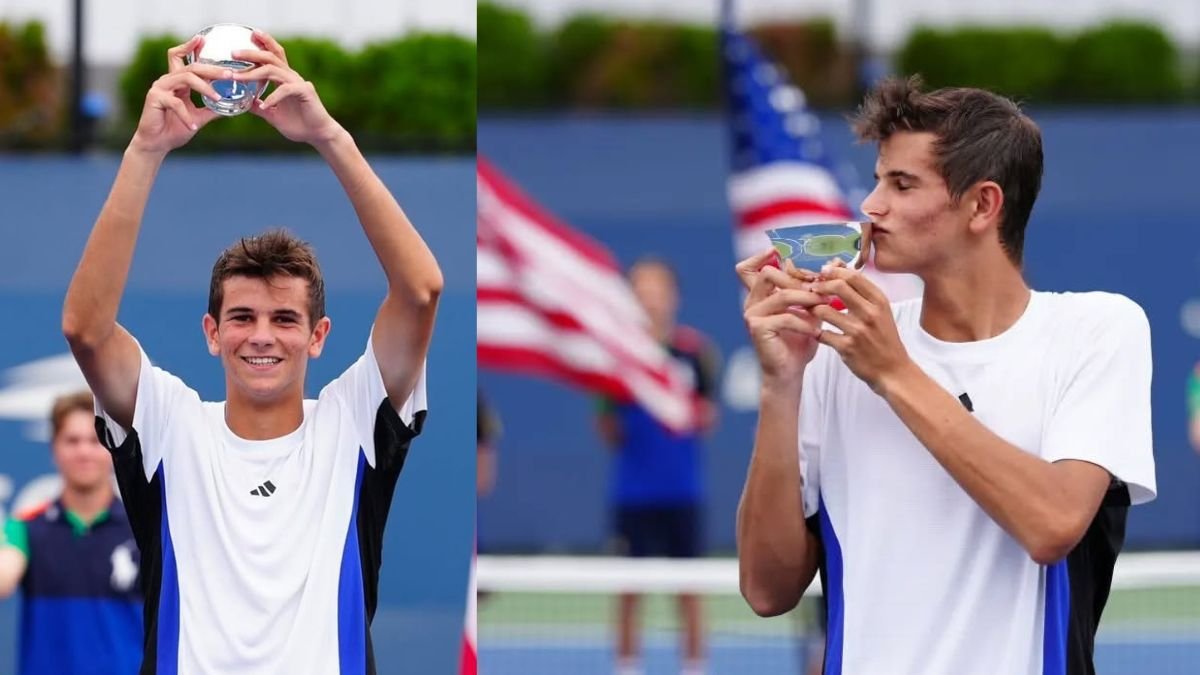
He reached No. 4 in the ITF junior combined rankings in September 2024. His biggest junior achievement came in August 2024 when he won the US Open boys’ singles title at Flushing Meadows. According to his profile on the official ATP Tour website , that victory marked him as one of the top junior players globally.
But junior success guarantees nothing. History is full of junior champions who never won a professional match.
The College Detour
After his junior career ended in 2024, he made an unusual choice for a top European prospect—he attended the University of Virginia. Most Spanish players skip American college tennis entirely, going straight to professional tours.
His reasoning was practical: “I had two options right after my junior career, go pro, or go to college. I took the option of going to college because I think Virginia is a great place to develop as a tennis player.”
He won ITA National Rookie of the Year during his freshman year. Heading into his sophomore year, he was ranked second in the ITA preseason singles rankings. He was taking five classes while competing in both college matches and professional Challenger events on weekends.
That balancing act worked temporarily. He’d bring his laptop to tournaments, studying between matches. But it wasn’t sustainable. Every week at college was a week not competing professionally.
On January 1, 2026, he announced he was leaving Virginia to turn professional full-time. Two years of college gave him development time and coaching. Now it was time to commit fully.
Moving Toward Professional Tennis
His professional breakthrough happened fast once it started. In August 2025, he won his first ATP Challenger title at Crete Challenger III in Greece. He’d entered as an alternate—someone withdrew, he got the spot, he won.
In October, he won the Lincoln Challenger in the United States. In November, he won the Charlottesville Challenger. Three Challenger titles in four months while still attending college classes.
Those victories qualified him for the Next Gen ATP Finals in Jeddah—the year-end championship for the best players under 21. That’s significant because it meant tennis authorities recognized him as one of the sport’s top young talents.
He entered 2026 ranked No. 168 in the world. His career-high ranking of No. 150 came January 12, 2026, just days after turning pro.
Playing Style and On-Court Identity
He plays right-handed. His favorite shot is his forehand. He prefers hard courts. Those are the basic facts available.
Watching him play reveals someone comfortable from the baseline, capable of generating power but also willing to construct points tactically. He’s not a serve-and-volley player. He’s not a defensive grinder either. He sits somewhere in the modern middle—aggressive baseline tennis with movement and shot variety.
At 19, his game is still developing. Physical maturity matters in men’s tennis. Players often peak physically in their mid-20s, meaning he’s got years of potential improvement ahead.
Career Progress So Far
As of January 2026, he’s a professional tennis player ranked in the top 150 globally. That puts him ahead of thousands of players but far from the top 50 where tournament draws and prize money increase significantly.
He’s competing primarily on the ATP Challenger Tour—the level below the main ATP Tour. Challengers are where players ranked 100-300 compete regularly, trying to break through to bigger tournaments.
His immediate goal is probably reaching the top 100, which would guarantee direct entry into Grand Slam qualifying draws and some ATP Tour events.
Earnings, Net Worth, and Financial Reality
Prize money in tennis works on a steep curve. The top 50 players earn millions. Players ranked 100-200 earn enough to sustain careers but aren’t getting rich. Below that, many players lose money after accounting for travel, coaching, and training costs.
According to ATP Tour records, his career prize money through January 2026 totals approximately $85,000. That’s accumulated over his entire professional career—not annual income.
His net worth isn’t publicly disclosed because he’s 19 years old and just turned pro. Any estimate would be speculation. At this career stage, his earnings are modest compared to established professionals.
Sponsorships for young players outside the top 100 are typically equipment deals—free racquets, shoes, clothing—rather than large cash payments. Major sponsorship money comes after proving yourself at higher levels.
Relationships and Personal Life
There’s no public information about romantic relationships. He’s 19, just moved to full-time professional tennis, traveling constantly to tournaments. Relationship status isn’t something he’s discussed in interviews.
When athletes this young keep personal lives private, it’s usually intentional. The focus stays on tennis rather than creating celebrity narratives.
Life Outside Tennis
According to his ATP profile, he plays chess as a hobby. His favorite TV show is “Outer Banks.” He likes “Harry Potter” books and “Pirates of the Caribbean” movies. His favorite band is Coldplay.
He says his best quality is his music taste. His guilty pleasure is sleep. His best skill outside tennis is playing football—the childhood sport he gave up but still loves.
He enjoys Spanish food, unsurprisingly. And he lists his parents as his heroes, which connects back to those teachers who supported his tennis dream from age four.
Read also: Iva Jovic Biography: Early Life, Tennis Career and Personal Background
About The Author
