
There’s something quietly assured about the way Marc Guéhi plays football. He doesn’t chase headlines with crunching tackles or last-ditch clearances—he simply reads the game early enough that those moments aren’t necessary. Watch him defend and you’ll notice how often he’s in the right position before the problem arrives.
That calmness isn’t accidental. It’s built from years of careful development, a household that valued discipline over shortcuts, and a faith that keeps him grounded when football threatens to become everything.
Roots, Family Influence, and Early Life
He was born Addji Keaninkin Marc-Israel Guéhi on July 13, 2000, in Abidjan, Ivory Coast. His family moved to Lewisham, South London, when he was one year old, settling in an area where football wasn’t just recreation—it was currency, identity, and for some, a way out.
His father is a church minister. His mother and three younger sisters still live in the family home where, as of August 2025, he still lived too—unusual for a Premier League footballer earning what he earns. “God first” was the household rule. There were times he couldn’t attend football commitments because church came first. Most kids would resent that. He seems to have absorbed it as foundation rather than restriction.
Those close to him describe him as “extremely humble, low maintenance.” That doesn’t mean passive—it means he doesn’t need the noise that often comes with professional football. His Christian faith isn’t background detail; it’s how he understands himself and his role.
In December 2024, the FA contacted him after he wrote “I love Jesus” on the rainbow captain’s armband during Stonewall’s Rainbow Laces campaign. The message violated equipment rules. The incident showed both his conviction and his willingness to express it publicly, regardless of potential friction.
Growing Into Football Before the Spotlight
He started playing at Cray Wanderers, a grassroots club in Bromley. At seven, Chelsea scouts noticed him. That’s when the academy years began—the careful progression through age groups, the constant evaluation, the understanding that most boys who enter Chelsea’s system won’t emerge as professionals.
He progressed steadily rather than spectacularly. In 2016-17, he won the treble with Chelsea’s Under-18s. The following season, they won the quadruple, including the FA Youth Cup. But those team achievements masked the harder question: would he actually make Chelsea’s first team?
At the same time, he captained England to the European Under-17 Championship final in 2017, then won the Under-17 World Cup months later. He even scored in the World Cup final. For a teenager, that’s about as good as youth football gets.
Yet first-team opportunities at Chelsea remained scarce. He made his debut in a League Cup match against Grimsby Town in 2019, then appeared again against Manchester United. Those were glimpses, not breakthroughs.
Learning Away From Stamford Bridge
In January 2020, Chelsea loaned him to Swansea City. Loans are where young players either prove they belong at higher levels or discover they don’t. He spent 18 months there, playing 45 games in his second season and helping Swansea reach the Championship play-off final.
They lost to Brentford. For the second straight year, promotion slipped away in the playoffs. Those experiences—playing meaningful matches with real consequences—taught him things Chelsea’s youth teams couldn’t.
He returned from Swansea a more complete player. Chelsea still didn’t have room for him in their plans. In July 2021, Crystal Palace paid £18 million to bring him to Selhurst Park. Chelsea included a 20% sell-on clause, which tells you they knew they might regret letting him go.
Crystal Palace and Responsibility
He’s made over 150 appearances for Palace since joining. More significantly, he’s become their captain—leading a club through one of its most successful periods in recent memory.
On May 17, 2025, he lifted Palace’s first-ever major trophy after they beat Manchester City 1-0 in the FA Cup final. He was substituted in the second half with an injury but climbed the Wembley steps alongside Joel Ward, the outgoing captain, to lift the trophy together.
Three months later, he captained them again in the Community Shield against Liverpool, winning on penalties after a 2-2 draw. Two trophies in one summer for a club that had never won a major honor. According to Crystal Palace‘s official website, he describes himself as “strong, comfortable on the ball and hopefully growing to be a leader one day.” That last part has already happened—he just hasn’t admitted it yet.
Physical Presence and Playing Identity
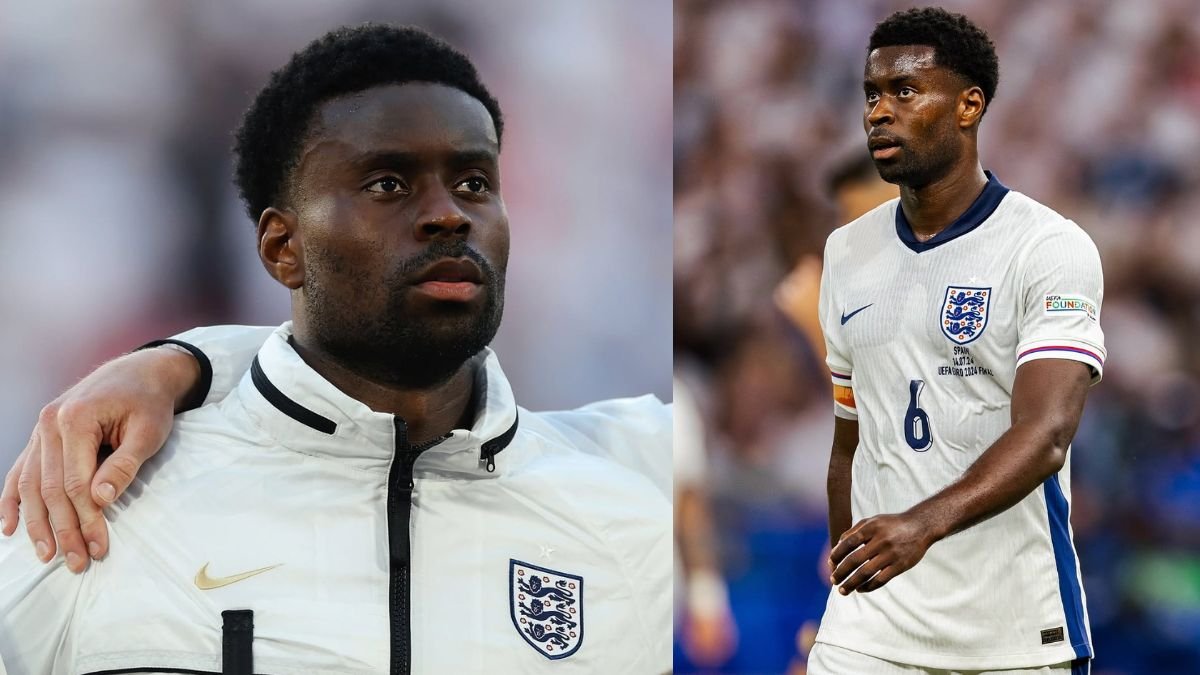
At 6 feet (182 cm) tall, he’s not particularly imposing for a center-back. Kyle Walker is taller. Virgil van Dijk is taller. Most elite center-backs are taller. Yet his positioning compensates for what height might offer. He’s rarely beaten in the air because he’s rarely out of position to begin with.
His body language on the pitch conveys control. He doesn’t panic under pressure. When opponents press high, he steps forward with the ball rather than booting it long. That composure comes from confidence in his reading of situations—knowing where teammates are, where space exists, what’s coming next.
He’s been described as “very strong” and praised for “coolness and maturity.” Those aren’t flashy qualities, but they’re the ones that matter over 90 minutes against elite attackers.
England Recognition and National Identity
He made his England senior debut in 2022. By Euro 2024, he was a starting center-back as England reached the final, losing to Spain. On September 9, 2025, he scored his first England goal in a 5-0 win over Serbia in World Cup qualifying.
Born in Ivory Coast but raised in England from infancy, he represents England at senior level. He’s the second Ivory Coast-born footballer to play for England after Wilfried Zaha, who was also his teammate at Palace. That dual heritage—African by birth, English by upbringing and choice—reflects modern football’s complicated relationship with identity and nationality.
He doesn’t make his heritage a talking point. He simply exists as someone formed by multiple influences, which probably feels normal to him even if it fascinates others.
The Transfer That Almost Happened
In August 2025, Liverpool agreed a £35 million deal to sign him on deadline day. He completed a medical. A five-year contract was ready to sign. Then, minutes before the deadline, Crystal Palace pulled out because they couldn’t secure a replacement in time.
Reports suggested manager Oliver Glasner threatened to resign if the deal went through. Guéhi was “torn to shreds” by the collapse. He’d done everything right—agreed terms, passed the medical, waited for his dream move to the Premier League champions. Palace blocked it anyway.
Chairman Steve Parish had publicly stated Guéhi would likely be sold to avoid losing him for free when his contract expires in summer 2026. Glasner contradicted that, insisting he “had to stay.” The contradiction played out in real time as the transfer window closed.
He stayed professional. He was nominated for Premier League Player of the Month for August despite the turmoil. His contract situation remains unresolved as of January 2026, with speculation that Liverpool, Bayern Munich, or Manchester City might return for him.
Life Away From Football
He keeps his personal life exceptionally private. He’s not married. There’s no public information about romantic relationships. His social media presence is minimal and focused entirely on football.
As of mid-2025, he still lived at home with his parents and three younger sisters. For most 24-year-old Premier League players earning significant wages, that would seem strange. For him, it appears to be about grounding—staying connected to the people and values that shaped him before football fame arrived.
He’s mentioned playing drums growing up and his father being a pastor. Those details suggest a childhood where football wasn’t the only thing that mattered, even as it became his career.
Net Worth and Professional Standing
Marc Guéhi’s contract with Crystal Palace, signed in 2021, expires in June 2026. Premier League defender salaries at his level typically range from £50,000-100,000 per week. Over five years, that puts his total Palace earnings in the range of £13-26 million before taxes.
If he’d joined Liverpool on that £35 million transfer, his wages would have increased significantly—Champions League clubs pay premium rates. Instead, he’s in the final months of his Palace contract, meaning he could leave for free in summer 2026 or Palace could sell him in January to recoup something.
Financial estimates of his net worth aren’t publicly confirmed, but based on five years of Premier League wages, England appearances, and endorsement opportunities, reasonable estimates would place it in the £5-10 million range. That’s substantial but not extravagant compared to established internationals.
FAQs
Where is Marc Guéhi from?
He was born in Abidjan, Ivory Coast, on July 13, 2000. His family moved to Lewisham, South London, when he was one year old, where he grew up and began playing football.
What is his background?
He’s of Ivorian descent, raised in England by a family where Christian faith was central. His father is a church minister. He came through Chelsea’s youth system before joining Crystal Palace in 2021.
What position does he play?
He’s a center-back, standing 6 feet tall. He’s right-footed and plays in a calm, composed style built on positioning and reading the game rather than physical dominance.
Does he play for England?
Yes. He made his England senior debut in 2022 and was a starting defender when England reached the Euro 2024 final. He scored his first England goal in September 2025 against Serbia in World Cup qualifying.
Read Also: Charlie Becker Biography: From High School Athlete to Big Ten Star
About The Author
