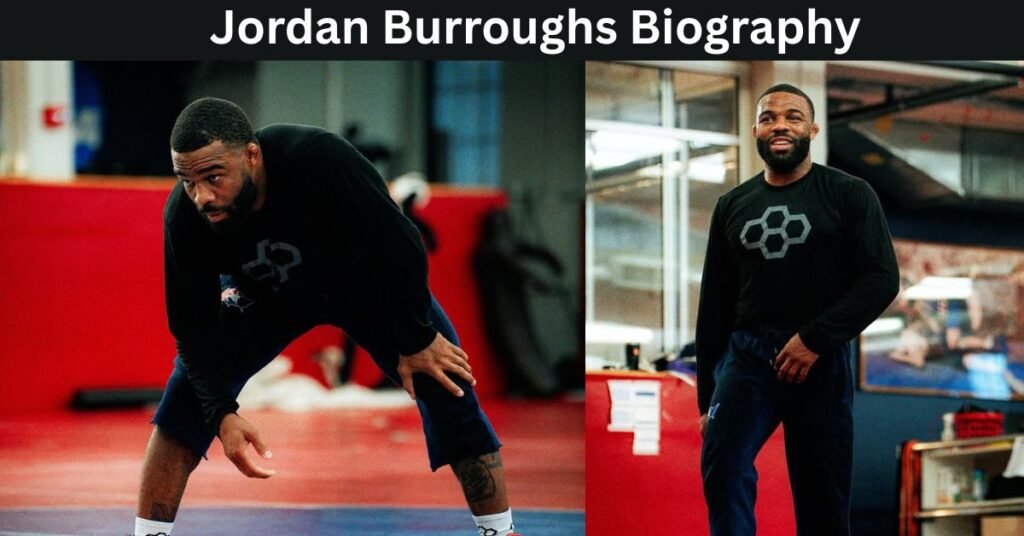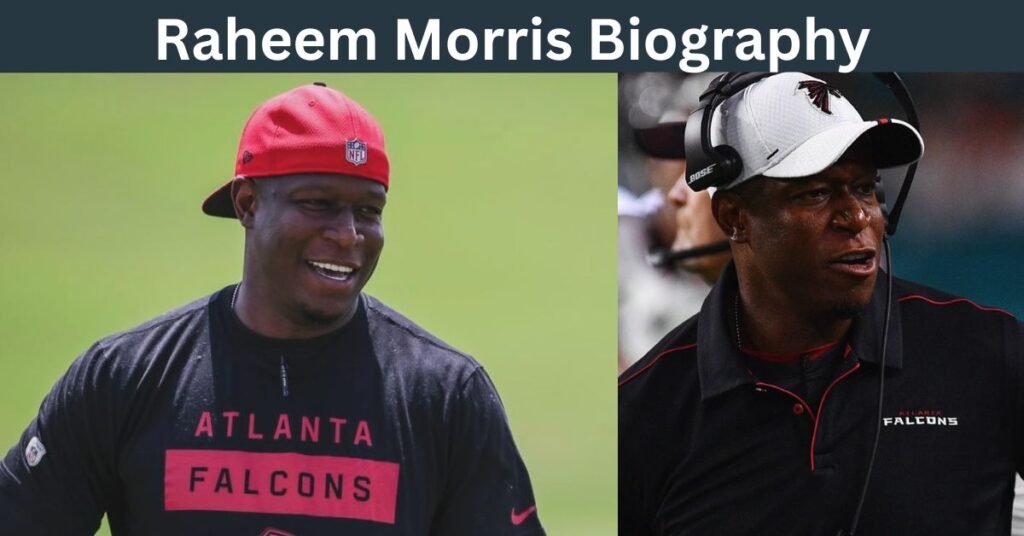
Donovan Carrillo is a Mexican figure skater who has spent most of his life doing something his own country had no real infrastructure to support. He grew up in Guadalajara, trained in a shopping mall, received minimal government funding for years, and still became the best figure skater Mexico has ever produced. At 26 years old, he has now competed at two Winter Olympics — and qualified for the free skate final in both of them, a first for any Mexican skater in history.
His biography isn’t built around one defining moment. It’s built around years of quiet persistence in a country where the sport he chose was barely practiced, where rinks were rare, where funding was unreliable, and where most people around him didn’t quite understand what he was trying to do. He did it anyway, and in doing so opened a door for the next generation of Latin American figure skaters.
Quick Facts
| Category | Details |
|---|---|
| Full Name | Donovan Daniel Carrillo Suazo |
| Date of Birth | November 17, 1999 |
| Age | 26 years old (as of 2026) |
| Birthplace | Zapopan, Jalisco, Mexico |
| Hometown | Guadalajara, Jalisco, Mexico |
| Current Residence | Toronto, Canada |
| Nationality | Mexican |
| Height | Approximately 5 feet 7 inches (170 cm) |
| Father | Adolfo Carrillo (physical education teacher) |
| Mother | Diana Suazo (physical education teacher) |
| Siblings | Three sisters, including older sister Daphne |
| Sport | Men’s Singles Figure Skating |
| Coach | Jonathan Mills and Myke Gillman (Toronto); formerly Gregorio Núñez |
| Olympics | 2022 Beijing (22nd overall); 2026 Milan-Cortina (qualified) |
| Historic Firsts | First Mexican to qualify for Olympic free skate; first Mexican to land a quadruple jump in competition |
| Sponsors | Toyota, HSBC |
Early Life and Childhood in Guadalajara
Donovan Daniel Carrillo Suazo was born on November 17, 1999, in Zapopan, a city within the Guadalajara metropolitan area in the state of Jalisco, Mexico. He grew up in Guadalajara itself, in a warm-weather city where winter sports were not part of the culture and ice rinks existed mainly inside shopping centers.
Before skating ever entered the picture, he was a multi-sport child. He enrolled in gymnastics and diving at a young age, developing the body awareness, flexibility, and coordination that would later serve him well on the ice. He also took ballet classes, which sharpened his sense of movement and expression.
At age eight, everything changed. His older sister Daphne started taking figure skating lessons, and Donovan tagged along one day at the local rink. He has since admitted in interviews that part of his motivation for joining was a girl in the class he liked. Whatever the reason, once he was on the ice, something clicked. He kept coming back — not for the girl, but for skating itself.
His mother Diana has recalled the financial pressure clearly: “For us, the most difficult thing was our finances. We had to consider the option of withdrawing the kids from skating for a month because we couldn’t afford the ice skating lessons.” Despite those pressures, his parents kept finding ways to support him.
Read Also: Chloe Kim Biography: Immigrant Roots, Early Life, and Personal Journey
Parents and Family Background
Donovan’s parents are Adolfo Carrillo and Diana Suazo. Both are physical education teachers, which gave them a strong appreciation for athletic development, discipline, and the physical demands of competitive sport. Their educational backgrounds meant they understood training and dedication, even if figure skating was far outside their direct experience.
His father Adolfo has spoken publicly about the family’s decision to invest in Donovan’s skating despite significant financial strain. “Everything was difficult, but I think it’s been worth it. There’s no money, but we have happy children,” Adolfo said in an interview with the Olympic Channel.
He has three sisters. His older sister Daphne was the one who first brought him to a skating rink, making her an indirect but important figure in his career. The family has remained closely connected to his journey even as his training required him to live far from home for extended periods.
Donovan has spoken about how difficult the physical separation from his family was, particularly when he left Guadalajara at age 13. “When I left home to start this journey, it was very hard for both my parents and myself. We suffered a lot due to this separation. And although we try to stay in contact via phone, video chat, it is not like being present there,” he said.
Leaving Home at Thirteen
When Donovan was 13 years old, the ice rink in Guadalajara where he trained shut down. His coach, Gregorio “Goya” Núñez, was relocating to León, in the state of Guanajuato, and the only way to continue training seriously was to go with him.
In León, he practiced in a shopping mall. The ice was small and dark. He shared it with teenagers on dates and small children learning to skate. Often, he had to perform without music to avoid disturbing the other skaters. He trained like this for years.
These weren’t temporary conditions he tolerated for a season. He trained in that environment for the better part of a decade. Most figure skaters his age in competitive programs were practicing in dedicated facilities with proper ice conditions, full-length programs, and consistent coaching schedules. He was working around mall hours and public skate sessions.
Despite these limitations, he kept improving. He made his international debut in 2017 and began competing in ISU Grand Prix events. In 2021, he made history by becoming the first Mexican figure skater to land a quadruple jump — the quadruple Salchow — in competition.
Nationality, Heritage and Cultural Identity
Donovan Carrillo is Mexican by nationality and Jaliscense by upbringing. His parents are both Mexican, and he grew up deeply connected to his country’s culture, food, and identity.
He has spoken openly about how his Latin heritage shapes his approach to skating. He credits his Latino heritage with shaping his style, saying that his passion and “Latin warmth” resonate with audiences and judges alike. His programs often reflect this cultural pride — blending technical demands with expressiveness that feels authentic rather than performed.
He has not publicly discussed religious beliefs in detail. His family background in Guadalajara, a deeply Catholic city in Mexico, provides cultural context, but Donovan himself has not made religion a public topic in interviews or media appearances.
His programs have been skated to music ranging from Carlos Santana to Elvis Presley, reflecting a range that goes beyond regional identity. He uses music as a vehicle for artistic expression, connecting with audiences across different cultures.
The Road to Beijing 2022
For most of his career, Carrillo received no money from the Mexican government. He only entered the high-performance program in 2019, six years after his first international representation for Mexico.
That same year he qualified for the senior world championships in Japan, he finally received a monthly stipend of 37,000 pesos — roughly equivalent to about $1,800 USD monthly at the time. For an elite athlete competing internationally, this was a modest amount.
In 2021, he placed 20th at the World Championships in Stockholm, which secured a spot for Mexico in men’s singles figure skating at the 2022 Beijing Winter Olympics. The accomplishment was significant. He would become the first Mexican skater to compete at the Olympic Winter Games in 30 years.
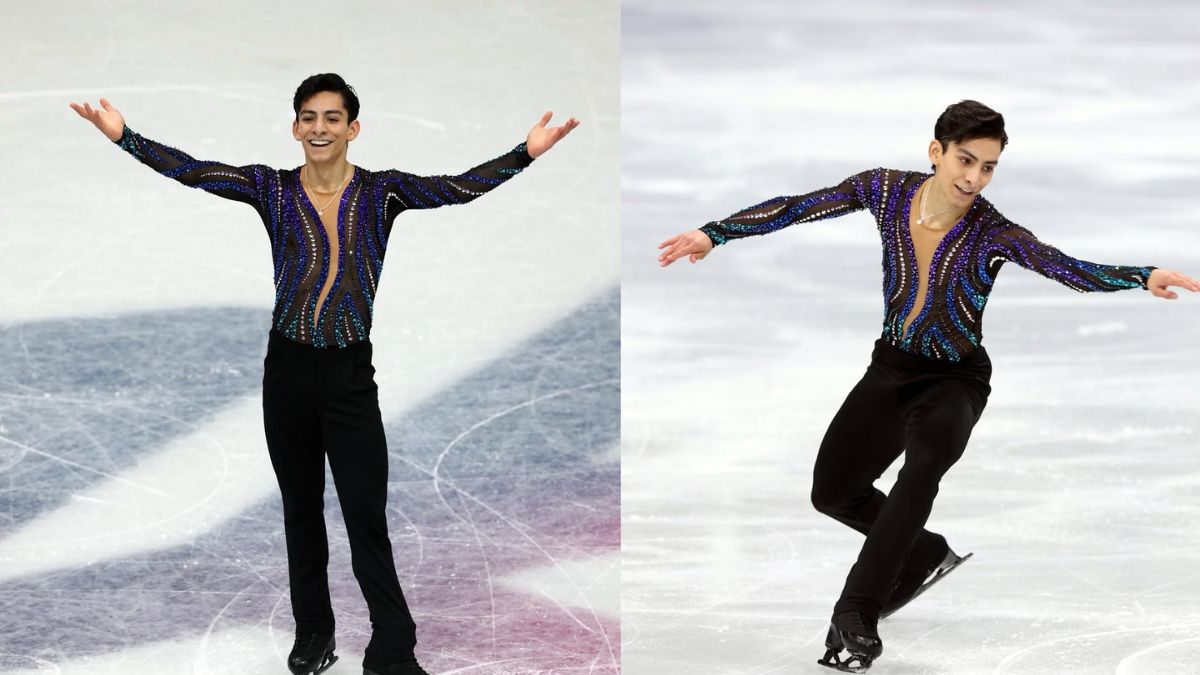
At Beijing 2022, he skated his short program to Carlos Santana and posted a personal best score of 79.69 points. After hearing his score announced, he raised both arms into the air, jumped three times and yelled, “Siii!” The smile was visible, even under his mask.
He qualified for the free skate — becoming the first Mexican figure skater ever to do so at the Olympics. He finished 22nd overall, the best result ever achieved by a male Latin American figure skater at an Olympic Games.
An Ankle Injury and a Major Rebuild
After Beijing, the momentum stalled. He suffered an ankle injury that required surgery in December 2022, keeping him out of competition for the entire 2022-23 season. It was a difficult period — operating at the sport’s highest level, making history, then losing nearly a full year to recovery.
When he returned to competition, he made a decision that would define the next phase of his career. He parted ways with his longtime coach Gregorio Núñez, with whom he had trained for over a decade, and moved to Toronto, Canada in 2023 to train with coaches Jonathan Mills and Myke Gillman.
The split with Núñez was not smooth. Núñez responded by writing in Spanish about politics and vested interests surrounding elite sport, suggesting the separation involved more than just professional differences. Donovan has spoken respectfully about the years they shared but has stayed focused on his own development rather than discussing the circumstances of the split in detail.
Training in Toronto and the 2026 Olympic Qualification
The move to Toronto changed his skating. “I try to forget what I learned in the past in Mexico and try to build a new Donovan that really enjoys what he’s doing and really find joy every single time I am on the ice,” he said. His new coaches encouraged him to stop chasing perfection in every session and instead embrace the process.
“It’s not just work on the sport, not just to teach me the jumps. But also giving me life advice. Showing me how to enjoy the process. I was so hard with myself, always trying to be perfect. And they were like ‘you don’t have to be perfect every single day,'” he explained.
In October 2025, he won a bronze medal at the ISU Skate to Milano event — the Olympic qualifying competition — securing Mexico’s spot in men’s singles figure skating at the 2026 Milan-Cortina Winter Games. He also won silver at the 2024 NRW Trophy, the 2025 Bavarian Open, and the 2025 International Challenge Cup.
At Milan-Cortina 2026, Carrillo made history again — becoming the first Mexican skater to qualify for two consecutive Olympic free skate finals. He finished 23rd in the short program with a score of 75.56, qualifying out of 39 athletes, with the top 24 advancing.
Physical Profile and Skating Style
According to publicly available information, Donovan Carrillo stands approximately 5 feet 7 inches (170 cm) tall with a slender, athletic build well-suited to the technical and artistic demands of figure skating.
His skating style blends technical ambition with genuine artistic expression. He is the first Mexican skater to land a quadruple jump in competition. He idolizes Spain’s Javier Fernández — a skater who, like Donovan, came from a country without deep figure skating traditions and built an elite career through persistence and technical development.
His programs are known for their energy and emotional warmth. He doesn’t approach skating as purely athletic. He sees it as performance, and his background in gymnastics, diving, and ballet gives him a range of movement that pure athletic training alone doesn’t produce.
Personal Life and Relationships
Donovan Carrillo keeps his romantic life private. He has not confirmed a relationship partner in verified public sources, and he does not discuss dating or personal relationships in interviews.
What comes through consistently in his public appearances and media coverage is a person who is thoughtful, self-aware, and genuinely humble. He lives alone in Toronto now — far from his family in Guadalajara — and has spoken about occasionally going downtown to find taco restaurants when he misses home.
He maintains a warm relationship with his family despite the distance. His parents and sisters have followed his career closely since his earliest competitions, and family support is a theme he returns to often in interviews.
Government Support and Financial Reality
Carrillo receives a monthly stipend of 12,000 pesos (approximately $696 USD) from Mexico’s National Sports Commission (Conade). He also has sponsors including Toyota and HSBC.
These figures illustrate the financial reality facing Olympic athletes in non-mainstream sports, particularly in countries without established winter sports infrastructure. After his historic performance at Beijing 2022, the head of Conade declined to increase his stipend, stating the money was an incentive for results rather than a salary.
His net worth has not been publicly disclosed. Based on sponsorship income, competition prize money, and government stipends, estimates from sports publications place his overall earnings in the modest range compared to figure skaters from countries with stronger national programs. Any specific net worth figure would be speculative without verified financial disclosure.
Read Also: Cooper Flagg Biography: Early Life, Career, and Personal Life
About The Author