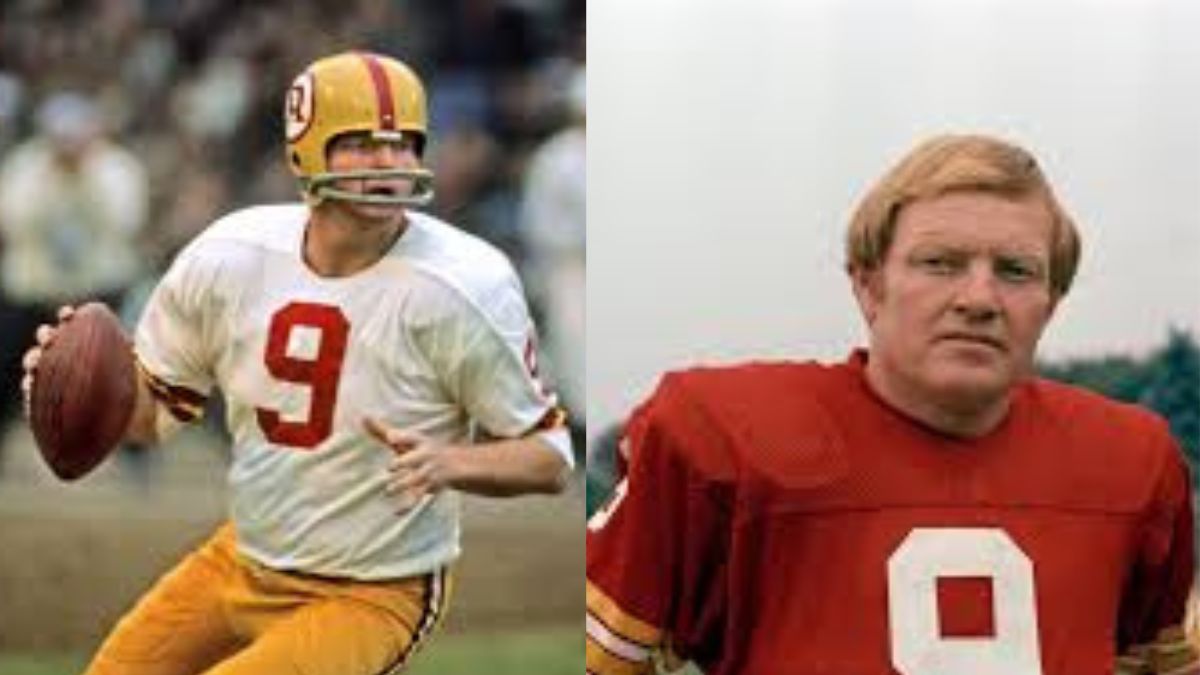
Sonny Jurgensen passed away on February 6, 2026, at the age of 91, leaving behind a legacy as one of the greatest pure passers in NFL history. His 18-year career with the Philadelphia Eagles and Washington Redskins established him as a legendary quarterback who revolutionized the passing game.
He was inducted into the Pro Football Hall of Fame in 1983 and spent 38 years as a beloved broadcaster for Washington’s radio crew. His life story goes far beyond statistics—it’s about family, perseverance, and a love for football that lasted seven decades.
Early Life and Childhood
Christian Adolph Jurgensen III was born on August 23, 1934, in Wilmington, North Carolina. Everyone called him Sonny from an early age, a nickname that stuck with him throughout his life.
He grew up on South 18th Street, about a mile from New Hanover High School, in a neighborhood packed with children. His family operated Jurgensen Motor Transport, a trucking company that hauled freight for A&P grocery stores, providing a solid working-class upbringing.
The neighborhood had about 30 boys within a four-block area, creating constant opportunities for pickup games. A neighbor remembered a red-headed kid with a big smile asking to join games on an empty corner lot—that was young Sonny, always looking for a chance to play.
He excelled at multiple sports from elementary school onward. He led his grammar school to city titles in baseball and basketball, won Wilmington’s youth tennis championship, and pitched for his local Civitan club that won the city baseball title.
High School Years at New Hanover
Jurgensen attended New Hanover High School in Wilmington, where he became a three-sport star in football, basketball, and baseball. His coach, Leon Brogden, would become a significant influence on his life and career.
During his junior year in 1951, he played running back and linebacker while Burt Grant quarterbacked the team. New Hanover beat Fayetteville 13-12 before 10,000 spectators at Legion Stadium to win the school’s first Eastern Conference title since 1928.
His senior year, he moved to quarterback and earned All-State honors. That same year, he averaged 12 points per game as a basketball guard, and the team finished as state AAA runner-ups. In baseball, he batted .339 while playing pitcher, infielder, and catcher.
According to information from profootballhof.com, Coach Brogden later said: “I will always remember Sonny for his competitive spirit and unusual good sense of humor. He had the ability with his personality and skills to raise the level of play in his teammates.”
College Career at Duke University
Jurgensen attended Duke University, where he joined the varsity football team in 1954 as a backup quarterback. His college career didn’t produce impressive statistics—he completed just 77 of 156 passes for 1,119 yards with six touchdowns and 16 interceptions.
Duke’s offense rarely passed the ball, which limited his development as a quarterback. He played defensive back as much as quarterback, finishing with 10 career interceptions on defense.
This lack of passing experience nearly cost him an NFL career. Duke’s head coach Bill Murray told scouts that Jurgensen would make a fine safety, not a quarterback. Had scouts listened only to Murray, one of history’s great passers might never have played the position professionally.
Fortunately, Duke assistant coach Red Parker intervened, convincing NFL scouts that Jurgensen’s arm talent transcended Duke’s run-first system. That intervention saved his career and changed NFL history.
Marriage and Family Life
Jurgensen was married twice during his life. His first marriage was to Suzanne Stuart Long, with whom he had two sons: Greg and Scott. The marriage ended in divorce, partly because football consumed his life and left little time for family.
After the divorce, he had limited contact with Greg and Scott, a source of regret later in life. A low point came when one of his sons told him he’d heard about his father’s arrest on the radio—a moment that deeply embarrassed and affected him.
On June 8, 1967, while playing for the Washington Redskins, he married Margo Hurt. This marriage would last nearly 58 years until his death in 2026. Together, they had two sons: Erik and Gunnar.
According to IMDb, Margo brought quiet strength to Jurgensen’s life off the field, supporting him through his playing career, broadcasting career, and retirement.
The couple bought a grand Italianate villa in 1969 on a bluff overlooking the Potomac River, adjacent to the Mount Vernon Estate. The house had been empty for five years and was in disrepair, but they rehabilitated it together and moved in during 1970.
They raised Erik and Gunnar in that Mount Vernon home, where Jurgensen also had a den with a fireplace and NFL-size television that he used to review game tapes and scouting reports during his broadcasting career.
In his 2018 retirement announcement from broadcasting, Jurgensen specifically thanked Margo “for letting me work the weekends for all those years.” After 62 years in professional football, she had supported him through it all.
Children and Grandchildren
Jurgensen had four sons total from his two marriages. From his first marriage to Suzanne Stuart Long, he had sons Greg and Scott, though he lost regular contact with them after the divorce.
From his second marriage to Margo Hurt, he had sons Erik and Gunnar, whom they raised together in their Mount Vernon home from 1970 onward.
At the time of his death in February 2026, Jurgensen was survived by his wife Margo, his four sons, six grandchildren, and four great-grandchildren, according to official statements from the family and the Washington Commanders organization.
NFL Career with Philadelphia Eagles
The Philadelphia Eagles selected Jurgensen in the fourth round—43rd overall—of the 1957 NFL Draft. At 5-foot-11 and 202 pounds with red hair and a calm demeanor, he didn’t look like much, but he could throw with remarkable accuracy.
He spent his first four seasons backing up Hall of Fame quarterback Norm Van Brocklin. He started just four games as a rookie in 1957, going 3-1 while throwing for 470 yards and five touchdowns, then barely played for the next three years.
In 1960, the Eagles won the NFL Championship, defeating Vince Lombardi’s Green Bay Packers 17-13. Jurgensen served as the holder for kicks but never took a snap at quarterback in the playoffs. It would be the only championship team he’d ever be part of.
When Van Brocklin retired after the 1960 season, Jurgensen finally became the starting quarterback. In 1961, he tied Johnny Unitas’ single-season record with 32 touchdown passes and set an NFL record with 3,723 passing yards. He earned First-Team All-Pro honors and his first Pro Bowl selection.
The following year in 1962, he led the NFL again with 3,261 passing yards and 22 touchdowns. But the Eagles were struggling as a team, and changes were coming.
Trade to Washington Redskins
On April 1, 1964, Philadelphia traded Jurgensen to the Washington Redskins for quarterback Norm Snead and cornerback Claude Crabb. The deal shocked him—Washington had been his favorite childhood team, but he’d built a life in Philadelphia.
The trade proved career-defining. He spent the next 11 seasons in Washington, making four Pro Bowl teams and leading the NFL in passing three more times.
In 1967, he set franchise records with 3,747 yards, 288 completions, 508 attempts, and 31 touchdown passes. That touchdown mark still stands as Washington’s single-season record nearly 60 years later.
He formed productive partnerships with receivers Bobby Mitchell, Charley Taylor, and Jerry Smith. Taylor and Jurgensen combined for 53 touchdowns over ten years together, one of the era’s most successful quarterback-receiver duos.
The 1969 Season Under Vince Lombardi
In 1969, legendary coach Vince Lombardi took over as Washington’s head coach. At 35, Jurgensen was in his sixth Washington season, and some considered him past his prime.
Jurgensen later said in his Hall of Fame enshrinement speech that he worked harder that season than in his previous 12 NFL campaigns combined. He got in the best shape of his life, and Lombardi simplified the offensive schemes.
The result was spectacular. Jurgensen led the NFL with 442 attempts, 274 completions, 62% completion percentage, and 3,102 yards. Washington went 7-5-2, their best record since 1955.
After one of Jurgensen’s performances that season—playing hurt and throwing for over 400 yards—Lombardi told reporters: “Sonny Jurgensen is a great quarterback. He may be the greatest this league has ever seen; he certainly is the best I have ever seen.”
Lombardi died of cancer before the 1970 season. Years later, Jurgensen would say that of the nine head coaches he played for, Lombardi was his favorite.
The Billy Kilmer Controversy
In the early 1970s under coach George Allen, Washington reached Super Bowl VII but lost to Miami’s undefeated Dolphins 17-14. Jurgensen didn’t start the game—Billy Kilmer got the nod, creating a quarterback controversy that consumed Washington.
Bumper stickers appeared around the city: “I Love Billy” and “I Love Sonny.” The defensive-minded Allen preferred Kilmer’s conservative style to Jurgensen’s high-risk approach. Injuries to Jurgensen in 1971 and 1972 complicated matters further.
Despite the competition and media circus, Jurgensen and Kilmer became lifelong friends. Even decades later, Kilmer would stay at Jurgensen’s house when visiting Washington.
In 1974, at age 40 and splitting time with Kilmer, Jurgensen won his third NFL passing crown. His final career appearance came in the playoffs—a 19-10 loss to the Los Angeles Rams on December 22, 1974.
After 18 seasons, 218 games, and 32,224 passing yards, his playing career was over.
Read Also: Who Is Darwin Blanch? Early Life, Tennis Journey and Background
Broadcasting Career
Jurgensen didn’t leave football after retiring as a player. He moved to the broadcast booth, working six years as a CBS analyst from 1975 to 1980 before joining Washington’s radio crew in 1981.
Partnering with Hall of Fame linebacker Sam Huff and play-by-play announcer Frank Herzog, Jurgensen became the voice of Washington football. The trio “became like family for Redskins fans” during the team’s glory years under Joe Gibbs.
He covered the team’s three Super Bowl victories in 1982, 1987, and 1991, calling games from the radio booth. He also worked for Washington television station WRC-TV from 1994 until December 2008 when budget cuts ended the program.
During his early broadcasting career in the 1980s, he looked so gaunt on television that viewers called the station asking if he had cancer. He didn’t—he had simply cut back his drinking considerably and become more conscious of his nutrition habits.
He worked with a Catholic University speech coach to improve his accent and delivery. Although never perfect, he improved significantly and became beloved for his insights and North Carolina drawl.
He announced his retirement from broadcasting before the 2019 season at age 84, ending 38 consecutive seasons covering Washington football. In his retirement announcement, he specifically thanked Margo for supporting him through all those weekend work commitments.
Personal Struggles and Growth
Jurgensen struggled with alcohol at times, particularly during his broadcasting career. He had run-ins with law enforcement related to drinking, incidents that embarrassed him deeply and affected his family.
An especially low point came when his son heard about his father’s arrest on the radio. The shame of that moment stayed with him and motivated him to change his approach.
He thought buying a boat would keep him out of trouble, but on the boat’s maiden voyage on the Potomac River, the Coast Guard pulled him over. These experiences taught him hard lessons about accountability and the impact of his choices on those he loved.
Over time, he addressed these issues and built a more stable life. His long marriage to Margo and his broadcasting career provided structure and purpose beyond his playing days.
Hall of Fame Recognition
On January 29, 1983, Jurgensen was elected to the Pro Football Hall of Fame. He was enshrined on July 30, 1983, alongside Bobby Bell, Sid Gillman, Bobby Mitchell, and Paul Warfield.
Washington president Edward Bennett Williams served as his presenter at the ceremony. The recognition validated a career that sometimes felt underappreciated during his playing years.
He never won a championship as a starting quarterback. He never won league MVP. He played on teams that often fell short despite his individual excellence. But those who watched him play understood his greatness.
His 82.62 career passer rating remains the highest for any quarterback in the “Dead Ball Era” before 1978 rule changes opened up passing offenses. He led the NFL in passing yards five times and earned five Pro Bowl selections.
Vince Lombardi once told Green Bay Packers executive Pat Peppler: “If we would have had Sonny Jurgensen in Green Bay, we’d never have lost a game.”
Physical Appearance and Playing Style
Jurgensen stood 5 feet 11 inches tall and weighed 202 pounds during his playing career. He wasn’t physically imposing by NFL standards, but his arm strength and accuracy were exceptional.
He had red hair and a friendly, approachable demeanor that endeared him to teammates and fans. His physique was unique among NFL quarterbacks of his era—he wasn’t lean and athletic like most passers.
His playing style was defined by his willingness to stand in collapsing pockets and deliver throws at the last possible moment. He once explained: “All I ask of my blockers is four seconds. I try to stay on my feet and not be forced out of the pocket. I beat people by throwing, not running.”
He refused to be intimidated by pass rushers, taking hits to complete passes rather than running out of bounds or throwing the ball away. This courage under pressure became his trademark.
Net Worth and Earnings
During his playing career, Jurgensen earned substantial salaries by 1960s and 1970s standards, though nothing compared to modern quarterback contracts. Specific salary figures from his playing days have not been widely published.
In his broadcasting career, he earned over $100,000 yearly according to historical accounts, which was significant income in the 1980s and 1990s. Over 38 years of broadcasting, this provided financial stability beyond his playing earnings.
Various sources have estimated his net worth at the time of his death to be in the range of several million dollars, accumulated through his playing career, broadcasting income, and wise financial management over decades.
He and Margo owned their grand Mount Vernon estate, which they purchased in 1969 and rehabilitated together. They later added a pool and tennis court after buying three adjoining empty lots, creating a substantial property.
Legacy and Impact on Football
Sonny Jurgensen’s legacy extends beyond his 32,224 passing yards and 255 touchdowns. He helped revolutionize the quarterback position during an era when passing was far more difficult than today.
He played before rule changes protected quarterbacks and receivers, when defenders could hit passers after throws and defensive backs could maul receivers downfield. In that environment, his passing efficiency was extraordinary.
His influence on Washington football lasted over 50 years—11 as a player, 38 as a broadcaster. Multiple generations of fans grew up hearing his voice on Sunday afternoons.
In 2023, Washington retired his No. 9 jersey, making him just the fourth player in the franchise’s 90-year history to earn that distinction at the time.
Final Years and Passing
Jurgensen lived his final years in the Washington, D.C. area with Margo. He remained connected to the football community and occasionally attended team events and Hall of Fame gatherings.
He passed away on February 6, 2026, at age 91. The family’s statement captured who he was beyond football: “The steady, humorous, and deeply loving heart of our family… He lived with deep appreciation for the teammates, colleagues, and friends he met along the way.”
He was survived by his wife Margo Hurt Jurgensen, his four sons (Greg, Scott, Erik, and Gunnar), six grandchildren, and four great-grandchildren.
Washington Commanders managing partner Josh Harris said: “Sonny Jurgensen is, and always will be, one of the defining legends of Washington football. He was a giant of the game, and a beloved part of our team’s identity.”
Read Also: Laila Edwards Biography: Age, Family, Career Journey & Personal Life
About The Author