
Mark Aguirre was the first overall pick in the 1981 NBA Draft, a three-time All-Star who averaged 20 points per game over 13 seasons, and a two-time NBA champion. Those facts appear simple on paper. Understanding his career requires context about the NBA during the 1980s—an era when scoring guards and forwards like Aguirre defined offensive basketball, when teams built around individual talent rather than systems, and when the gap between regular season success and championship achievement felt impossible to bridge.
His journey from Dallas Mavericks franchise player to Detroit Pistons role player tells a specific story about adaptation, sacrifice, and what winning actually costs. He went from being the guy taking 20 shots a night to being the guy accepting 10 shots if it helped the team. That transition shaped his legacy more than any scoring title ever could have.
NBA Era and Competitive Environment
The 1980s NBA belonged to scorers. Magic Johnson’s Lakers ran fast breaks. Larry Bird’s Celtics worked methodical half-court sets. The Pistons played physical defense that bordered on violence. Within that landscape, Aguirre represented the pure scorer—someone who could get 25-30 points regardless of defensive scheme or game flow.
The Western Conference during his prime Dallas years was stacked. The Lakers won championships. The Blazers had Drexler. The Rockets had Olajuwon. Dallas had talent but couldn’t break through. That context matters when evaluating his Mavericks tenure—he was excellent, but excellence alone didn’t equal championships in that era.
Playing Style and On-Court Strengths
Aguirre averaged 20 points per game over his 13-year NBA career. That consistency across more than a decade shows reliability few players match. According to his Basketball-Reference profile, he could score from multiple levels—post-ups, mid-range jumpers, transition baskets.
At 6’6″, he had the size to play power forward in smaller lineups but the skill to play wing positions. He wasn’t a great defender or passer—those weren’t his roles. He scored, rebounded adequately, and created offense when teams needed buckets.
On January 29, 1985, he scored a career-high 49 points in Dallas’s home win against Philadelphia. On April 20, 1984, he grabbed a career-high 17 rebounds in a playoff loss against Seattle. These performances show his range—he could dominate games through scoring or contribute through other means when needed.
Career Journey and Team Transitions
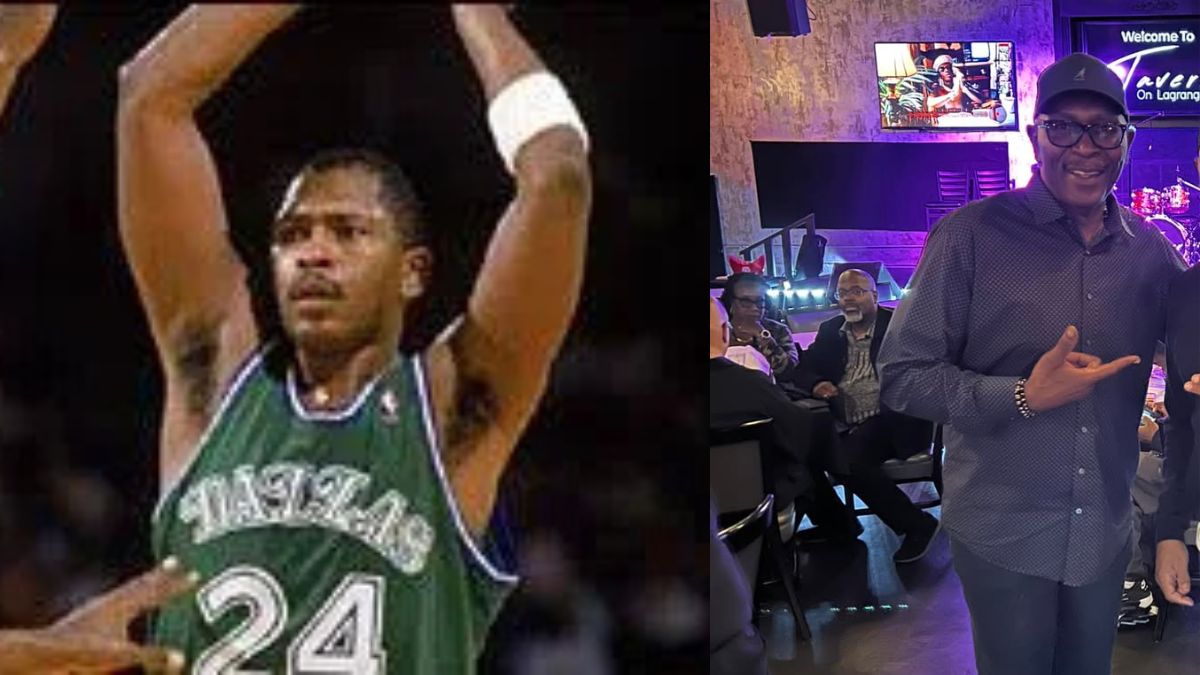
He was selected as the first overall pick by the Dallas Mavericks in the 1981 NBA draft after playing three years at DePaul University. Being the number one pick creates expectations that follow players their entire careers.
In his first season, he was limited to 51 games and averaged 18.7 points. Beginning with the 1982–83 season, he reeled off six straight campaigns in which his average topped 22 points per game. During the 1983–84 season, he averaged 29.5 points per game, second in the league to Adrian Dantley.
Those Dallas years established him as one of the league’s elite scorers. But playoff success eluded the Mavericks. Their only Western Conference Finals visit was the 1988 loss to the Lakers.
He had repeated conflicts with coach Dick Motta and players like Rolando Blackman, Derek Harper and James Donaldson. Team chemistry matters, and the dysfunction in Dallas eventually made a change inevitable.
On February 15, 1989, midway through the 1988–89 season, Aguirre was traded to the Detroit Pistons for Adrian Dantley and a first-round draft pick. The trade shocked Dallas fans—Aguirre had been their franchise player for eight years.
Championships, Achievements, and Recognition
He was selected to play in three All-Star games and won two NBA championships. Those championships came with Detroit in 1989 and 1990, validating his decision to accept a reduced role for team success.
He was inducted into the College Basketball Hall of Fame in 2016. His college career at DePaul was exceptional—he was a two-time consensus All-American and named the 1980 National Player of the Year. He helped DePaul reach the 1979 Final Four and averaged 24.5 points and 7.9 rebounds per game during his three seasons.
DePaul retired his number, one of only two players in program history to receive that honor alongside George Mikan. That recognition shows his impact at the collegiate level.
Detroit Pistons Years and Championship Role
After being traded to Detroit, the Pistons won the NBA title in 1989. Despite not being a lead scoring option like he was in Dallas, Aguirre played a key role in Detroit’s championship run, especially in the Eastern Conference Finals against the Chicago Bulls.
In the 1990 playoffs, which culminated with Detroit repeating as champions with a five-game Finals win over Portland, Aguirre averaged 11 points a game. Eleven points doesn’t sound impressive for someone who’d averaged 25+ in Dallas. But those 11 points came in the right moments, against playoff defenses, in a system where multiple players could score.
The following postseason, he scored his highest postseason total as a Piston, with 34 points in a Game 4 win over Boston in the Eastern Conference Semifinals. That performance showed he could still explode when necessary.
The Pistons were defeated by Michael Jordan and the Bulls in the following round, bringing their title defense to a close. Detroit’s championship window was closing.
In 1993, the Pistons released Aguirre. After clearing waivers, the Los Angeles Clippers signed him for $150,000 for a partial campaign in 1993–94. Through the 1993–94 season, he had accumulated 18,458 points for a career average of 20.0 points per game.
Early Life and Basketball Foundations
Aguirre’s mother, Mary, was living in Arkansas when she became pregnant with him at age sixteen. She moved to Chicago to be with her family who helped raise him. He did not meet his father until he was aged six.
He was raised in Chicago and played basketball at playgrounds on the city’s west side. Chicago playground basketball during the 1970s was competitive and physical, developing skills through constant competition rather than structured coaching.
His college years at DePaul under coach Ray Meyer shaped him into a complete player. The success there—Final Four appearance, National Player of the Year—prepared him for NBA expectations even if those expectations proved difficult to meet in Dallas.
Life After the NBA
According to DePaul University Athletics, Aguirre officially joined the DePaul Athletics staff as Special Assistant to the Athletics Director in October 2023.
In this role, he provides strategic counsel to the Vice President/Director of Athletics while cultivating relationships with DePaul alumni, Chicago business partners and stakeholders. He also supports the athletic department in alumni engagement to help grow the DePaul Basketball brand both locally and nationally.
This position brings his career full circle—returning to the program where he became a star, helping the next generation of DePaul players navigate their own journeys.
Frequently Asked Questions
When did Mark Aguirre play in the NBA?
He played from 1981 to 1994, spanning 13 seasons with Dallas, Detroit, and the LA Clippers.
What position did he play?
He primarily played small forward but also filled shooting guard and power forward roles depending on lineups.
Did he win NBA championships?
Yes, he won two NBA championships with the Detroit Pistons in 1989 and 1990 after being traded from Dallas.
Which teams did he play for?
Dallas Mavericks (1981-1989), Detroit Pistons (1989-1993), and Los Angeles Clippers (1993-94).
What is he doing now?
As of 2023, he serves as Special Assistant to the Athletics Director at DePaul University, his alma mater, focusing on alumni engagement and strategic partnerships.
Read Also: Caroline Wozniacki: A Complete Profile of Her Tennis Career and Personal Journey
About The Author