
Alan Armstrong started at Williams Companies in 1986 as a design engineer earning maybe $30,000 a year. Forty years later, he walked away from the CEO role after building one of America’s most valuable energy infrastructure companies—handling 30% of all natural gas flowing through the United States every single day.
Born in 1963 and graduating from the University of Oklahoma in 1985 with a bachelor’s degree in civil engineering, Armstrong represents the rare executive who spent his entire career at one company, rising from entry-level engineer to CEO through merit, not connections.
Now, in March 2026, Governor Kevin Stitt has appointed him to fill Oklahoma’s U.S. Senate seat as Senator Markwayne Mullin advances to a federal cabinet position. The move places one of the energy industry’s most respected voices directly into national policymaking.
Oklahoma Roots and Engineering Background
Armstrong comes from a family deeply embedded in the energy industry. Both his grandfathers, one grandmother, his mother and father worked for what was then Phillips Petroleum Co., and his uncle led the design team for the first major offshore platform in the North Sea.
Growing up surrounded by petroleum engineers and roughnecks, he understood the industry’s importance to Oklahoma’s economy before he could drive. His family maintained great respect for Williams Companies, making it a natural career destination after graduation.
He studied civil engineering at the University of Oklahoma, graduating in 1985. He joined Williams in 1986 as an engineer, starting in the unglamorous world of automating old compressor systems for Cities Service pipelines that Williams had acquired.
His early assignments involved field work—dusty, hot, and far from corporate offices. But he excelled at problem-solving and understanding how systems connected across vast infrastructure networks.
Wife Shelly and Four Children
Armstrong has been married to wife Shelly for over three decades, crediting his partner’s support with enabling his career success. In a 2011 interview with Tulsa People, he stated they’d been married 25 years at that time, placing their wedding around 1986—the same year he started at Williams.
Armstrong told Tulsa People: “I can’t say enough about the support she’s provided over the years; we’ve done a lot of moving around the country, and it takes a lot of extra effort to relocate a family several times”. His career required moves between Oklahoma, Texas, and various regional offices as he climbed the corporate ladder.
They have four kids, though specific names and ages have been kept largely private. In 2011, Armstrong mentioned having four children ranging from ages 11 to 20, meaning they’re now between 24 and 33 years old—all adults pursuing their own careers.
The family also includes two dogs—a young and frisky yellow retriever named Lilly, and a very lovable, old black Lab named Ford. Armstrong described spending weekends at the lake with family and friends, maintaining work-life balance despite CEO responsibilities.
His devotion to family remained consistent even during the most demanding periods of leading Williams through industry upheaval and the COVID-19 pandemic.
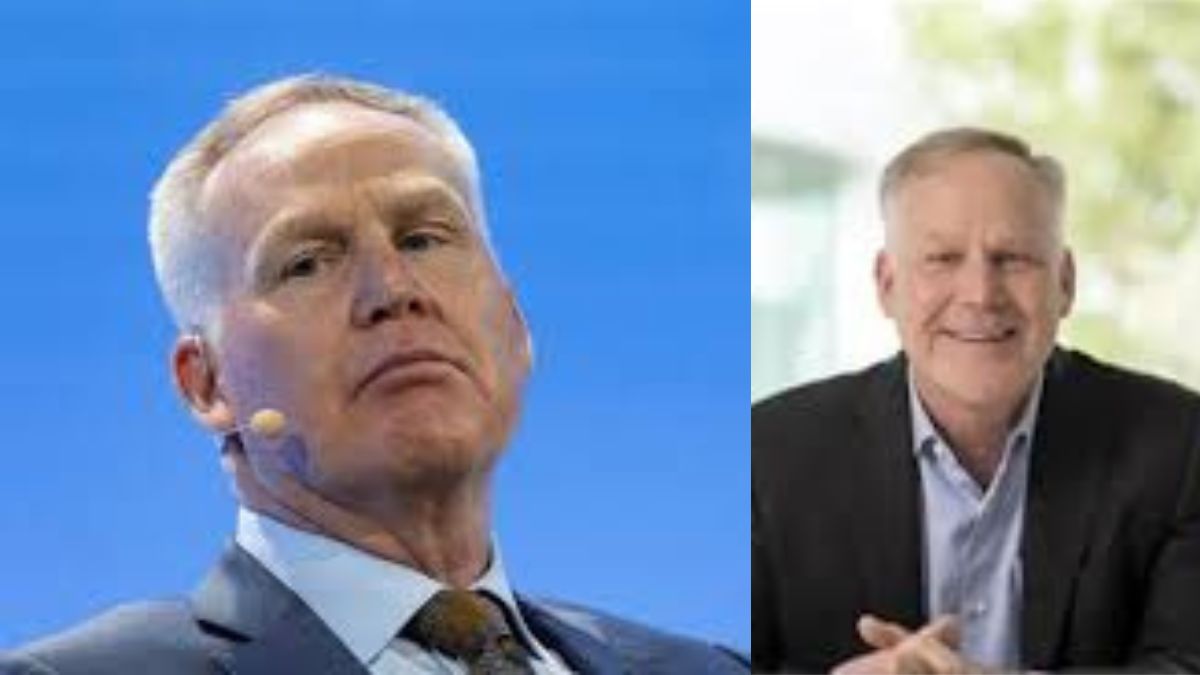
Ethnicity, Religion and Personal Life
Alan Armstrong is White American with deep Oklahoma roots spanning multiple generations. His surname “Armstrong” is of Scottish origin, common among families who settled the American South and Midwest.
Religious beliefs have not been discussed publicly by Armstrong in interviews or corporate communications. Like many business leaders from Oklahoma—a state with strong Christian cultural influences—he likely maintains personal faith privately while keeping it separate from professional identity.
His personal interests beyond family include board service for educational and cultural institutions. He serves on multiple boards including the University of Oklahoma Foundation, Junior Achievement USA, The Williams Foundation, and the Philbrook Museum of Art in Tulsa.
These commitments reflect someone who believes in giving back to the community that supported his career and family for four decades.
The 40-Year Rise Through Williams
Armstrong’s career progression at Williams included serving as director of commercial operations for the company’s midstream business in the Gulf Coast region from 1995 to 1997; vice president of retail energy services from 1997 to 1998; vice president of commercial development from 1998 to 1999 and vice president of gathering and processing from 1999 to 2002.
He became senior vice president of Williams’ midstream operations in 2002, overseeing the company’s North American gathering, processing, and pipeline businesses during a period of rapid expansion.
In October 2010, Williams announced that chairman and CEO Steve Malcolm would retire at the end of the year. The board elected Alan Armstrong to succeed Malcolm as CEO effective January 3, 2011.
His appointment came during a major corporate restructuring following the 2008 financial crisis. Williams was struggling with debt, facing an attempted hostile takeover, and needed strategic refocusing.
Armstrong’s strategy was brilliant in its simplicity: focus exclusively on natural gas infrastructure, divest everything else, and connect low-cost gas supplies to the fastest-growing demand centers.
Read Also: Neal Dunn Biography: Net Worth, Wife, Parents, Political Journey & Education
CEO Tenure: Building a Natural Gas Giant
Rising from design engineer to CEO, Armstrong streamlined Williams operations into a top-tier natural gas infrastructure operator with 12 consecutive years of earnings growth. That streak—unbroken through oil price crashes, regulatory battles, and a pandemic—is nearly unprecedented in the energy sector.
Under his leadership, Williams’ natural gas-focused strategy has driven significant reductions in greenhouse gas emissions, lowered consumers’ utility bills and paved the way for investments in renewable energy.
The company now operates pipelines and facilities across more than 25 states, touching approximately 30% of all U.S. natural gas volumes. This includes gathering systems in major shale plays, processing plants, interstate pipelines, and storage facilities.
Armstrong served as CEO for 14 years before transitioning to Executive Chairman in 2025, handing day-to-day operations to his handpicked successor Chad Zamarin.
Salary, Compensation and Net Worth
As CEO of a Fortune 500 company, Armstrong’s compensation reflected his performance. SEC filings show his total compensation in recent years ranged from $15-20 million annually, including salary, bonuses, and stock awards.
His net worth is estimated between $50-100 million, primarily from Williams stock accumulated over four decades and vested equity compensation. Unlike tech billionaires, his wealth came from steady accumulation rather than sudden liquidity events.
Williams Companies itself is valued at approximately $50 billion as of 2026, making it one of America’s largest energy infrastructure operators. Armstrong’s leadership directly created tens of billions in shareholder value.
Awards and Industry Recognition
In January 2026, Armstrong was awarded Lifetime Achievement at the Platts Global Energy Awards, often described as the Oscars of the energy industry. Williams was also awarded Excellence in Energy – Midstream.
Judges described Armstrong as “a leader with deep personal integrity” and pointed to his focus on process safety, global advocacy for pragmatic energy solutions and strategic positioning of Williams for a cleaner energy future.
In 2018, he received the Hanlon Award, the most prestigious honor in the midstream industry, recognizing those who have demonstrated the greatest achievements in the field.
Board Service and Industry Leadership
Armstrong serves on the boards of the American Petroleum Institute and the Energy Infrastructure Council, where he co-chaired a working group to develop the first-ever Midstream Company ESG Reporting Template. He serves as Chair of the National Petroleum Council.
He also serves as board member for BOK Financial Corp. and was elected to Constellation Energy’s board of directors effective January 1, 2026, just weeks before his Senate appointment.
His industry leadership extends beyond corporate boards. He’s a founding member of Natural Allies for a Clean Energy Future and speaks regularly at major energy conferences worldwide.
The Senate Appointment and What’s Next
Governor Kevin Stitt is expected to appoint Williams executive Alan Armstrong to an Oklahoma U.S. Senate seat as Sen. Markwayne Mullin advances in a federal nomination. The appointment brings decades of energy infrastructure expertise directly into federal policymaking.
Armstrong’s career has centered on expanding natural gas pipeline systems that deliver energy across the United States. He has also been involved in high-profile projects in the Northeast, where regulatory challenges have slowed or blocked development.
His Senate service will focus heavily on energy policy, infrastructure development, and regulatory reform—areas where his four decades of experience provide unmatched expertise.
Read Also: Dolores Huerta Biography: Husband, Parents, Net Worth, Children & Career Journey
About The Author