
Mike Fincke is an American astronaut who has spent 549 days in space, making him the fourth among NASA astronauts with the most time beyond Earth. He is 58 years old and recently completed his fourth mission to the International Space Station.
He is a retired United States Air Force Colonel who dedicated his career to both military service and space exploration. His journey from a small Pennsylvania town to becoming one of NASA’s most experienced astronauts shows years of hard work and commitment.
In January 2026, he made headlines when NASA revealed he experienced a medical emergency on the International Space Station. This led to NASA’s first-ever medical evacuation from the space station in its 25-year history.
Early Life and Childhood
Edward Michael Fincke was born on March 14, 1967, in Pittsburgh, Pennsylvania. However, he considers the nearby suburb of Emsworth to be his real hometown.
His parents, Edward and Alma Fincke, raised him in a regular working family environment. His father worked hard to support the family, and his mother managed their home in Emsworth.
Growing up in Pennsylvania in the 1970s and 1980s, he developed interests that would shape his future career. He loved reading about space, learning about geology, and studying different languages.
He was not the kind of child who stood out as a future astronaut immediately. Instead, he was curious, studious, and enjoyed learning new things. His teachers remember him as a bright student who asked many questions.
Education and Academic Journey
Mike Fincke attended Sewickley Academy in Sewickley, Pennsylvania, and graduated in 1985. This private school provided him with a strong academic foundation that prepared him for university studies.
He earned an Air Force ROTC scholarship to attend the Massachusetts Institute of Technology, one of America’s top engineering schools. At MIT, he worked incredibly hard and graduated in 1989 with not just one, but two Bachelor of Science degrees.
His first degree was in Aeronautics and Astronautics, which focuses on aircraft and spacecraft engineering. His second degree was in Earth, Atmospheric and Planetary Sciences, showing his interest in understanding planets and space environments.
Right after graduating from MIT in 1989, he did something unusual for an American student at that time. He attended a summer exchange program at the Moscow Aviation Institute in the Soviet Union, where he studied cosmonautics. This was during the final years of the Cold War, making his experience particularly unique.
He then went to Stanford University, where he earned a Master of Science degree in Aeronautics and Astronautics in 1990. Years later, in 2001, he earned a second master’s degree in Planetary Geology from the University of Houston–Clear Lake.
According to his official NASA biography, he also attended El Camino College in California, where he studied Japanese and geology, showing his commitment to continuous learning throughout his life.
Military Career Before NASA
After finishing his education at Stanford in 1990, Fincke entered the United States Air Force. His first assignment was at the Air Force Space and Missiles Systems Center at Los Angeles Air Force Base in California.
There, he worked as a Space Systems Engineer and Space Test Engineer. This meant he helped design and test equipment that would be used in space missions.
In 1994, he completed the prestigious United States Air Force Test Pilot School at Edwards Air Force Base in California. After graduation, he joined the 39th Flight Test Squadron at Eglin Air Force Base in Florida.
As a Flight Test Engineer, he flew in F-16 and F-15 fighter aircraft, testing various systems and equipment. This gave him valuable experience understanding how machines perform under extreme conditions.
In January 1996, he was sent to Japan, where he worked at the Gifu Test Center at Gifu Air Base. He served as the United States Flight Test Liaison to the Japanese/United States XF-2 fighter program, helping coordinate cooperation between the two countries.
By the time he retired from the Air Force, he held the rank of Colonel and had accumulated over 2,000 flight hours in more than 30 different types of aircraft.
Becoming a NASA Astronaut
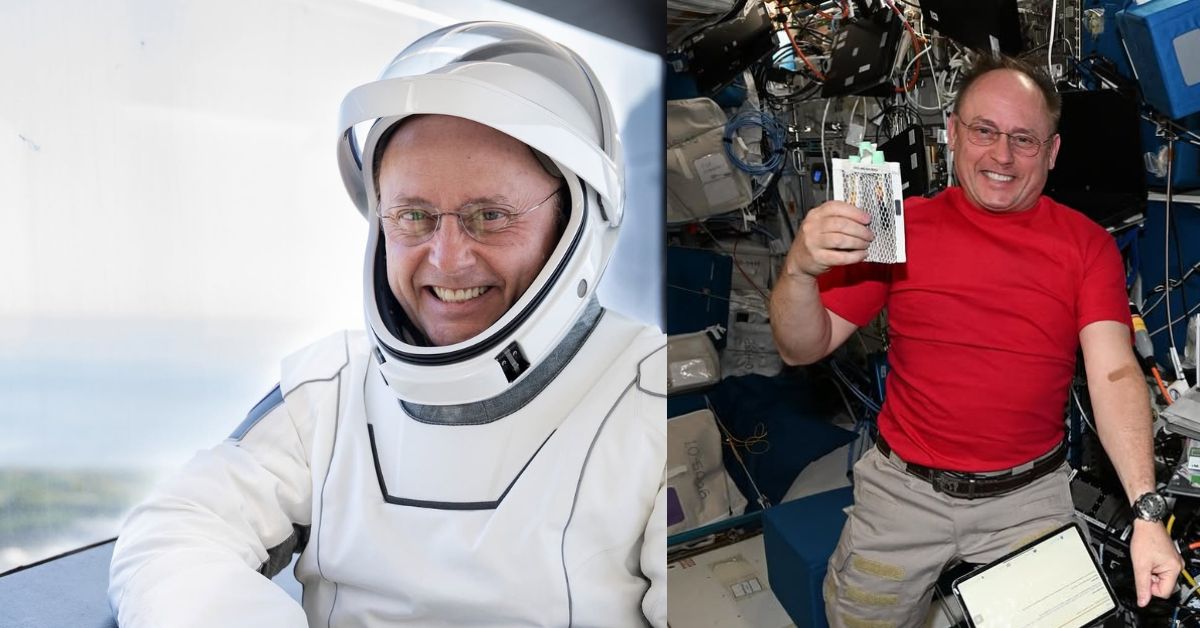
In April 1996, NASA selected Mike Fincke to become an astronaut. This was a dream come true for someone who had been preparing his entire career for this opportunity.
He reported to the Johnson Space Center in Houston, Texas, in August 1996. He then spent two years in training and evaluation, learning everything an astronaut needs to know.
During his early years at NASA, he worked in technical support roles. He served as an International Space Station spacecraft communicator, which means he talked to astronauts in space from mission control on Earth.
He also worked as part of the Crew Test Support Team in Russia. This role required him to travel to Russia and learn their space systems, which is why his earlier Russian language studies became so valuable.
In July 1999, he was assigned as a backup crew member for International Space Station Expedition 4. Being a backup meant he had to train just as hard as the main crew, but would only fly if something happened to one of the primary astronauts.
He also qualified to fly as a left-seat flight engineer on the Russian Soyuz spacecraft. This certification made him one of the few American astronauts who could pilot Russian spacecraft.
First Space Mission: Expedition 9
Mike Fincke’s first trip to space came on April 18, 2004, when he launched aboard the Soyuz TMA-4 spacecraft from Baikonur Cosmodrome in Kazakhstan. He served as Science Officer and Flight Engineer for Expedition 9.
The spacecraft docked with the International Space Station on April 21, 2004. He would spend the next six months living and working in space, conducting scientific experiments and maintaining the station’s systems.
During Expedition 9, he performed four spacewalks, spending over 15 hours outside the spacecraft doing repairs and upgrades. These spacewalks were done in Russian Orlan spacesuits.
His mission concluded on October 23, 2004, when his crew undocked from the station and returned safely to Kazakhstan. His first mission lasted 187 days, 21 hours, and 17 minutes.
Second Space Mission: Expedition 18
On October 12, 2008, Fincke launched on his second mission to space, this time as Commander of Expedition 18. He traveled aboard Soyuz TMA-13 with Russian Cosmonaut Yuri Lonchakov and space tourist Richard Garriott.
As Commander, he led a three-person crew and helped prepare the space station for future six-person crews. His leadership responsibilities included making decisions about daily operations and ensuring crew safety.
During this mission, something interesting happened. He participated in filming the first science fiction movie ever made in space, called “Apogee of Fear.” He did this during his personal free time, showing his creative side.
His crew hosted two space shuttle missions, STS-126 and STS-119, which brought supplies and new crew members to the station.
On April 8, 2009, Fincke and his crew returned to Earth, completing another successful long-duration mission in space.
View this post on Instagram
Third Space Mission: STS-134
Fincke’s third space mission was very different from his first two. On May 16, 2011, he launched aboard Space Shuttle Endeavour on mission STS-134. This was the final flight of Endeavour, making it a historic mission.
He served as Mission Specialist 1, working on the flight deck and participating as one of the spacewalkers and robotic arm operators.
The main purpose of STS-134 was to deliver the Alpha Magnetic Spectrometer to the International Space Station. This is an expensive scientific instrument that studies cosmic rays and searches for antimatter in space.
The mission lasted until June 1, 2011, and successfully completed all its objectives. Fincke had now flown on three different types of spacecraft: Soyuz, Space Shuttle, and lived aboard the International Space Station.
Work with Commercial Crew Program
After his third mission, Fincke became deeply involved in NASA’s Commercial Crew Program. This program works with private companies like SpaceX and Boeing to develop new spacecraft that can carry astronauts to space.
From 2014 to 2019, he served as the Astronaut Office Chief of the Commercial Crew Branch. In this leadership role, he helped NASA award contracts to SpaceX and Boeing to build new crew vehicles.
He worked extensively on developing both the SpaceX Crew Dragon and Boeing CST-100 Starliner spacecraft. His job involved testing systems, reviewing designs, and making sure the spacecraft would be safe for astronauts.
In January 2019, NASA announced that Fincke would fly on Boeing’s Crew Flight Test, which was supposed to be the first crewed mission of the Starliner spacecraft.
However, technical problems with the Starliner kept delaying the mission. In June 2022, NASA changed the Crew Flight Test to include only two astronauts, with Fincke serving as backup pilot instead.
In March 2025, NASA announced that Fincke would fly on SpaceX Crew-11 instead, since the Boeing Starliner was still having technical issues.
Fourth Space Mission: Crew-11
On August 1, 2025, Mike Fincke launched on his fourth mission to space aboard SpaceX’s Crew Dragon spacecraft. He served as pilot of the Crew-11 mission, joined by NASA astronaut Zena Cardman, Japanese astronaut Kimiya Yui, and Russian cosmonaut Oleg Platonov.
During this mission, he served as Flight Engineer for Expedition 73 and later as Commander of Expedition 74. This meant he led operations on the space station during part of his stay.
The crew was originally scheduled to remain on the space station until late February 2026. However, something unexpected happened in January 2026 that changed those plans.
Read Also: James Talarico Biography: Early Life, Family, Career, Education & Personal Life
Medical Emergency and Historic Evacuation
On January 7, 2026, while aboard the International Space Station, Mike Fincke experienced a medical event that required immediate attention from his crew members.
NASA canceled a planned spacewalk on January 8 and began evaluating whether to bring the crew home early. This was a very serious decision because ending a mission early had never been done for medical reasons in the station’s 25-year history.
According to the official statement released by NASA at NBC News, NASA determined the safest course was an early return for Crew-11 to take advantage of advanced medical imaging not available on the space station.
The four Crew-11 astronauts departed the space station on January 14, 2026. After an 11-hour journey, their SpaceX Dragon capsule splashed down in the Pacific Ocean off the coast of San Diego on January 15, 2026.
On February 25, 2026, Fincke publicly identified himself as the astronaut who had the medical issue. He thanked his crew members and praised their response to the emergency.
NASA Administrator Jared Isaacman later said it was a “serious situation” in orbit but added that Fincke had been safe and stable ever since returning to Earth.
Personal Life and Family
Mike Fincke married Renita Saikia in 1996. Renita is originally from Houston, Texas, but her family came from Assam, India. Her parents, Rupesh and Probha Saikia, emigrated from India in the 1960s.
The couple has three children: a son named Chandra and two daughters named Tarali and Surya. All three children have names reflecting Renita’s Indian heritage.
Mike Fincke became the first astronaut to become a father while in space. His daughter Tarali was born on June 17, 2004, while he was aboard the International Space Station during Expedition 9.
NASA arranged special communications so Fincke could speak with Renita during the delivery via a radio connection to her cell phone in the Houston hospital. After the birth, NASA set up video conferences so he could see his newborn daughter from space.
Fincke has a deep respect for his wife’s culture. He famously carried an Assamese Gamcha (traditional scarf) to space as a tribute to her heritage. He was even spotted doing the traditional Bihu dance aboard the space station.
The family lives in Houston, Texas, near the Johnson Space Center. Despite his demanding career, friends say Fincke always makes time for his family when he is on Earth.
Languages and Interests
Mike Fincke is multilingual, which has been very helpful in his career working with international space partners. He is fluent in Russian and Japanese, and of course English.
His Russian language skills came from his early studies and were improved during his many trips to Russia for training. These skills allowed him to pilot Russian Soyuz spacecraft and work closely with Russian cosmonauts.
He learned Japanese while stationed in Japan during his Air Force career and continued studying the language throughout his life.
Beyond languages, he enjoys travel, geology, astronomy, and reading. He belongs to professional organizations including the Association of Space Explorers and The Explorers Club.
His interest in geology led him to earn a second master’s degree in planetary geology. This knowledge helps him understand the surfaces of other planets and moons that humans might visit someday.
Connection to Star Trek
Mike Fincke is a big fan of the Star Trek television series. In 2005, he and fellow astronaut Terry Virts appeared in the final episode of Star Trek: Enterprise. He played a hologram engineer character named Lieutenant M. Fincke.
According to his IMDB profile, Fincke and Virts visited the Star Trek set during their vacation and were invited to appear in the episode “These Are The Voyages.”
While orbiting Earth on the International Space Station, Fincke had the chance to speak with actor Scott Bakula via a space-to-ground communication link. Later, he was awarded a “Starfleet Award,” which was actually a trophy-size replica of the Starfleet emblem, for his work aboard the ISS.
He was also featured in special features on the Star Trek: First Contact Blu-ray release, where he talked about working in space and how Star Trek inspires people to believe in space exploration.
He even appeared in a 2006 episode of The Wiggles children’s show called “Wiggle Around the Clock,” where he demonstrated a space suit. He also voiced himself in a Season 14 episode of the PBS children’s show Arthur titled “Buster Spaces Out.”
Awards and Honors
Throughout his career, Mike Fincke has received numerous awards recognizing his contributions to space exploration and military service.
He has been awarded two NASA Distinguished Service Medals and three NASA Spaceflight Medals. These are among the highest honors NASA gives to its astronauts.
He also received the first International Space Station Leadership Award, recognizing his exceptional leadership during his time as ISS Commander.
From his military service, he earned the Defense Superior Service Medal, Legion of Merit, United States Air Force Meritorious Service Medal, three Air Force Commendation Medals, two Air Force Achievement Medals, and various unit and service awards.
He was a Distinguished Graduate from the United States Air Force ROTC program, Squadron Officer School, and Test Pilot School programs. He also received the Colonel Ray Jones Award as the top Flight Test Engineer in his Test Pilot School class in 1993.
Net Worth and Financial Information
Mike Fincke’s exact net worth is not publicly disclosed. However, online estimates suggest his net worth is around $5 million, though this figure should be considered an estimate only.
NASA astronaut salaries are based on the federal government pay scale. Senior astronauts with Fincke’s experience and rank typically earn between $140,000 and $180,000 per year as their base salary.
However, astronauts can also earn additional income from speaking engagements, book deals, and consulting work. As a retired Air Force Colonel, Fincke also receives a military pension.
His wealth has been built over nearly 30 years of government service, first in the Air Force and then with NASA. Unlike private sector employees, government workers build wealth more gradually through steady salaries and retirement benefits.
It is important to remember that estimates of net worth for public figures are often inaccurate because they are based on limited public information. The actual figure could be higher or lower depending on investments, real estate, and other private financial matters.
Space Records and Statistics
Mike Fincke has spent a total of 549 days in space across his four missions. This places him fourth among American astronauts for the most cumulative time in space.
He has completed nine spacewalks, spending 48 hours and 37 minutes working outside spacecraft. This places him 11th on the all-time list of spacewalkers.
What makes him unique is that six of his nine spacewalks were performed in Russian Orlan spacesuits, while three were in American EMU (Extravehicular Mobility Unit) spacesuits. Very few astronauts have experience with both types of suits.
He has flown on three different types of spacecraft: the Russian Soyuz, the American Space Shuttle, and the SpaceX Crew Dragon. This versatility demonstrates his adaptability and extensive training.
Read Also: Richard Axel Biography: Early Life, Family Background and Scientific Career
About The Author